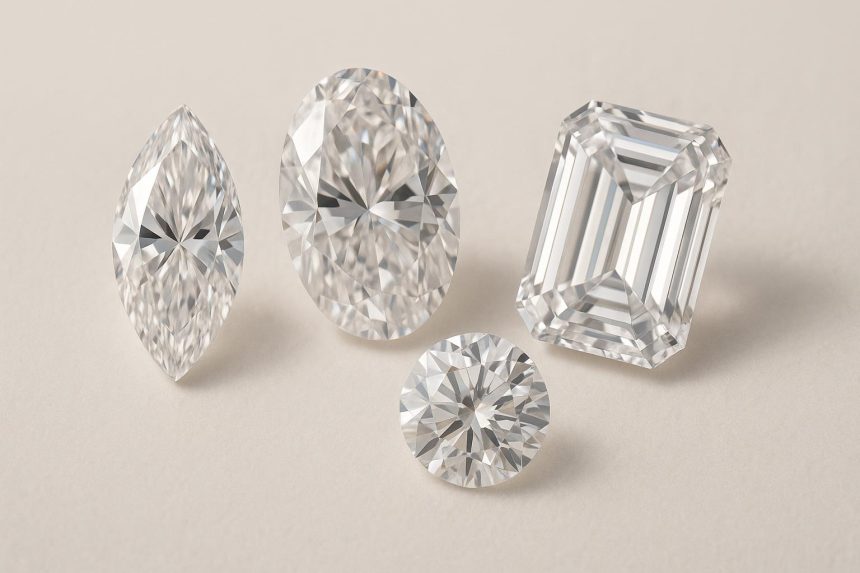
Diamond shape has a significant influence on both the appearance and personality of an engagement ring. While round diamonds remain a classic choice, many modern buyers are gravitating toward elongated diamond shapes such as oval, pear, marquise, emerald, radiant, and elongated cushion cuts. These shapes offer a distinctive look that feels both contemporary and individual, while also creating greater visual impact on the hand.
Part of their appeal comes from perception. Two diamonds can have the same carat weight yet appear noticeably different in size depending on how their weight is distributed. Because elongated diamond shapes spread their weight across a larger visible surface area, they often look larger than round diamonds of the same carat weight, making them a popular choice among buyers seeking both presence and proportion.
Carat Weight Doesn’t Equal Visible Size
One of the biggest misconceptions in diamond buying is that carat directly determines how large a diamond looks. In reality, carats measure weight, not face-up appearance.
Round diamonds typically concentrate more of their carat weight within a compact shape. Elongated cuts, by contrast, spread that same weight across a longer outline and larger face-up area. As a result, they often appear larger when viewed from above, even when their carat weight is identical to that of a round diamond.
This creates the impression of a larger diamond without increasing carat weight.
Popular Elongated Diamond Shapes
Several elongated diamond shapes have become particularly popular in modern engagement rings because they combine strong visual presence with distinctive character.
- Oval diamonds offer a soft, rounded silhouette that feels classic yet contemporary. Their balanced proportions and flattering finger coverage have made them one of the most requested engagement ring shapes today.
- Pear-shaped diamonds combine a rounded end with a pointed tip, creating an elegant silhouette that feels both distinctive and versatile.
- Marquise diamonds feature an elongated shape with pointed ends, maximizing finger coverage and creating one of the most dramatic elongated profiles.
- Emerald cut diamonds are known for their long, clean lines and step-cut facets. Their structured appearance appeals to buyers looking for a refined, architectural aesthetic.
- Radiant cut diamonds combine the elongated outline of rectangular shapes with brilliant faceting, making them a popular choice for those seeking both visual presence and contemporary styling.
- Elongated cushion diamonds offer a softer alternative to rectangular cuts. Their rounded corners and stretched proportions create a balance between classic cushion shapes and the larger face-up appearance associated with elongated diamonds.
While each shape has its own character, they all share one advantage: their elongated proportions create a larger visual footprint on the finger, which contributes to their growing popularity in modern bridal jewelry.
The Eye Naturally Follows Length
Another reason these shapes appear bigger is visual perception. The eye naturally tracks length more than width.
An elongated diamond draws attention across a longer outline, which creates the illusion of increased size. This effect becomes even more noticeable when paired with slim bands or minimal settings.
More Finger Coverage Creates a Larger Look
Elongated diamonds also cover more of the finger vertically. Instead of appearing compact in the center, they extend further along the hand.
This wider finger coverage creates:
- A more noticeable center diamond
- A slimmer visual effect on the finger
- Better balance in solitaire settings
These factors contribute to why many buyers perceive elongated shapes as larger and more visually present than round diamonds.
Why Elongated Shapes Work Well in Lab-Grown Rings
The growing popularity of lab diamond engagement rings has also contributed to the rise of elongated cuts.
Many buyers are using the flexibility of lab-grown diamonds to explore:
- Larger-looking elongated shapes
- Better cut proportions
- More balanced ring designs
Instead of focusing only on carat size, the emphasis is increasingly on overall visual impact and proportion.
Final Thought
The reason elongated diamond shapes appear larger than round diamonds comes down to proportion, surface visibility, and visual perception. Their extended outlines create greater finger coverage and make more of the diamond visible from the top view.
From oval engagement rings to emerald cut diamonds, these shapes continue to influence modern bridal jewelry because they combine strong visual presence with balanced wearability.
For those exploring contemporary ring styles, With Clarity offers a wide selection of lab diamond engagement rings across different elongated cuts, making it easier to compare shapes and find a design that feels refined, balanced, and visually impactful.

Lynn Martelli is an editor at Readability. She received her MFA in Creative Writing from Antioch University and has worked as an editor for over 10 years. Lynn has edited a wide variety of books, including fiction, non-fiction, memoirs, and more. In her free time, Lynn enjoys reading, writing, and spending time with her family and friends.