Hair says a lot about how a person feels day to day. It shapes confidence, shapes how someone shows up in photos, at work, in a mirror each morning. That’s exactly why so many people researching hair loss solutions eventually land on the same conclusion. Follicular unit extraction, better known as FUE, has quietly become the go to method in modern hair restoration, and the reasons behind that go well beyond marketing hype.
Here’s a real look at why FUE keeps winning out over older techniques, and what actually makes it worth considering.
A Gentler Way To Restore Hair
Older hair transplant methods relied on cutting a strip of skin from the scalp, which meant a fairly large incision and a longer healing process. FUE flips that approach on its head. Instead of one big cut, a surgeon removes individual follicles using tiny punch tools, one at a time.
That small shift changes everything about the patient experience. Less trauma to the scalp means fewer complications overall, and the risk of infection or noticeable scarring drops significantly. Recovery windows tend to be shorter with FUE, which means getting back to a normal routine happens faster than most people expect going in.
Because the wounds are so small, discomfort after the procedure stays mild for most patients. Fewer follow up visits are usually needed too, which makes the whole process feel a lot less like a major surgery and more like a straightforward outpatient procedure.
Scars That Barely Show
Scarring worries almost everyone considering a hair transplant, and it’s a fair concern. Strip harvesting methods leave behind one long linear scar across the back of the scalp, something that can be tough to hide with a shorter haircut.
FUE avoids that problem entirely. The tiny round punch marks left behind heal into small dots that are nearly impossible to spot once fully recovered. That makes a real difference for anyone who prefers to keep their hair cropped short or buzzed close.
Faster healing on smaller wounds also means less day to day discomfort while things settle. For people who want a hairstyle that doesn’t require hiding evidence of surgery, this is often the deciding factor. It also keeps future options open, since minimal scarring doesn’t complicate a second procedure down the line if one is ever needed.
Results That Actually Look Natural
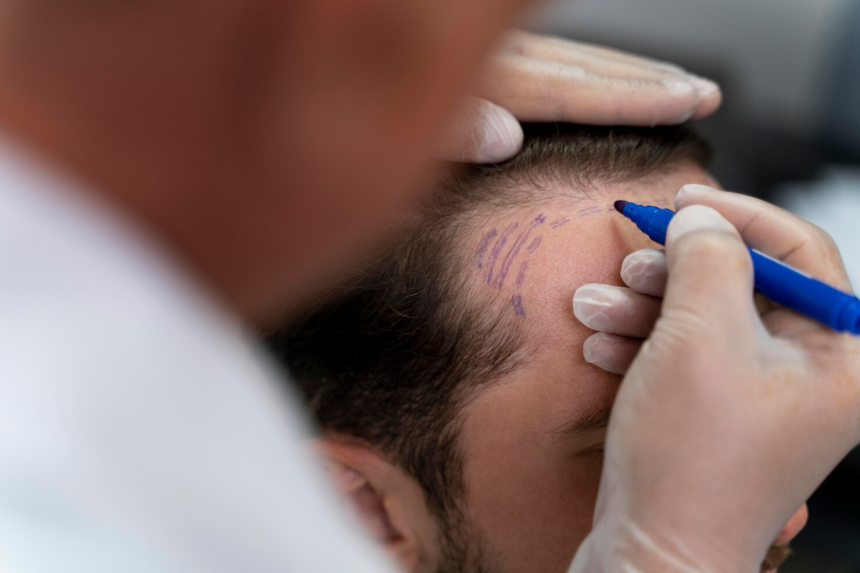
A hair transplant only works if it looks like it belongs there. This is where FUE really shines. Because individual follicles get placed one by one, surgeons can follow the natural direction and pattern of existing hair growth rather than working around a large patch of grafts.
The result tends to look full without that patchy, uneven look older techniques were sometimes known for. Many people choose to get a professional FUE hair transplant specifically because the outcome blends seamlessly with the hair that’s already there, rather than looking like an obvious add on.
Precision plays a huge role here too. Hairlines placed through FUE tend to sit closer to how hair naturally grows along the forehead, which matters more than people realize for the overall look. Small details like this are usually what separates a transplant that looks effortless from one that looks obviously done.
More Options For Donor Hair
One underrated advantage of FUE is flexibility. Surgeons aren’t limited to pulling follicles only from the back of the scalp. Hair from the beard or chest can sometimes serve as a donor source too, depending on the individual case.
That flexibility matters a great deal for patients who don’t have much donor hair available in the usual spots. Being able to draw from multiple areas opens the door to better overall density, and it means FUE can work for people at very different stages of hair loss, including those who’ve had a previous transplant that didn’t go as planned.
A Safer Track Record Overall
Safety data backs up what a lot of surgeons already know from experience. A clinical study tracking FUE patients over a full year found the overall complication rate stayed under five percent, with issues like scarring, infection, or bleeding all showing up far less often than older transplant methods typically report.
Because FUE avoids the large incisions associated with older techniques, nerve damage and heavy bleeding become far less likely. Postoperative pain also tends to stay manageable, which adds up to a smoother recovery overall. That safety profile is a big reason FUE has earned trust among both surgeons and patients over the past decade.
Results Built To Last
Perhaps the biggest reason people choose this procedure comes down to permanence. Follicles taken from resistant donor areas keep their resistance to hair loss even after being moved, meaning they typically continue growing for the rest of a person’s life.
That long term reliability is what makes the investment worthwhile for so many patients. Nobody wants to go through a procedure only to watch the results fade in a few years. FUE offers a solution that holds up, paired with a natural look that keeps people coming back to recommend it to others dealing with the same struggle.
FUE has reshaped what hair restoration looks like today, offering a gentler procedure, far less scarring, a genuinely natural appearance, and results that last. Between its flexibility, strong safety record, and consistent outcomes, it’s easy to understand why this method has become the standard so many people trust when they’re ready to deal with hair loss for good.

Lynn Martelli is an editor at Readability. She received her MFA in Creative Writing from Antioch University and has worked as an editor for over 10 years. Lynn has edited a wide variety of books, including fiction, non-fiction, memoirs, and more. In her free time, Lynn enjoys reading, writing, and spending time with her family and friends.