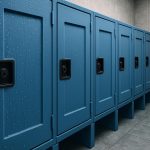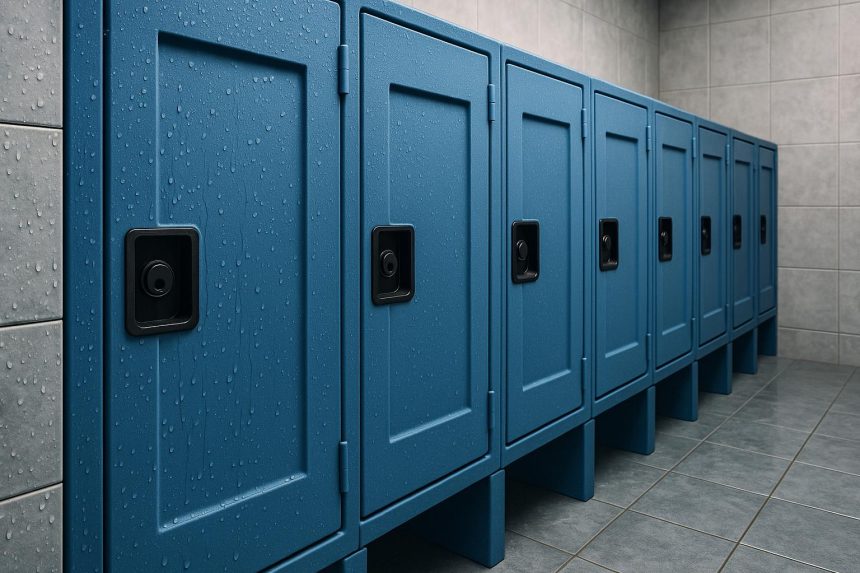
Locker rooms, pool facilities, hospitals, and athletic centers expose storage systems to water, humidity, cleaning chemicals, and repeated impact. Metal lockers can corrode when moisture reaches damaged coatings, while laminate systems can swell or separate. Solid plastic lockers use high-density polyethylene, a non-porous material that remains waterproof, rust-proof, and stable in demanding commercial areas. Material selection affects hygiene, maintenance, service life, and storage capacity, so moisture performance deserves close attention.
Moisture Changes the Material Equation
Locker rooms create repeated wet-dry cycles. Water enters through condensation, damp clothing, floor splash, and routine cleaning. Those conditions test seams, edges, fasteners, and coated surfaces, particularly when moisture remains trapped after use.
For facilities comparing storage materials, solid plastic lockers provide a practical answer because high-density polyethylene does not absorb moisture. The material does not swell, corrode, or separate, so performance remains consistent in pool areas, hospital changing rooms, gyms, and other humid locations.
Traditional metal lockers depend on coatings to protect the underlying steel. Scratches, dents, or worn edges can expose the surface and allow corrosion to begin. Solid plastic avoids that failure path because it resists water rather than relying on a surface coating alone.
Moisture can also reach hidden areas behind locker panels, around fasteners, and beneath damaged finishes. Once corrosion begins in those locations, cleaning staff often cannot remove it without replacing hardware or sections of the locker. Solid plastic reduces this concern because its waterproof construction does not rely on an intact painted surface.
Why HDPE Holds Up
High-density polyethylene gives these lockers a solid, waterproof construction. It does not absorb water, which prevents the expansion and distortion associated with moisture-sensitive materials.
The material also resists dents, scratches, and graffiti better than many traditional locker materials. That matters in facilities where users open doors frequently, move equipment nearby, or store bulky items in compartments.
Impact resistance reduces the need for cosmetic repairs and replacement parts. Facility teams can keep locker rooms in service without addressing rust spots, swollen panels, or damaged laminate edges after demanding seasons.
Cleaner Surfaces, Simpler Care
A non-porous surface leaves fewer places for moisture and residue to collect. Solid plastic lockers resist mold, mildew, and bacterial buildup, which supports sanitation routines in healthcare settings and shared changing areas.
Cleaning still requires the right method. Use mild liquid soap and a dry wipe to protect the surface, and avoid abrasive cleaners, scouring pads, and harsh chemicals. Simple care prevents unnecessary surface damage.
Frequent disinfecting does not change the material’s basic moisture resistance. This aspect makes solid plastic suitable for locations that clean lockers often and need surfaces that remain easy to maintain.
Routine care also becomes easier when staff can inspect clean, intact surfaces instead of searching for rust beneath peeling coatings. A consistent cleaning process helps preserve appearance while limiting residue in door seams, handles, and ventilation openings.
Storage That Fits the Facility
Locker configuration affects capacity and user access. Single-tier units provide full-height storage for larger belongings or hanging garments, while double-tier and triple-tier arrangements increase the number of users within the same floor area.
Z-tier lockers combine vertical hanging space with a higher-capacity layout. The angled design lets a robe or suit jacket hang without wrinkling while leaving room for additional lockers.
Facilities should match the configuration to user behavior, available space, and stored items. A pool facility might prioritize hanging space, while a busy athletic center might need more compartments within a limited footprint.
Installation And Long-Term Value
A complete installation requires more than locker bodies and doors. Institutional-grade anchors, fasteners, framing, and hardware support a code-compliant installation, while optional ADA-compliant hardware addresses accessibility requirements.
Solid plastic lockers carry a 25-year warranty, and the installation warranty lasts one year. These terms give facility planners a clear service framework for comparing initial costs with maintenance and replacement expenses.
The product carries a Class C fire rating and a high durability rating. These specifications belong in project documents alongside moisture resistance, intended use, hardware requirements, and the selected locker configuration.
Installation planning should also account for wall conditions, floor drainage, clearances, and access routes. Proper measurements help crews position lockers without blocking walkways, vents, or accessible spaces. Early coordination reduces field adjustments and supports a cleaner final installation.
Conclusion
High-moisture facilities need storage materials that withstand water, cleaning, impact, and repeated use without predictable moisture damage. High-density polyethylene meets those demands through waterproof, rust-proof, non-porous construction that resists swelling, corrosion, mold, mildew, and separation. Before selecting a locker system, facility planners should review room humidity, cleaning practices, storage needs, accessibility requirements, and available floor space. Next, match those conditions with the appropriate configuration and installation hardware.

Lynn Martelli is an editor at Readability. She received her MFA in Creative Writing from Antioch University and has worked as an editor for over 10 years. Lynn has edited a wide variety of books, including fiction, non-fiction, memoirs, and more. In her free time, Lynn enjoys reading, writing, and spending time with her family and friends.