If you’ve been relying on Mentimeter to run polls and interactive presentations, you’re not alone, it’s one of the most widely used audience engagement tools out there, holding a strong rating across hundreds of reviews. But the longer you use it, the more its limitations start to show. Participant caps, shallow quiz formats, and limited visibility into how individuals are actually performing are common pain points that push people to look for something better.
The good news is that there are solid alternatives in 2026, each suited to a different type of session. This guide covers five of the best, along with where each one excels and where it falls short.
Why People Move Away from Mentimeter
Mentimeter works fine for basic polling. But once you want more from your sessions, the gaps become hard to ignore.
The participant limit is often the first frustration. The free plan restricts how many people can actively respond, which breaks down quickly in larger team or classroom settings. Then there’s the engagement problem, you can put up a poll, but getting people to genuinely participate is a different challenge. Research from Gallup’s 2025 Global Workforce Report found that only around 21% of employees are actively engaged at work. Passive polling tools don’t do much to move that number.
For anyone running training sessions or educational programs, there’s also the issue of tracking. Mentimeter shows you aggregate responses, but it doesn’t tell you how each individual is doing. That’s a meaningful gap if you’re trying to measure comprehension or learning outcomes rather than just collecting clicks.
Pricing is another factor. As soon as you need more participants or more questions per session, you’re pushed toward a paid plan with annual billing — not ideal for teams that want flexibility.
The 5 Best Mentimeter Alternatives
1. Kvistly — Best for Quiz-Driven Sessions
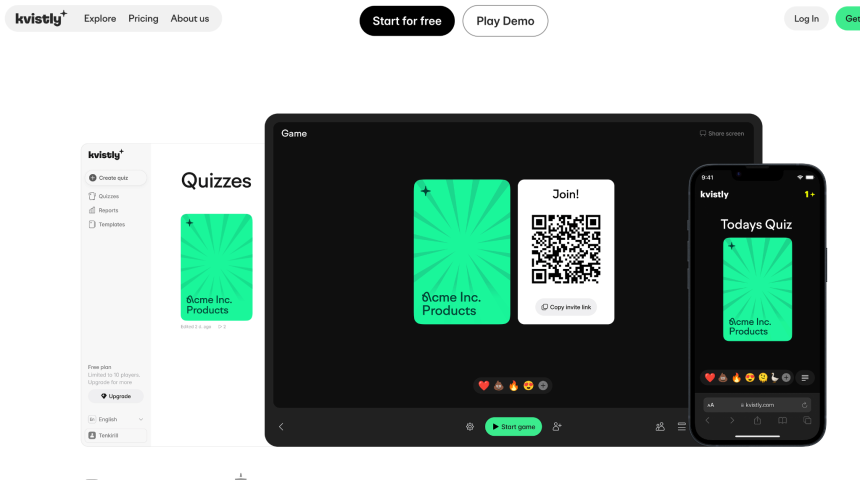
If passive interaction is the problem, Kvistly is the solution. It’s built specifically for live quiz engagement, not just polling. Participants answer questions, stake a confidence score, and compete on a real-time leaderboard — which makes a noticeable difference in how invested people actually feel during a session.
The standout feature is the AI quiz generator. You can type in a topic, paste your notes, or upload a document, and Kvistly produces a complete quiz in seconds. In practice, generating a 10-question knowledge check from a pasted training document takes around 40 seconds, with minimal editing needed before you’re ready to run it.
After each session, you get per-participant analytics that show exactly who struggled with which questions. That depth of post-session data simply isn’t available on Mentimeter’s free plan, and it makes Kvistly a much stronger choice for anyone running structured training or teaching environments.
Kvistly supports multiple question formats, works from any device without downloads, and includes multi-language support. The free plan is one of the most capable in this category — including AI generation and analytics — and public schools get full access at no cost. Paid plans start at €37/month.
Best for: Corporate training, team workshops, classroom knowledge checks, interactive meetings.
2. Slido — Best for Large Presentations
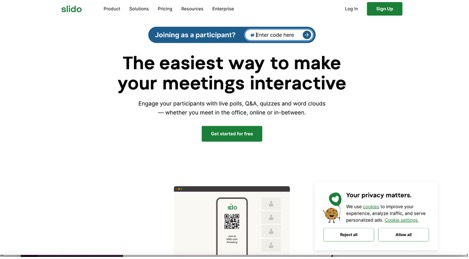
Slido is built for a different problem: managing audience interaction during large-scale presentations without disrupting the session flow. Attendees submit questions through a simple link, upvote the ones they most want answered, and respond to live polls — all while the presenter maintains full control from a separate moderation view.
What sets Slido apart is how cleanly it integrates with PowerPoint and Google Slides. You can embed polls directly inside your deck rather than toggling between windows, which keeps the experience smooth for both presenter and audience.
It’s not the right tool if you want competitive quizzes or gamification — that’s not what it’s designed for. And the free plan is fairly limited on participant numbers and monthly poll volume. But for formal corporate settings, conferences, and large town halls, few tools handle audience Q&A as effectively.
Best for: Conferences, corporate presentations, webinars, large town halls. Pricing: Free plan available. Paid plans from $12.50/month.
3. Kahoot — Best Free Competitive Option
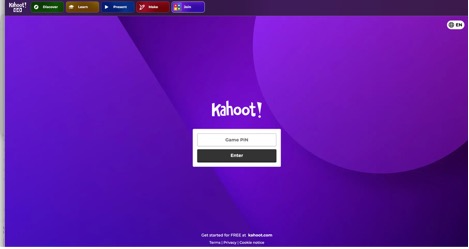
Kahoot is one of the most recognizable names in interactive sessions, and for good reason. Its timer-based multiple-choice format gets participants engaged almost instantly — there’s no learning curve, and the competitive leaderboard format creates genuine energy in the room. The large library of pre-made quizzes across hundreds of topics is also a genuine time-saver when you’re short on prep time.
The limitations are real, though. The free plan caps sessions at 10 participants, which rules it out for most real team or classroom settings without upgrading. Question types are largely limited to multiple choice, and there’s no open-ended response format, word clouds, or slide integration. For straightforward competitive quizzes, Kahoot is hard to beat at its price point — but you’ll hit a ceiling quickly if you need more variety.
Best for: Classrooms, team building events, corporate training warm-ups, virtual events. Pricing: Free plan limited to 10 participants. Paid plans from $19/month.
4. Wooclap — Best for Educators
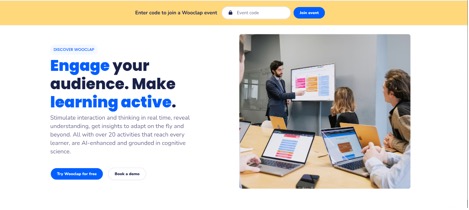
Wooclap is purpose-built for educational settings, and it shows. Where most tools focus on participation rates, Wooclap is designed around learning outcomes. You can embed interactive questions into presentations, run brainstorming activities, set up matching exercises, and use open-ended formats that encourage actual discussion rather than just a click.
The platform also tracks learning outcomes over time, which matters for instructors who need evidence of comprehension — not just a record of who clicked what. The variety of question types is noticeably broader than Mentimeter at a comparable price point.
The interface is a bit denser than simpler tools, and it takes a few minutes to get comfortable with the session setup. It’s also less relevant outside of educational contexts — if you’re running corporate events or conferences, other tools on this list will serve you better.
Best for: Universities, schools, seminars, educational workshops. Pricing: Paid plans from $10.99/month.
5. AhaSlides — Best Like-for-Like Mentimeter Replacement
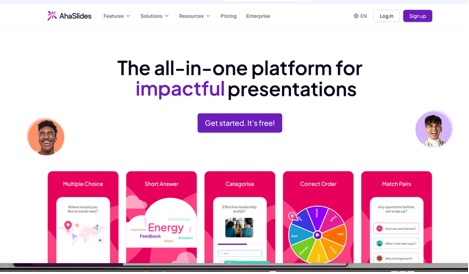
If you want something that closely mirrors what Mentimeter does but costs less and offers more on the free plan, AhaSlides is the obvious choice. It combines presentation slides with live audience interaction — polls, quizzes, word clouds, rating scales, and Q&A — in a clean, beginner-friendly interface.
The free tier is noticeably more generous than Mentimeter’s without requiring a paid upgrade, and the overall upgrade pricing is friendlier too. The competition mode exists but is less polished than Kahoot or Kvistly, and the analytics are lighter. But as a straightforward, accessible alternative that covers the same core use cases, AhaSlides is hard to argue against.
Best for: Workshops, training sessions, internal presentations, public talks. Pricing: Paid plans from $23.95/month.
A Complementary Tool Worth Knowing: Julip
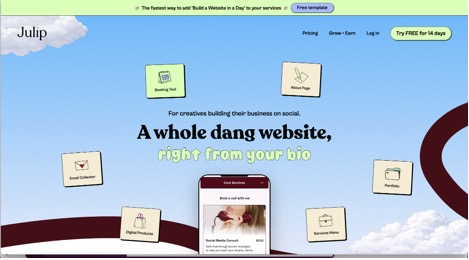
While the tools above focus on live session engagement and audience interaction, there’s a separate challenge that trainers, educators, freelancers, and session facilitators often run into once the session is over, how do you present yourself, your services, and your work professionally online?
That’s where Julip comes in. It’s not an audience engagement platform, but it works hand-in-hand with tools like Kvistly, Kahoot, and Slido by solving the problem that comes before and after the session: your online presence.
Julip is a website-in-bio tool built specifically for creatives, freelancers, social media managers, coaches, and anyone who runs a service-based business. Instead of sending people to a cluttered list of links or a generic Linktree page, Julip gives you a fully functional, visually polished website that lives right in your social media bio. Think of it as your professional storefront — one link that shows potential clients your portfolio, services, pricing, testimonials, and even lets them book a call or buy a digital product, all without leaving the page.
For anyone running interactive sessions for hire, whether that’s a corporate trainer using Kvistly for team knowledge checks, a workshop facilitator running Kahoot competitions, or an educator hosting Wooclap-powered lectures, Julip is the tool that makes sure your professional presence matches the quality of what you deliver in the room. It replaces the need for a separate website, Calendly account, Canva portfolio, and payment processor, consolidating everything into one link at $19/month (billed annually), with a free 14-day trial and no cut taken from your earnings.
If you’re building a business around interactive sessions and training, it’s worth pairing the right engagement tool with a professional online presence that does the selling for you before the session even begins.

Lynn Martelli is an editor at Readability. She received her MFA in Creative Writing from Antioch University and has worked as an editor for over 10 years. Lynn has edited a wide variety of books, including fiction, non-fiction, memoirs, and more. In her free time, Lynn enjoys reading, writing, and spending time with her family and friends.