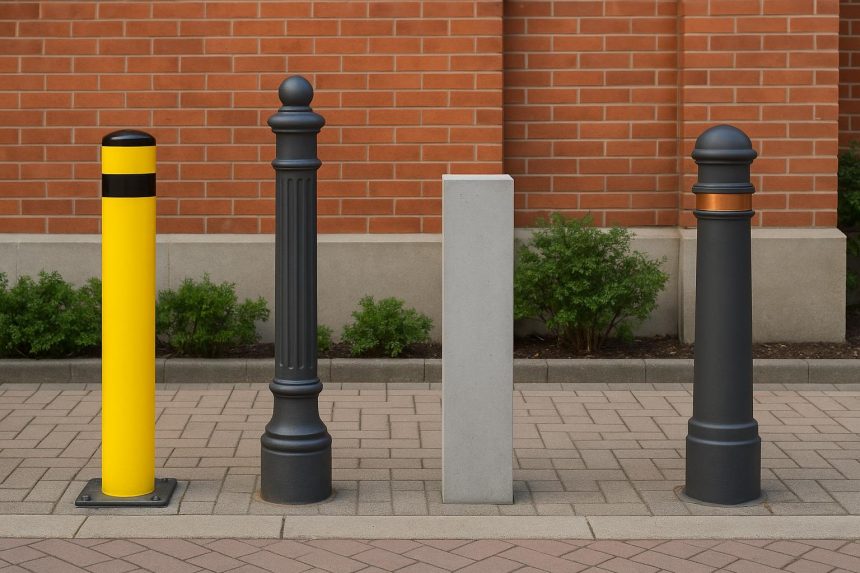
Bollards show up everywhere—outside shops, along sidewalks, at parking lot entrances—but they’re doing more work than most people realize. Today’s projects don’t just drop in a standard post and call it done. The right bollard depends on how a space is used, who needs access, and what kind of traffic—foot or vehicle—moves through it day to day.
From removable and fixed options to collapsible and light-duty posts, each bollard type serves a specific purpose. Small choices like post size, footing depth, finishes, and locking hardware play a big role in how well the system holds up over time. Weather exposure, winter conditions, and security concerns all factor into those decisions. With some upfront planning around parts, keys, and inspection routines, bollards can stay functional, easy to manage, and cost-effective long after installation.
Removable Bollards for Managed Vehicle Access
Post diameter and wall thickness determine a removable bollards resistance and service life. Removable bollards provide controlled access where vehicles must enter or exit on a defined schedule. Base choices such as stainless sockets with drainage or recessed sleeves alter installation depth, theft resistance, and winter upkeep.
Head style and locking method affect handling; flush caps with keyed locks suit frequent removal while lifting rings and T-heads work for heavy handling. Match post sizing, base type, head style, and operation method to who controls access and how often removal occurs. Operation affects maintenance frequency; plan storage, spare posts, and inspection intervals to keep access reliable.
Fixed and Crash-Rated Bollards for Permanent Protection
Impact-rated cores and thicker walls set the baseline for crash-rated bollards, with published K- or M-rated performance specifying vehicle mass and approach speed resisted. Select a rating that matches anticipated approach vectors and curb or lane geometry, and verify manufacturers supply test documentation. Post material and welding detail affect residual strength and repairability after impact.
Footing choices depend on soil type, frost depth, and available embedment; deeper concrete piers or extended anchors reduce displacement for higher-impact requirements. Spacing should reflect vehicle paths and stopping distance so adjacent posts work as a system. Specify corrosion protection, inspection intervals, and replacement parts to keep long-term protection predictable and operable.
Collapsible Bollards for Flush Surface Control
A recessed sleeve and hinge assembly define many collapsible bollard installations. Units drop flush when unlocked and lock upright with keyed or hydraulic latches, keeping pedestrian routes clear while allowing vehicle entry. Select mechanisms with cycle ratings, corrosion resistance, and match the post diameter and wall thickness to expected loads and handling.
Verification testing should simulate local vehicle types and cycle frequency to reveal fatigue points and latch wear. Integrate sleeves with pavement drainage and clear surface markings, locate readily available service access or spare posts within short response distances, and set inspection intervals and locking protocols to keep daily operation reliable.
Light Removable Bollards for Visual Guidance
Short, lightweight posts set at regular intervals mark pedestrian edges without blocking vehicles. Light removable bollards establish visual boundaries and guide foot traffic while remaining simple to lift or store, so they work where stopping power is unnecessary. Choose uniform diameters and consistent post spacing to preserve visual rhythm and predictable clearances for mobility devices.
Aluminum or polypropylene posts reduce weight and abrasion when handling, and sleeves with keyed locks cut removal time during shift changes. Reflective bands, high-contrast tops, and compliant spacing improve visibility for everyone and help wayfinding near ramps and crossings. Specify spare units, standardized keys, and routine checks so availability matches daily operational needs.
Customization, Accessories, and Specification Planning
Finish warranties and film-thickness requirements define repaint intervals and field touch-up needs. Retroreflective bands and low-profile caps increase visibility with minimal maintenance, and replaceable sleeves reduce downtime for surface damage; when specifying locks, weigh mechanical, keyless, and electronic options against field-service demands.
List required accessories and replacement components in the contract, including mounting plates, retrofit sleeves and service-friendly fasteners, and require parts commonality to shorten procurement lead times. Include code references for spacing and barrier listings, set finish warranty periods, and prefer recyclable metals or low-VOC coatings to reduce long-term material impact.
Smart planning brings everything together at the end of a bollard selection process. When access needs, protection goals, and maintenance realities line up, the result is a system that works smoothly day after day. Clear specs around post size, footing depth, finishes, locks, and spare parts cut down surprises later. Writing inspection schedules and storage locations into contracts helps teams respond faster when issues come up. A final review with installers or purchasing staff can catch site-specific details early and keep long-term upkeep straightforward and predictable over the full life of the site and budgets.

Lynn Martelli is an editor at Readability. She received her MFA in Creative Writing from Antioch University and has worked as an editor for over 10 years. Lynn has edited a wide variety of books, including fiction, non-fiction, memoirs, and more. In her free time, Lynn enjoys reading, writing, and spending time with her family and friends.