Key Takeaways
- Business account fees can erode profits if left unchecked, especially for small enterprises.
- Understanding not only the visible but also the hidden fees is essential for financial success.
- Federal regulators are increasing scrutiny of unfair and opaque banking fees.
- Businesses can mitigate hidden costs through informed strategies and by seeking more transparent banking partners.
Table of Contents
- Introduction
- Common Business Account Fees
- Unveiling Hidden Costs
- The Impact of Hidden Fees on Small Businesses
- Regulatory Measures Against Hidden Fees
- Strategies to Mitigate Hidden Fees
- Final Thoughts
Introduction
Maintaining a business account is more than just a formality in today’s fast-paced commercial landscape. It forms the backbone of operational stability and growth, yet the assortment of fees and costs associated with these accounts can be daunting for any business owner. Whether you are new to business or already established, getting a handle on business account charges is a crucial step toward protecting your profits and planning strategically for the future. That is why exploring the best business bank account for startups is a top priority for many new entrepreneurs seeking both transparency and cost savings in their banking relationships.
Often, the confusion isn’t about the obvious account fees but about the less visible costs that quietly accumulate over time. Surprises in the form of service charges or penalties can undermine even the most carefully constructed budgets, making it vital for business owners to recognize and manage both the apparent and hidden fees tied to business banking.
Common Business Account Fees
When opening a business account, banks are generally straightforward about standard service fees. Nevertheless, it is essential to know precisely what to expect. These standard fees include:
- Monthly Maintenance Fees: Most banks charge a regular fee to service and maintain your account.
- Transaction Fees: There may be charges for exceeding a certain number of monthly deposits, withdrawals, or transfers.
- Overdraft Fees: Exceeding your account balance generally triggers costly overdraft fees.
- Wire Transfer Fees: Both incoming and outgoing domestic or international wire transfers usually incur set fees.
- ATM Fees: Using out-of-network ATMs can quickly add up with extra fees per transaction.
Before choosing a bank, carefully compare the published fee schedules. Financial industry experts at Business.com recommend reviewing independent comparisons and reviews to find banks that align best with your transaction habits and business needs.
Unveiling Hidden Costs
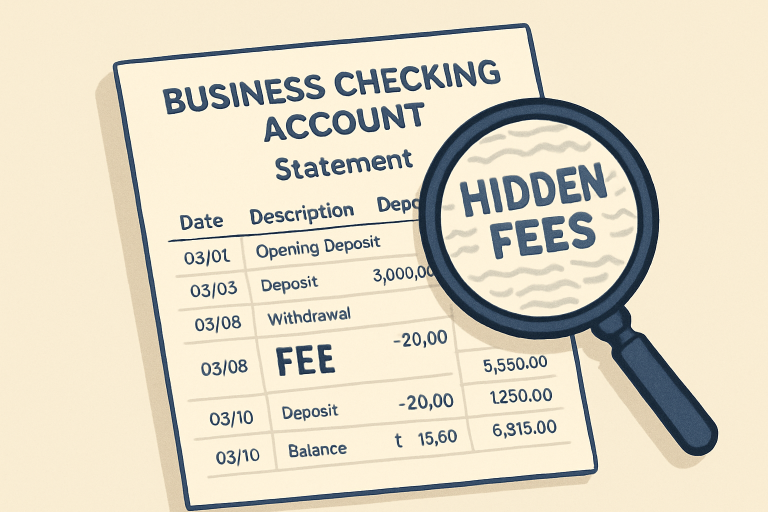
Even after accounting for the obvious fees, hidden or less conspicuous costs can still affect your balance. Banks might impose inactivity fees when there are no transactions over a specific period, catching businesses off guard. There may also be penalties for exceeding deposit thresholds, failing to maintain a minimum monthly balance, or not meeting other account requirements.
These hidden fees are often tucked into the fine print of account agreements, making them easy to overlook. That’s why even the most diligent business owners can be caught unprepared and feel the impact of these charges after the fact. As highlighted by small business finance experts, these costs are particularly challenging for startups and smaller firms with tighter cash flow margins.
The Impact of Hidden Fees on Small Businesses
Hidden banking fees can have a serious, sometimes devastating, impact on small businesses. According to recent research, American small and medium-sized businesses collectively incur an estimated $153 billion in hidden costs annually. Alarmingly, nearly one in five small businesses affected by hidden fees reported that these charges forced them into negative cash flow, threatening their financial stability and growth potential.
This phenomenon effectively acts as a “hidden growth tax,” stifling the ability of businesses to expand, invest in new opportunities, or even meet regular operational expenses. For many, an unexpected fee here or there might seem trivial, but over the course of a year, these charges can compound and have a deeply disruptive effect.
Regulatory Measures Against Hidden Fees
Recognizing the widespread effect of hidden fees, U.S. regulatory agencies are stepping up oversight and enforcement. The Federal Trade Commission (FTC) recently proposed a rule intended to eradicate so-called “junk fees” that are not disclosed transparently to business customers. According to FTC estimates, these fees contribute tens of billions of dollars in consumer and small-business costs annually.
This policy shift is mirrored by efforts from the Consumer Financial Protection Bureau (CFPB), which has also called for greater transparency in banking and other financial services. Such regulatory attention reflects increased public concern and highlights the importance banks must place on honest and accessible fee disclosures.
Strategies to Mitigate Hidden Fees
Review Account Agreements Thoroughly
From the outset, it is critical to scrutinize the terms and conditions governing the opening of a business account. Note any situations that might trigger additional fees, such as excessive cash deposits or account dormancy.
Maintain Required Minimum Balances
Where possible, keep account balances above minimum thresholds to skip unnecessary penalties. Many banks waive service fees for accounts that maintain higher balances, offering a financial incentive for responsible account management.
Regularly Monitor Account Statements
Staying vigilant by frequently reviewing transaction statements allows you to catch errors and unauthorized or unexplained charges quickly. Early detection is the key to disputing invalid fees and avoiding ongoing drains on your balance.
Negotiate With Your Bank
Don’t be afraid to reach out and ask about lowering or eliminating certain fees, especially if you can demonstrate loyalty or bring more business accounts to the same bank. Many financial institutions are willing to accommodate client requests to retain business relationships.
Explore Alternative and Online Banks
Finally, consider moving your business account to a digital or challenger bank, which often offers lower fees and more transparent pricing. Thorough research into available options, particularly those recognized as among the most reliable for startups or small businesses, can yield significant annual savings.
Final Thoughts
A clear understanding of both advertised and hidden fees is necessary for maintaining a thriving business. As regulatory bodies push for reform and more financial technology firms strive for transparency, business owners have more opportunities than ever to minimize costly surprises. By proactively monitoring your accounts, holding banks accountable, and diligently reviewing agreement details, you can safeguard your company from expensive and unexpected banking charges—leaving you freer to focus on innovation, growth, and success.

Lynn Martelli is an editor at Readability. She received her MFA in Creative Writing from Antioch University and has worked as an editor for over 10 years. Lynn has edited a wide variety of books, including fiction, non-fiction, memoirs, and more. In her free time, Lynn enjoys reading, writing, and spending time with her family and friends.