Table of Contents
- Understanding Safety Standards
- Assessing Workplace Hazards
- Lens Materials and Coatings
- Frame Design and Fit
- Prescription Safety Glasses
- Maintenance and Care
- Common Mistakes to Avoid
- Conclusion
Protecting your vision should always be a priority, whether you work in construction, healthcare, laboratories, or any other field with potential eye hazards. The right pair of safety glasses can protect your eyes from hazards such as flying debris, chemical splashes, and exposure to harmful radiation. It is crucial to select safety glasses tailored to your specific environment and tasks to maximize both safety and comfort. There are several factors to weigh when evaluating which pair best fits your needs. Understanding hazard types, safety standards, material choices, and care considerations will empower you to make informed decisions. Before you purchase safety eyewear, you can learn about the relevant guidelines, options, and mistakes to avoid.
Understanding Safety Standards
Satisfactory eye protection is about more than just choosing glasses with robust-looking frames. In the United States, safety glasses should meet the American National Standards Institute (ANSI) Z87.1 standard, which ensures the glasses have passed rigorous tests for impact resistance and optical clarity. Always check for a “Z87” or “Z87+” marking. This certification guarantees that your eyewear is designed to offer genuine protection against workplace hazards. Familiarizing yourself with ANSI and Occupational Safety and Health Administration (OSHA) standards ensures you select products that provide real safety, not just a false sense of protection.
Assessing Workplace Hazards
Before you pick a pair, please review the unique risks you regularly encounter. This helps ensure your glasses offer the right features and performance:
- Impact Hazards: Activities like cutting, grinding, or drilling produce high-speed particles that can seriously injure unprotected eyes.
- Chemical Hazards: Work with hazardous liquids or vapors calls for glasses that guard against splash or fume exposure.
- Radiation Hazards: Certain jobs expose your eyes to harmful ultraviolet (UV), infrared, or laser radiation, making specialized filters critical.
- Dust and Particles: Persistent exposure to airborne particles can cause irritation or damage if your eyes are left unprotected.
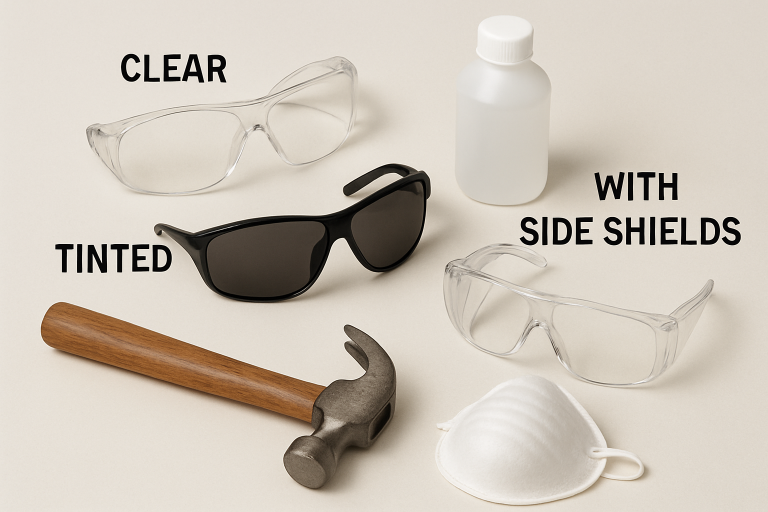
Identifying these risks drives better choices, such as opting for side shields for lateral impact protection or chemical-resistant coatings if you’re dealing with hazardous substances.
Lens Materials and Coatings
The lens material and coatings significantly influence both the safety and longevity of your glasses:
- Polycarbonate Lenses: Lightweight and remarkably impact-resistant, these are a preferred option for most industrial and high-risk settings.
- Glass Lenses: Although these provide superior optical clarity, they are heavier and less impact-resistant, often better suited for specialized tasks rather than hazardous environments.
There are several coatings available to enhance protection and comfort:
- Anti-Fog Coating: Prevents fogging, essential for humid or fast-paced conditions where clear vision is necessary.
- Scratch-Resistant Coating: Boosts lens durability, helping to keep your vision unobstructed and extending the lifespan of your eyewear.
- UV Protection: Offers valuable defense against UV rays, especially if you spend significant time outdoors or in well-lit environments.
Frame Design and Fit
Optimum safety glasses combine ample coverage with a comfortable, customizable fit. The frames should fully cover the eye area, including the sides, to shield against peripheral hazards. Many models feature adjustable nose pads or temple arms, supporting a secure fit for various face shapes. Lightweight, ergonomic designs are crucial for long-term wear, helping prevent discomfort and encourage consistent use. When glasses fit correctly, they are less likely to shift or fall off, ensuring that your protection remains constant throughout your workday. Ill-fitting glasses are not only uncomfortable but can also leave gaps that expose your eyes to hazards.
Prescription Safety Glasses
For workers who require vision correction, prescription safety glasses are an important solution. These tailor corrective lenses with protective features, so you do not need to layer safety eyewear over regular glasses. Please always verify that your prescription safety glasses meet relevant standards, such as ANSI Z87.1, to ensure both visual clarity and impact resistance.
With the wide variety of available designs and lens powers, most users can find prescription safety eyewear that combines functionality with comfortable fit and style.
Maintenance and Care
Consistent maintenance guarantees long-lasting protection and clear vision. Clean lenses regularly with mild soap, water, or approved lens-cleaning products to remove dirt and prevent scratches. When not in use, store your glasses in a rigid, protective case to shield them from physical damage and environmental hazards. Routinely inspect your eyewear for scratched lenses, loose hardware, or cracks, and promptly replace any compromised components to maintain maximum protection. With good care practices, you will extend the service life of your safety glasses and reduce the need for frequent replacements, supporting both safety and cost efficiency.
Common Mistakes to Avoid
- Prioritizing Style Over Safety: It is tempting to focus on appearance, but always ensure that your glasses offer certified, reliable protection before considering aesthetics.
- Ignoring Certification: Never purchase safety glasses that lack relevant standards. Uncertified eyewear may provide little more than a false sense of security.
- Overlooking Fit: Poorly fitting glasses can become a source of distraction or leave your eyes exposed to hazards, negating their protective benefits.
By sidestepping these common errors, you ensure your safety glasses truly safeguard your vision in real-world environments.
Conclusion
Choosing the right safety glasses is all about carefully matching workplace hazards, verifying certification, and ensuring a secure, comfortable fit. Investing in proper lens materials and maintaining your eyewear will protect your vision while boosting job performance and comfort. Stay vigilant about quality and maintenance to maximize eye protection in any work setting.

Lynn Martelli is an editor at Readability. She received her MFA in Creative Writing from Antioch University and has worked as an editor for over 10 years. Lynn has edited a wide variety of books, including fiction, non-fiction, memoirs, and more. In her free time, Lynn enjoys reading, writing, and spending time with her family and friends.