For many people, a quiet room is another of life’s luxuries. However, for those living with Severe ME/CFS (Myalgic Encephalomyelitis/Chronic Fatigue Syndrome), absolute silence is a medical necessity. This condition affects the body’s ability to produce and manage energy, turning everyday environments into a source of physical pain. To help manage these symptoms, a specific type of isolation technology exists to create a “sensory vacuum” for recovery, as discussed in this guide.
Understanding Severe ME/CFS
Severe ME/CFS is a complex condition that causes profound exhaustion. Unlike the tiredness you feel after a long day at school, this exhaustion does not improve with a normal night of sleep.
Patients often have a very small “energy envelope,” meaning they have a strictly limited amount of physical and mental energy each day. Even minor activities can drain their energy reservoirs, such as sitting in a brightly lit room. This leads to a “crash,” where their symptoms become much worse. Therefore, alternative solutions, such as advanced sleeping booths, go a long way to help block the noise.
How Noise Drains Energy
External noises are a major problem for people with this syndrome. Sounds like traffic, neighbors talking, or even a humming refrigerator keep the brain in a state of high alert. For someone with severe ME/CFS, this constant input fragments their rest.
Without a way to block out these interruptions, the body remains in a state of sensory overload, making it impossible to recover energy. This is why controlling the environment is the most important part of their daily care.
How Soundproof Sleeping Booths Provide Isolation
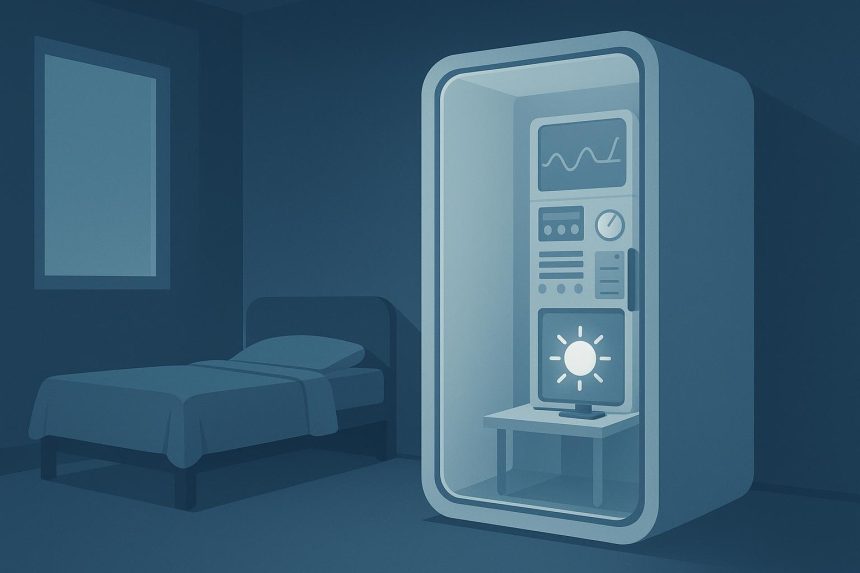
Specialized sleeping booths offer a controlled environment for deep rest. These advanced sleep technology booths use a patented double-walled design that reduces outside noise by an average of 45 decibels. This turns loud household sounds into a faint whisper. These booths are also equipped with silent ventilation systems, ensuring the user has fresh air without any distracting mechanical humming.
Key Features Supporting Rest and Health
The sleeping booths are built using sustainable materials that are fire-resistant and have zero chemical odors, which is important for patients who are also sensitive to smells. Models like the Dream and Dream Plus are large enough to fit standard beds, providing a spacious and safe refuge.
Because they use a modular design, they can be put together easily without using loud power tools. This combination of features reduces sensory input to the lowest possible level, allowing for deeper recovery.
Engineering the Ideal Recovery Space
The difference between a basic soundproof box and high-end sleep technology lies in the engineering. For a person with Severe ME/CFS, the quality of the airflow is as important as the silence.
Standard booths can become stuffy, but the advanced sleeping booths use passive and silent airflow systems to keep the air fresh without creating vibrations. This level of detail ensures that the environment inside remains stable and predictable, which is exactly what a sensitive nervous system needs to stop being on high alert.
Long-Term Impact on Quality of Life
While not a cure for ME/CFS, isolation technology is a powerful tool for symptom management. By providing a reliable place to “unplug” from the world, these advanced sleeping booths allow patients to practice better pacing.
When a patient knows they have a guaranteed silent space, the anxiety of potential “crashes” caused by neighborhood noise decreases. This peace of mind is a significant factor in long-term well-being and helps the individual maintain whatever level of health they currently have.
Conclusion
In conclusion, managing a condition as severe as ME/CFS requires more than just standard rest; it requires a specialized environment. Acoustic isolation technology provides a solution to the constant energy drain caused by our noisy world. By creating a silent, safe, and healthy sanctuary, these sleeping booths empower individuals to protect their energy envelopes and improve their daily quality of life.

Lynn Martelli is an editor at Readability. She received her MFA in Creative Writing from Antioch University and has worked as an editor for over 10 years. Lynn has edited a wide variety of books, including fiction, non-fiction, memoirs, and more. In her free time, Lynn enjoys reading, writing, and spending time with her family and friends.