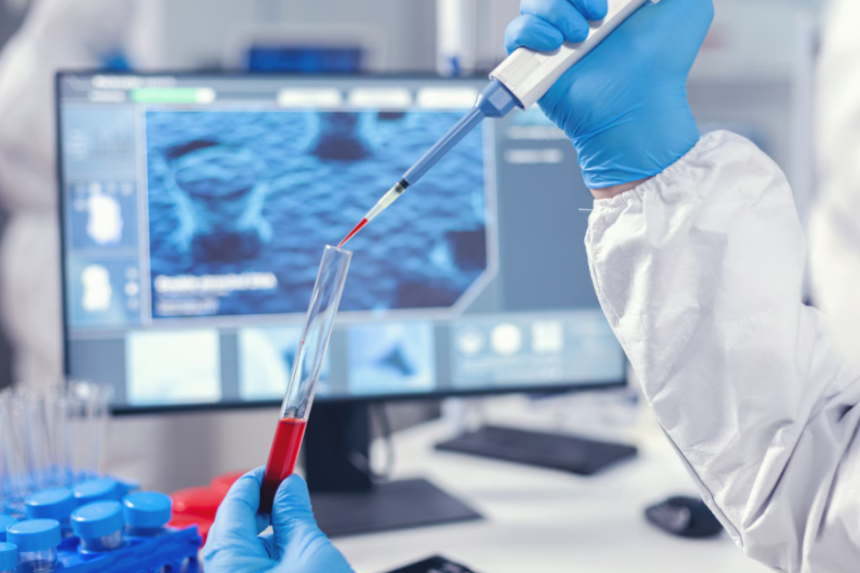
The key to accurate gene analysis of a sample is often one factor that many researchers can struggle to control, which is the quality of the RNA. Poor samples, contamination, or lapses in the extraction processes can easily undermine the results of the experiment, resulting in unreliable data and redundant work.
This not only delays the research process but also adds expenses and frustration in the lab. Simultaneously, RNA integrity needs to be maintained with precision, speed, and the tools that are compatible with the molecular workflows and fit perfectly.
This is where a consistent method of extraction is needed because it guarantees uniformity even at the initial stage of analysis. As a result, the right solution may greatly enhance results by streamlining complicated processes and minimizing variation.
This article examines the importance of an RNA extraction kit in obtaining quality gene analysis and the role it plays in supporting reliable research findings.
1. Ensure High RNA Integrity For Reliable Gene Expression Analysis
Reliable gene expression analysis starts with intact RNA. In case of degradation, it changes the transcript representation and causes the inaccurate interpretation of gene activity. Hence, to obtain meaningful data, it is crucial that RNA integrity is preserved.
This can be maintained by using a standardized RNA extraction kit to adhere to controlled and optimized procedures. The aim of these systems is to minimize handling errors and to limit exposure to degrading conditions.
Consequently, you are able to maintain the entire length and structure of RNA molecules, essential for downstream techniques like reverse transcription and sequencing. This makes sure that the results of gene expression represent real biological conditions and not technical inconsistencies.
2. Minimize Degradation and Preserve RNA Quality
One of the most frequent issues in the molecular biology workflow is RNA degradation. RNA is easily degraded due to even minor exposure to RNases or mishandling, which also influences the quality of the results.
To overcome this, extraction kits have elements that safeguard RNA in the isolation process. The mechanisms of these components are to inactivate RNases and stabilize RNA molecules during the process. Moreover, simplified procedures minimize processing time, thus limiting degradation risks further.
Through reduced degradation, you retain high-quality RNAs, which can be used to provide accurate experimental results. This is of particular consideration when dealing with sensitive samples or low-abundance transcripts.
3. Achieve High Purity for Accurate Downstream Results
Another important aspect that has a direct influence on gene analysis is purity. Protein, genomic DNA, and chemical residues are contaminants that may cause interference in downstream reactions, resulting in inaccurate data.
RNA extraction kits are specially made to extract such impurities using effective purification procedures. These measures make sure that the end product is a clean RNA sample capable of undergoing different techniques of analysis.
Consequently, downstream processes such as PCR and sequencing can be performed without inhibition. This enhances the quality of the results and lessens the necessity of extra cleaning processes, which saves time and effort.
4. Enhance Reproducibility in Gene Analysis Experiments

Any scientific study requires reproducibility, particularly in the case of verifying the results in a number of experiments or laboratories. Nevertheless, a lack of consistency in extraction techniques normally increases the variation in RNA quality, which influences reproducibility.
Standardized extraction systems give a uniform framework that reduces the variation between samples. Every procedure is streamlined so that the results are uniform, no matter who performs the procedure.
This consistency enables you to compare data in experiments with confidence. As a result, reproducible results enhance the credibility of your findings and support more reliable scientific conclusions.
5. Support Efficient Performance in Downstream Applications
When it comes to gene analysis, several downstream applications are commonly used, such as reverse transcription, quantitative PCR, and sequencing. All these methods need high-quality RNA to be effective.
Extraction kits are engineered to produce RNA that fulfils the requirements of these applications. They provide pure and contaminant-free RNA, which provides easy execution of further processes.
In addition, the efficiency of these kits reduces processing time, allowing you to move quickly from extraction to analysis. This streamlined workflow improves productivity and supports high-throughput research environments.
6. Improve Overall Accuracy in Molecular Biology Workflows
Accuracy in molecular biology depends on how well each step in the workflow is executed, and RNA extraction sets the foundation for everything that follows. If errors occur at this stage, they can carry forward and affect amplification, quantification, and final data interpretation. Therefore, maintaining precision during extraction is essential for reliable outcomes.
A structured extraction system helps reduce variability by standardizing each step, from sample preparation to purification. This ensures that RNA samples remain consistent across experiments, which directly supports accurate measurements in gene analysis.
In addition, cleaner RNA with minimal contamination allows downstream processes to function without interference. As a result, the overall workflow becomes more stable, and the data you generate reflects true biological signals rather than technical inconsistencies.
Conclusion
High-quality gene analysis requires careful attention to every step, and RNA extraction remains one of the most critical stages. When RNA integrity, purity, and consistency are maintained, downstream applications perform more effectively and produce reliable results.
On the other hand, poor extraction can introduce errors that compromise the entire workflow. By using a structured extraction system, you can reduce variability, protect RNA quality, and improve reproducibility across experiments.
In addition, streamlined processes enhance efficiency and minimize the risk of contamination. As research demands continue to grow, adopting reliable extraction methods becomes essential for achieving accurate and consistent results in molecular biology.

Lynn Martelli is an editor at Readability. She received her MFA in Creative Writing from Antioch University and has worked as an editor for over 10 years. Lynn has edited a wide variety of books, including fiction, non-fiction, memoirs, and more. In her free time, Lynn enjoys reading, writing, and spending time with her family and friends.