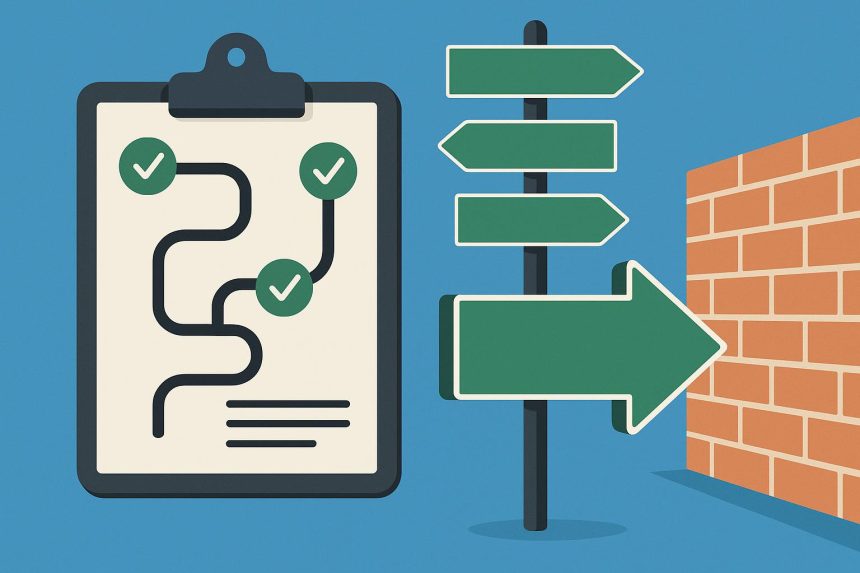
Changing careers is often talked about as a bold, exciting move—something that leads to more meaningful work and a better future. And while that can absolutely be true, what people don’t talk about as much are the quieter, less visible steps that actually make the transition successful.
This is especially true if you’re thinking about moving into healthcare. Nursing, in particular, has become a popular choice for career changers who want stability and purpose in their work. But behind every smooth transition is a lot of planning that doesn’t always get mentioned.
If you’re considering this path, understanding those behind-the-scenes steps can save you a lot of time, stress, and unnecessary detours.
Step 1: Understanding What Comes Before the Application
A common mistake people make is assuming that applying to a nursing program is the first step. It’s not—it’s more like the midpoint.
Before you even think about submitting an application, there’s some groundwork to take care of, especially when it comes to academics. Accelerated nursing programs, which are designed for people who already have a bachelor’s degree, require certain courses to be completed ahead of time.
These aren’t optional—they’re required, and they’re there for a reason. They prepare you for the pace and difficulty of the program itself.
A lot of people assume their previous degree will cover everything, but that’s rarely the case. That’s why it helps to look into the required ABSN prerequisite courses early on. It gives you a clear idea of what you’re missing and helps you avoid wasting time on classes you don’t actually need.
It might not be the most exciting part of the process, but it’s one of the most important.
Step 2: Rethinking What “Starting Over” Really Means
One of the biggest mental barriers in changing careers is the feeling that you’re starting from scratch.
Leaving behind years of experience can feel like you’re throwing everything away. But in reality, you’re not starting over—you’re building on what you already have.
Think about the skills you’ve gained so far:
- Communicating with clients or teams
- Solving problems under pressure
- Managing your time and responsibilities
- Working through challenging situations
All of these are incredibly valuable in healthcare.
When you look at it this way, the transition feels less like a reset and more like a shift in direction.
Step 3: Planning Your Timeline (Instead of Guessing)
Another step that often gets overlooked is creating a clear timeline.
A lot of people take a reactive approach—signing up for courses as they realize they need them, or applying whenever they feel ready. This can lead to unnecessary delays.
A better approach is to plan things out from the beginning.
Start by figuring out:
- Which courses you need
- How long they’ll take
- Whether you’ll study full-time or part-time
- When your target programs accept applications
Without a plan, it’s easy to lose time simply because things weren’t done in the right order. Some science classes, for example, require you to complete other courses first. Missing that detail can slow you down more than you expect.
A little planning upfront can make the whole process much smoother.
Step 4: Balancing Everything While You Prepare
Most people don’t have the luxury of focusing only on their career change. You’re likely juggling work, personal responsibilities, and maybe even family commitments at the same time.
That’s why it’s important to be realistic about your schedule.
If you’re taking prerequisite courses while working, it might help to:
- Take fewer classes at once instead of overloading yourself
- Choose flexible options that fit your routine
- Set aside consistent study time each week
Trying to rush through everything can lead to burnout, which ends up slowing you down anyway. A steady pace is usually more effective in the long run.
Step 5: Knowing What You’re Signing Up For
Accelerated nursing programs are designed to move quickly—but that also means they can be intense.
Many career changers are surprised by how demanding they are. The workload is heavy, and the pace doesn’t leave much room for catching up if you fall behind.
It helps to go in with a clear understanding of what to expect.
Ask yourself:
- Am I ready to fully commit to this for a period of time?
- Do I have support from family or friends if I need it?
- Can I adjust my schedule to make this a priority?
Being honest with yourself now can make a big difference later.
Step 6: Thinking About Finances Early
Finances are another piece that people sometimes overlook until it becomes urgent.
Between tuition, living expenses, and possibly cutting back on work hours, the costs can add up.
That doesn’t mean the path isn’t worth it—but it does mean you should plan ahead.
Look into:
- Savings you can rely on
- Financial aid or scholarships
- Loan options
- Ways to adjust your budget during the program
Having a plan in place can take a lot of pressure off once you’re in the middle of your studies.
Step 7: Building Confidence Along the Way
It’s completely normal to have doubts when you’re making a big change.
You might find yourself wondering:
- “Is it too late for me to do this?”
- “Can I handle the science courses?”
- “What if I can’t keep up?”
These thoughts come up for almost everyone.
Confidence doesn’t come from having everything figured out—it comes from taking small, consistent steps forward. Each course you complete and each decision you make builds momentum.
By the time you’re ready to apply, you won’t be guessing—you’ll be prepared.
Final Thoughts
Switching into healthcare can feel overwhelming at first, but it becomes much more manageable once you understand the process behind it.
It’s not just about deciding to make a change—it’s about preparing for it in a thoughtful way.
When you take the time to understand the requirements, plan your timeline, and get yourself ready both academically and mentally, the whole path becomes clearer.
It may not always be the easiest journey, but with the right preparation, it’s absolutely a doable—and often rewarding—one.

Lynn Martelli is an editor at Readability. She received her MFA in Creative Writing from Antioch University and has worked as an editor for over 10 years. Lynn has edited a wide variety of books, including fiction, non-fiction, memoirs, and more. In her free time, Lynn enjoys reading, writing, and spending time with her family and friends.