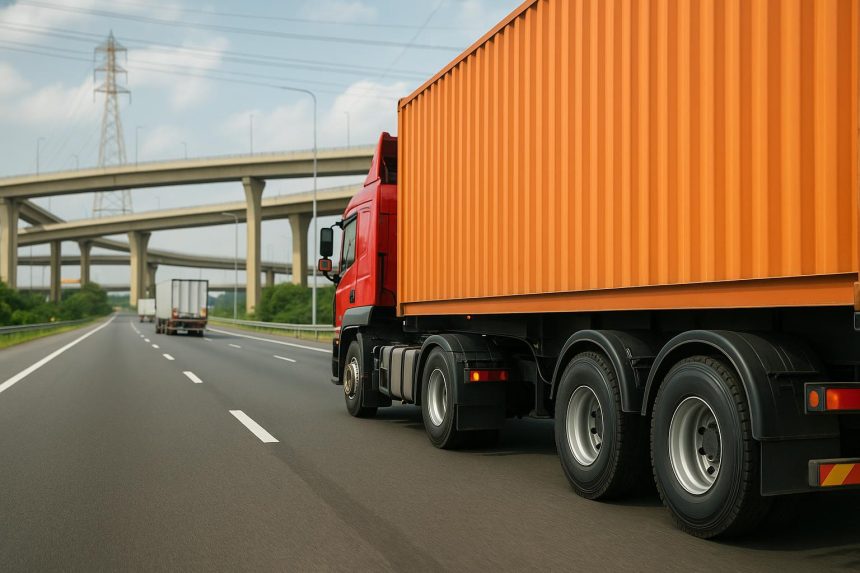
India’s roads have changed a lot in the last decade. And if you run a fleet, you already know this better than most people.
The highways are wider. The distances are longer. More goods are moving across more states than ever before. E-commerce and Quick commerce business had a significant force behind pushing freight volumes. And it went to an extent nobody thought of, not even five years ago.
Now you can see warehouses and dark stores popping up on city outskirts, last-mile delivery is getting squeezed for time, and trucks are simply running harder and longer to keep up.
But do you know the question that most logistics managers aren’t asking about? It’s this one: Are your truck tyres keeping up?
The Logistics Boom Is Real, And It’s Putting Pressure on Everything
Think about what a long-haul truck goes through in a single month. Varying road surfaces, overloading at loading points, summer heat that makes tarmac soft and sticky, and rain-soaked highways in the monsoon. A truck moving goods from, say, Ludhiana to Chennai isn’t just clocking distance. It’s battling conditions causes accelerated wear of low-quality rubber.
Bus and truck tyres in this environment aren’t just a maintenance item. They’re a business decision. A bad tyre choice doesn’t just mean a blowout. It means a delayed shipment, a stranded driver, a frustrated client, and repair costs that eat into already thin margins.
What Most Operators Actually Get Wrong
Many fleet managers continue to purchase truck tyres using a traditional mindset — prioritizing price first and Quality second, while considering critical performance factors such as mileage, fuel efficiency, retread ability, durability, and total cost of ownership.
That worked in a different era. On shorter routes, at lower speeds, with lighter loads. Today, it’s a recipe for constant tyre trouble.
The smarter operators I’ve spoken to are asking different questions now. They want to know about tyre performance under heat stress. They want data on tread life under mixed loads. And increasingly, they want fuel-efficient tyres, because fuel is still the single biggest operating cost for any fleet.
That last point is worth sitting with for a moment. A tyre that offers just 2-3 per cent better rolling resistance can significantly reduce fuel consumption across a fleet of 50 or 100 trucks. That’s not a small number over a year.
What’s Changed in Tyre Technology, And Why It Matters
Indian tyre manufacturers have come a long way in the last few years. The gap between imported and domestic tyres, especially in the truck segment, has closed considerably. Bias construction tyres, which remain popular in Indian conditions for their load-bearing capacity and durability on bad roads, have seen genuine engineering improvements in compound quality and carcass design.
Birla Tyres, for instance, has focused on building tyres specifically suited to Indian operating conditions. The bias construction approach isn’t outdated. On broken roads, unpaved sections, and overloaded routes, a well-engineered bias tyre often outperforms a radial in terms of sheer durability. That’s not marketing. That’s physics.
The evolution in tyre technology has also meant better heat dissipation, more consistent tread wear, and improved resistance to cuts and punctures. These things directly affect uptime, which is the metric that really matters to any serious fleet operator.
So, What Should You Actually Look For?
Keep it practical. Here’s what experienced operators check before committing to a tyre brand:
- Load rating vs. actual operating load: Don’t just match the minimum. Give yourself a buffer, because overloading happens.
- Heat performance: If your routes run through central India in summer, this should be non-negotiable.
- Tread pattern and compound: Not all tyre performance is equal. A tyre built for highway use will wear differently from one designed for mixed terrain.
- After-sales support: What does the dealer network look like? Can you get a replacement or repair in a remote district? For fleets, this matters enormously.
- Total cost, not just purchase price: A cheaper tyre that wears out within the range of 35000-40,000 km costs more than a slightly pricier one that runs for a range of 65000-70,000 km.
Supporting India’s Robust Logistics Industry
India’s logistics future is genuinely exciting. But it only works if the vehicles powering it are equipped for the challenge. Choosing the right bus and truck tyres isn’t glamorous work, but it’s foundational. Get that right, and everything else gets easier.
Birla Tyres is driving that change with robust bias truck tyres that empower fleets against challenges that are very much Indian. Would you choose Birla Tyres to build the foundation for a brighter future of the logistics industry?

Lynn Martelli is an editor at Readability. She received her MFA in Creative Writing from Antioch University and has worked as an editor for over 10 years. Lynn has edited a wide variety of books, including fiction, non-fiction, memoirs, and more. In her free time, Lynn enjoys reading, writing, and spending time with her family and friends.