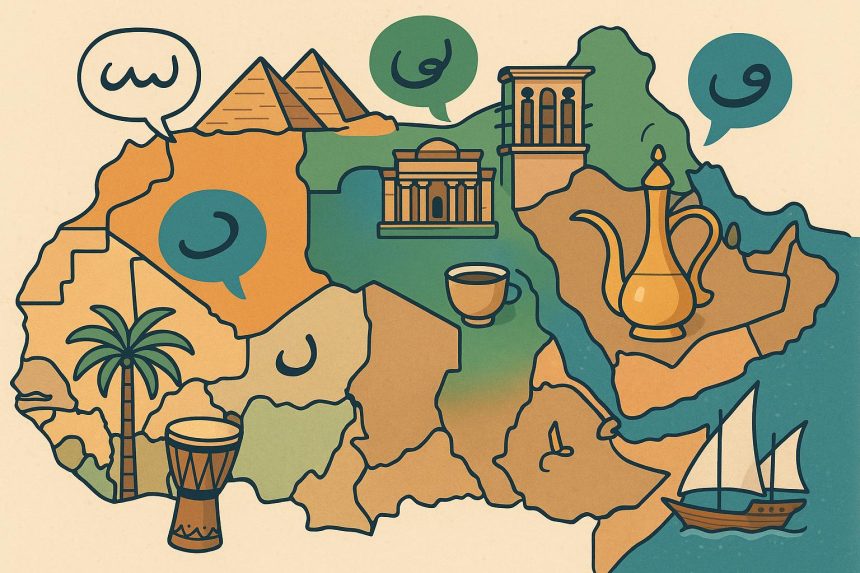
Arabic is one of the most widely spoken languages in the world, yet many people don’t realize just how diverse it truly is. When we talk about arabic dialects, we’re not simply referring to different accents or minor pronunciation variations. Instead, Arabic dialects represent a rich tapestry of distinct linguistic systems that have developed across the Middle East, North Africa, and parts of South Asia over centuries.
Each region has cultivated its own unique way of speaking, shaped by history, geography, culture, and human migration. Understanding these variations isn’t just a matter of academic interest. Whether you’re learning Arabic, traveling through the Arab world, or simply curious about language and culture, grasping the fundamentals of how arabic dialects differ can transform your entire experience.
This guide will help you navigate the fascinating world of Arabic dialects and discover what makes each region’s voice truly special.
The Difference Between Modern Standard Arabic and Regional Dialects
What is Modern Standard Arabic?
Modern Standard Arabic, often abbreviated as MSA or Fusha, is the formal, standardized version of the language. It’s used in official government communications, news broadcasts, literature, and formal education across the Arab world. Think of it as the “official” Arabic that transcends regional boundaries.
However, here’s what many people find surprising: very few Arabs speak MSA in their daily lives. Instead, they use their regional arabic dialects when talking with family, friends, and colleagues.
How Dialects Differ from Standard Arabic
The distinction between MSA and arabic dialects goes far beyond simple vocabulary differences. Dialects often feature different grammatical structures, pronunciation patterns, and even different ways of constructing sentences. Someone from Cairo might struggle to understand someone from Marrakech if both are speaking purely in their native dialects, even though they share the same written language.
This reality is crucial to understanding why arabic dialects matter so much in the Arab world and why learning the formal version alone might leave you unprepared for real-world conversations.
Arabic Dialects Across the Levant Region
The Levantine Arabic Family
The Levant, which includes Syria, Lebanon, Palestine, and Jordan, hosts what many consider one of the most widely understood Arabic dialects. Levantine Arabic has gained significant international recognition, partly due to popular Syrian and Lebanese films, TV shows, and music that have circulated throughout the Arab world. This dialect is known for its relatively melodic quality and its accessibility to speakers of other regional variations.
Unique Features of Levantine Speech
Levantine arabic dialects are characterized by distinctive phonetic features and vocabulary. For example, the dialect often softens certain consonants compared to MSA, and it has incorporated influences from Turkish, French, and other languages due to the region’s historical connections.
Native speakers of this dialect often find it easier to communicate across the Arab world because Levantine media and entertainment have made it familiar to millions of people who don’t necessarily speak it at home.
The Rich Tapestry of Maghrebi Dialects
Morocco, Algeria, and Tunisia
North Africa hosts some of the most distinct and challenging arabic dialects for learners to understand. Moroccan Arabic, known as Darija, Algerian Arabic, and Tunisian Arabic each have their own character. These dialects have been heavily influenced by Amazigh (Berber) languages, French colonialism, and unique historical developments that set them apart from eastern Arabic variations.
The Challenge of Understanding Maghrebi Variations
Someone who has learned Egyptian Arabic might find Moroccan quite difficult to follow initially. The phonetic systems are different, the vocabulary includes many indigenous terms, and the rhythm of speech varies considerably.
Yet for residents of these countries, their regional arabic dialects are sources of pride and identity. Understanding these variations is essential if you want to genuinely connect with people from North Africa or appreciate the region’s rich cultural expressions.
Egyptian Arabic and Its Widespread Influence
Why Egyptian Arabic Matters Globally
Egyptian Arabic holds a special place in the Arab world due to Egypt’s significant cultural influence. Cairo is often considered the entertainment capital of the Arab world, and Egyptian films, television shows, and music have shaped how millions of Arabs across different countries speak and understand their language. This means that Egyptian Arabic has become almost a lingua franca within certain circles, understood and even imitated by people throughout the region.
Characteristics of Egyptian Speech
Egyptian arabic dialects feature interesting phonetic patterns and have absorbed vocabulary from English, Italian, French, and Turkish due to Egypt’s position as a major hub of international commerce and culture. The dialect is known for its expressive nature and its use in comedy and entertainment, which has helped spread its influence far beyond Egypt’s borders.
If you spend time in Cairo or consume Egyptian media, you’ll quickly notice how this particular dialect differs from others you might encounter elsewhere.
The Gulf Dialects and Their Growing Influence
Understanding Gulf Arabic
The Arabian Gulf region, including Saudi Arabia, the UAE, Kuwait, and other Gulf states, has its own distinct group of arabic dialects. Gulf Arabic has gained increasing global prominence in recent years due to the region’s economic power and growing media presence. These dialects share certain similarities with each other but also have distinct local variations.
Modern Developments in Gulf Speech
Gulf arabic dialects have incorporated more English than many other Arabic variations, reflecting the region’s international business environment and the presence of expatriate communities. Additionally, younger generations in Gulf countries are creating new linguistic blends as they navigate between traditional dialects, MSA, and English. This dynamic evolution makes Gulf Arabic particularly interesting to linguists studying how languages change in response to globalization.
Sudan, Iraq, and Beyond
Less Widely Known But Equally Important Dialects
While not as globally recognized as Egyptian or Levantine Arabic, the dialects spoken in Sudan, Iraq, and other regions are equally fascinating and important to their communities. Sudanese Arabic, for instance, has unique features that reflect the country’s position as a bridge between the Arab world and sub-Saharan Africa. Iraqi Arabic carries influences from Mesopotamian history and has its own distinct phonetic and grammatical characteristics.
The Importance of Regional Recognition
Each region’s Arabic dialect serves as a marker of identity and cultural belonging. Learning about these less widely known variations helps us appreciate the full spectrum of how arabic dialects have evolved across different communities. It also demonstrates respect for the unique heritage and linguistic contributions of all Arab-speaking peoples, not just those whose dialects have achieved international prominence.
Practical Tips for Understanding Arabic Dialects
Start with Exposure and Patience
If you’re trying to understand different arabic dialects, the most effective approach is genuine exposure through media, conversations, and cultural engagement. Watch films and television shows from different regions, listen to podcasts, and if possible, spend time with native speakers. Your brain will naturally begin to recognize patterns and distinctions as you increase your exposure.
Build Your Foundation with MSA First
Most language learners benefit from establishing a solid foundation in Modern Standard Arabic before diving deep into specific dialects. This gives you the grammatical framework and vocabulary base that connects all dialects, making it easier to learn regional variations afterward.
Embrace the Learning Journey
Understanding arabic dialects requires patience and genuine curiosity. You won’t master them overnight, and that’s perfectly fine. Each dialect you learn will enrich your appreciation for Arabic language and culture. Many language enthusiasts find that learning dialects is actually more rewarding than learning formal Arabic because it connects you directly to how real people communicate in their daily lives.
Conclusion
The world of Arabic dialects is vast, complex, and genuinely fascinating. From the Levantine coasts to the Moroccan mountains, from Egyptian cities to Gulf metropolises, each region has developed a unique linguistic voice that reflects its history, culture, and people. Rather than viewing these variations as obstacles to learning Arabic, it’s far more enriching to see them as windows into the incredible diversity of the Arab world.
Whether you’re a student of language, a traveler, or simply someone interested in understanding how humans communicate across different cultures, appreciating these regional differences deepens your understanding of both language and humanity itself. The journey to decode the nuances of regional speech patterns is one that rewards curiosity, patience, and an open heart. Start exploring today, and you’ll discover that the Arab world’s linguistic landscape is as beautiful and varied as its people.

Lynn Martelli is an editor at Readability. She received her MFA in Creative Writing from Antioch University and has worked as an editor for over 10 years. Lynn has edited a wide variety of books, including fiction, non-fiction, memoirs, and more. In her free time, Lynn enjoys reading, writing, and spending time with her family and friends.