Chances are you don’t give much thought to your liver. But this is precisely the problem with it.
You spend all your time worrying about your heart’s health, weight management, or blood pressure while your liver does more than 500 things in a day without even you knowing it.
Your liver cleanses your blood, breaks down whatever you have eaten, stores your energy, produces protein, regulates cholesterol, and even helps boost your immune system to combat infections.
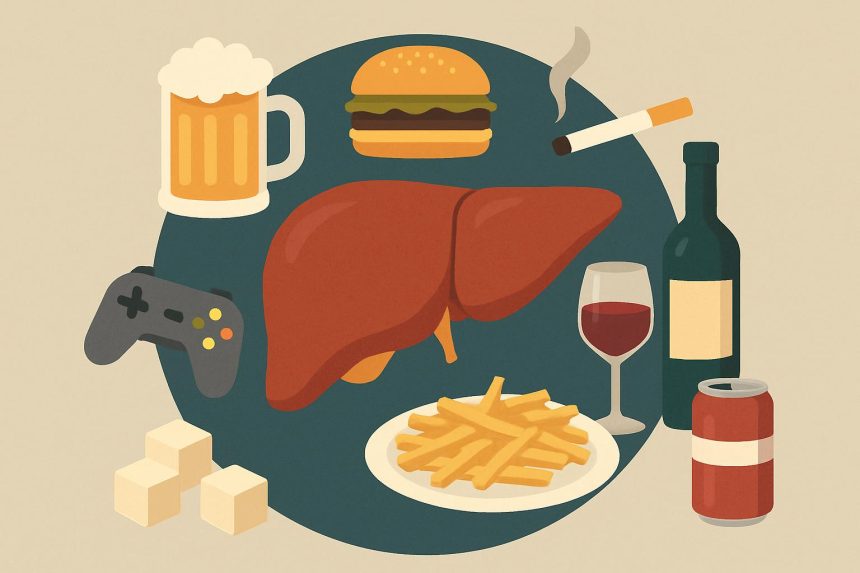
The danger associated with liver diseases lies in the fact that by the time you start feeling it, you’ve already inflicted a lot of damage to it. The following list of behaviors represents those which doctors consider dangerous for your liver, and the best part is, they can be easily reversed once you become aware of them.
1. Taking Liver Supplements
This one is going to surprise you. Many of the supplements sold specifically to “support” or “detox” your liver can actually damage it.
Before you reach for any liver supplement, you must first know what your liver is actually doing right now. Get a simple blood test done that measures your liver enzymes, then get it interpreted through something like an ast/alt de ritis ratio calculator. If your enzymes are at a good level, then your liver is working just right on its own. But if they are high, then you need to arrange an appointment with a hepatologist as soon as possible. DON’T go for any supplements yourself! DO NOT self-medicate with supplements!
And here’s why that’s important: your liver is essentially a self-cleaning system. It processes and removes waste on its own, without any outside help. When you add concentrated supplement doses on top of that, you’re giving your liver extra compounds to process rather than less to deal with. That’s the opposite of what you’re trying to achieve.
Turmeric and green tea supplements are two of the most commonly used products that can cause liver toxicity based on findings in JAMA Network Open in 2024. It is not because there is any problem with consuming these products through eating or drinking in normal food doses. There is no harm at all in consuming these products in food doses. But the issue is that these products cause problems when consumed in supplement doses. This happens because there is a much greater concentration of the compounds in supplements than in food. In addition, there can be variability in the effects of these supplements compared to medicines, since they are not regulated like medicines.
2. Sitting Too Much
The majority of people are unaware that your liver detests a sedentary lifestyle ten times more than your heart. Insufficient movement causes fat to build up in the liver.
The problem starts with that accumulation of fat because it triggers a series of events that can result in inflammation, scarring, and ultimately severe liver disease. The fact that you can have a large amount of fat in your liver without experiencing any symptoms at all is what makes this so annoying.
Liver fat is directly and quantifiably impacted by resistance training, particularly the type that increases muscle mass. Muscle gain is important for fat loss in the liver because it changes the hormonal process in your body. The subjects in a study published in the Journal Gut who have fatty liver disease and who went under resistance exercise training for eight weeks saw 13% reduction in liver fat without losing any body weight. Just the exercise accomplished that.
Cardio is also crucial. Even without significant weight loss, it has been demonstrated that 150 minutes a week of moderate aerobic activity—a vigorous 30-minute walk five days a week—can improve insulin resistance and reduce fatty liver. You are not required to run marathons. All you have to do is move regularly.
3. Giving Up Coffee
If you have cut down on the amount of coffee you drink because you think it’s bad for you, your liver would like to speak to you.
Coffee is actually one of the few things that you should consider taking if you want to protect your liver. Studies show that individuals who took three or more cups of coffee a day had less stiffened livers, which is a major sign of liver diseases. In another study, people who were at greater risks of developing fatty liver diseases but drank at least three to four cups of coffee a day had lower risks of developing the diseases.
It seems that the antioxidants in coffee have something to do with this. There are some components of coffee that trigger a reaction to remove damaged cells within the liver, and this is what the liver needs to do.
Even if you don’t enjoy caffeine in your drinks, you can still have decaffeinated coffee because studies have shown that decaffeinated coffee has similar benefits for your liver. The one important thing to remember, however, is that you should not use too much sugar.
4. Eating Too Much Sugar
Sugar, especially high-fructose corn syrup, which is present in the majority of sweetened beverages, packaged snacks, and processed desserts, is likely the most detrimental to your liver of all the foods you eat.
Your liver converts excess sugar to fat. Fat buildup leads to inflammation and, eventually, causes scars to form. This process takes time but once started, it will not stop.
A substantial amount of sugar-sweetened beverages increased risk of developing fatty liver disease by 40%, according to a meta-analysis. Another study, conducted on almost 100 thousand postmenopausal women, showed that those who consumed one sugar-sweetened drink per day were much more likely to die from liver diseases and get liver cancer than those who drank small amounts of such drinks. These are startling figures that strongly suggest reducing liquid sugar in particular.
5. Eating Ultra-Processed Foods
Fast foods, frozen foods, snacks, and meat products. All these foods have an extra amount of sugar, fats, and preservatives, which adds more load to the liver.
In a research conducted with nearly 174,000 participants over almost nine years, people who consumed the most amounts of ultraprocessed foods had a greater chance of developing fibrosis or cirrhosis of the liver. These are very serious illnesses, but not all understand how our diet influences their development.
The most popular diet for liver maintenance is the Mediterranean diet, which consists of vegetables, fruits, whole grains, legumes, olive oil, and fish or chicken. It doesn’t mean that you need to radically change your diet at once. It’s enough just to substitute one or two meals a week with your home cooking.
6. Ignoring Your Blood Sugar and Cholesterol Numbers
There is actually a very strong link between diabetes mellitus and liver problems that people may not readily see at first. The continuous presence of high glucose in the blood causes damage to many organs of the body, one of which is the liver. As the CDC pointed out, around 70% of those having type 2 diabetes are suffering from fatty liver disease. This means that aside from avoiding diabetes mellitus, it is also important to control one’s blood sugar to save one’s liver.
High level of low density lipoproteins is what causes fat in the liver. Therefore, it is important to control one’s cholesterol levels and maintain healthy amounts through proper diet, regular exercise and medication. It is vital to undergo blood tests from time to time in order to check on the health of one’s blood sugar and lipid levels.
7. Smoking
Smokers usually think about how it affects their lungs, but very few people talk about their liver. However, the multitude of toxic substances present in cigarettes has to go through your liver when entering the blood circulation system. This constant harm to liver cells can be great if you repeat this process every day throughout many years.
Also, smoking induces inflammation throughout the entire body, while one of the main reasons for liver cell damage and liver cancer is chronic inflammation. People who suffer from pre-existing liver conditions are even more prone to it because their liver is in bad condition and cannot withstand the additional chemical load.
This negative effect of smoking on the health of our liver is also shown by the increased risk of developing liver cancer in ex-smokers compared to non-smokers. But quitting at any moment of time reduces the load on the liver, and your body will heal.
Final Thoughts
Always remember: your liver is forgiving, perhaps more than you deserve, but only if you give it the chance.
If you’re managing your overall health and you use tools to calculate total daily energy expenditure as part of a fitness or weight goal, we’d strongly advise you incorporate regular liver health checks into that same routine. Bear in mind that excess body weight is one of the biggest drivers of fatty liver disease, so both goals naturally support each other.

Lynn Martelli is an editor at Readability. She received her MFA in Creative Writing from Antioch University and has worked as an editor for over 10 years. Lynn has edited a wide variety of books, including fiction, non-fiction, memoirs, and more. In her free time, Lynn enjoys reading, writing, and spending time with her family and friends.