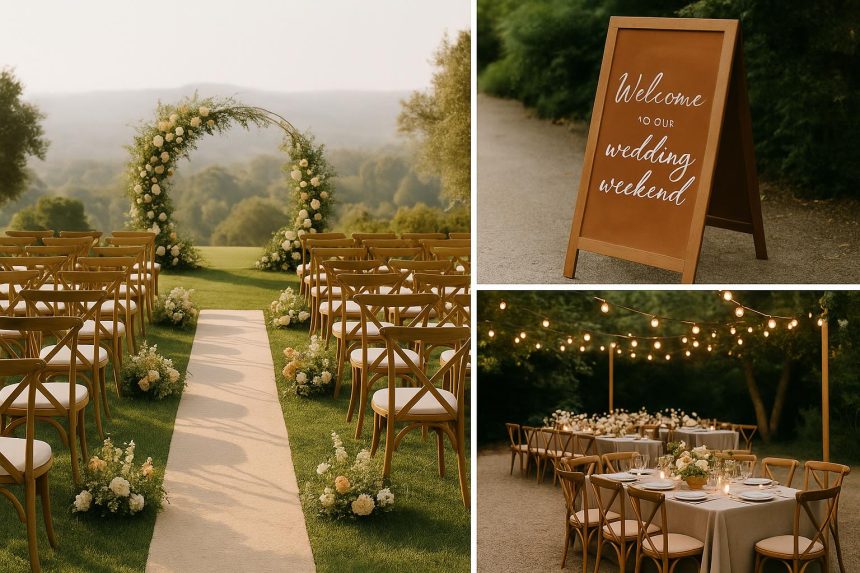
More couples are choosing weddings that unfold across two or three days rather than concentrating everything into one evening. The format opens up the celebration in real ways but adds planning dimensions most couples have not thought through.
The single-evening wedding has been the default format for so long that most couples plan their own day inside that template without questioning it. Recently, more couples have been pushing back on that framing. They want time to actually visit with guests who traveled in. They want a rehearsal dinner that does not feel like an afterthought. They want a morning-after brunch that gives the weekend a real ending rather than a tired airport rush. They want, in short, a wedding that breathes. The multi-day wedding weekend has become the format that delivers this, and it is changing what couples expect from venues that can host it well.
Why Couples Are Choosing the Weekend Format
Several pressures have pushed couples toward longer celebrations. Guests are traveling farther on average, which makes a single evening feel like a poor return on the travel investment. Family structures have grown more complex, with more sides to include and more conversations that simply cannot happen in the compressed timeline of a single reception. The wedding industry has matured to the point where good vendors can sustain a longer event without burning out, and venues that can host multi-day celebrations have become more available. The result is a format that feels generous to guests, less frantic for the couple, and more memorable for everyone involved.
The trade-off is planning complexity. A weekend wedding is not just a longer wedding. It is a different kind of event with its own logistical demands, financial structure, and design considerations. Couples who approach it as if it were just an expanded version of a single-day wedding tend to encounter friction throughout planning. Couples who approach it as a distinct format with its own logic tend to produce weekends that feel coherent and celebratory rather than diffuse and exhausting.
Shaping the Arc of the Weekend
A well-designed wedding weekend has an emotional arc the same way a single-day wedding does. Arrival energy on Friday evening. A welcome event that lets guests reconnect without competing with the main ceremony. The wedding day itself with its natural rhythm. A sendoff event that gives the weekend an ending. Each piece serves a different purpose and has a different tone, and the contrast between them is part of what makes the weekend feel like a real experience rather than just a stretched-out party.
The mistake to avoid is treating every event like the main reception. Variety in tone and format keeps the weekend interesting. A casual welcome dinner that feels different from the wedding reception. A morning-after brunch that feels like recovery rather than a third party. Smaller side activities for guests who want them and free time for those who do not. The weekend gives the couple room to differentiate, and using that room produces a more interesting experience than packing every hour with formal programming.
The Venue Capabilities That Actually Matter
Hosting a multi-day wedding requires venue capabilities that single-day venues do not always offer. Multiple event spaces of different scales for the different parts of the weekend. On-site or nearby accommodations so guests are not commuting between events. Outdoor and indoor options to handle weather across multiple days. Catering capacity that can shift between formal and casual modes without missing a beat. Staff who can sustain the operational demands of a multi-day event without quality degradation in the later events.
- A separate space for the welcome event that does not require flipping the main reception space twice
- Lodging for the couple, the wedding party, and the immediate families on-site or close enough to avoid commute logistics
- Outdoor areas suitable for casual events like cocktail receptions or yard activities during daylight hours
- Kitchen capacity to serve different meal formats across the weekend without requiring multiple caterers
- Storage for decor, gifts, and personal items that need a home across multiple days
The Guest Experience Across Multiple Days
Guests at a weekend wedding need attention that single-evening guests do not require. They are essentially houseguests for two or three days, and the couple has implicit responsibility for their experience throughout that time. Welcome bags help. Clear communication about each event’s tone and dress code helps more. Local information for guests with free time matters. Transportation between events, especially when alcohol is involved, becomes a real logistical question rather than a single end-of-night taxi line. The couple cannot personally host every guest across every event, so good weekend weddings often designate roles. A trusted friend greets late arrivals. Someone tracks dietary needs. The planner or venue staff handle escalations so the couple does not become the operational manager of their own wedding.
Budget Architecture Looks Different
Multi-day weddings cost more than single-day weddings, but not always as much more as couples initially expect. The extra cost concentrates in specific categories. Additional food and beverage across multiple events. Additional staffing hours. Sometimes additional rentals or design elements. The savings often come from places couples do not initially anticipate. Lower per-event pressure means simpler designs work. The Friday welcome event and Sunday brunch absorb a portion of the social load that often gets paid for in over-elaborate single receptions.
Couples who budget the weekend as one integrated event, rather than three separate events stacked together, produce more financially coherent plans. The catering team can plan menus across all three events rather than treating each as a separate negotiation. The rental order combines what is needed across days. The staffing plan covers the entire weekend. This integrated approach typically produces better pricing and better execution than treating each event as an isolated transaction.
Choosing a Venue That Can Hold the Weekend
Not every wedding venue can deliver a coherent weekend experience, even when they technically can host events across multiple days. The capability to deliver the full weekend smoothly comes from venues that have done it many times, have refined their operational rhythm for multi-day events, and have built the staff culture to sustain quality across the full schedule. Asking specifically about previous weekend weddings, and asking to talk to couples who have used the venue for multi-day events, reveals which venues are truly equipped versus which are stretching to accommodate the request.
Couples evaluating a wedding venue specifically for a weekend wedding should look beyond the photos of the main event space to the operational depth that supports a multi-day celebration. The venue that hosts beautiful single evenings is not necessarily the venue that delivers a great weekend. The combination of physical capability, operational experience, and staff culture is what produces the weekends that guests remember years later.
What a Good Weekend Actually Feels Like
The best weekend weddings have a particular feel to them. Guests who arrive as strangers leave knowing each other. Family members who have not seen each other in years actually have time to talk. The couple gets to be present with people they care about rather than working a reception line. The wedding itself, when it arrives on Saturday, sits inside a larger experience that gives it context and meaning. At Le Pavillon, by Sunday brunch, the weekend feels complete rather than truncated. This is the experience that pulls couples toward the weekend format, and it is well within reach for any couple willing to plan for it deliberately.
FAQs
Q1: Are multi-day weddings really worth the extra planning?
Yes. Multi-day weddings let guests reconnect properly, give families real time together, and let the couple actually enjoy their wedding rather than running a single packed evening.
Q2: How much more does a weekend wedding cost than a single-day wedding?
It costs more, but less than couples expect. Extra costs concentrate in food, beverage, and staffing. Integrated planning across all events often produces better pricing than three separate events stacked together.
Q3: Do guests stay the whole weekend?
Most do, especially out-of-town guests. Local guests often attend only the main wedding day. Welcome events and Sunday brunches usually see seventy to ninety percent attendance.
Q4: Can any wedding venue host a multi-day wedding?
No. Hosting a coherent weekend requires multiple event spaces, on-site or nearby lodging, kitchen capacity for varied meal formats, and staff trained to sustain quality across multiple days.
Q5: When should we book a venue for a weekend wedding?
Twelve to eighteen months ahead is standard. Multi-day-capable venues book up faster than single-day venues because there are fewer of them and weekend dates have only one couple per weekend.

Lynn Martelli is an editor at Readability. She received her MFA in Creative Writing from Antioch University and has worked as an editor for over 10 years. Lynn has edited a wide variety of books, including fiction, non-fiction, memoirs, and more. In her free time, Lynn enjoys reading, writing, and spending time with her family and friends.