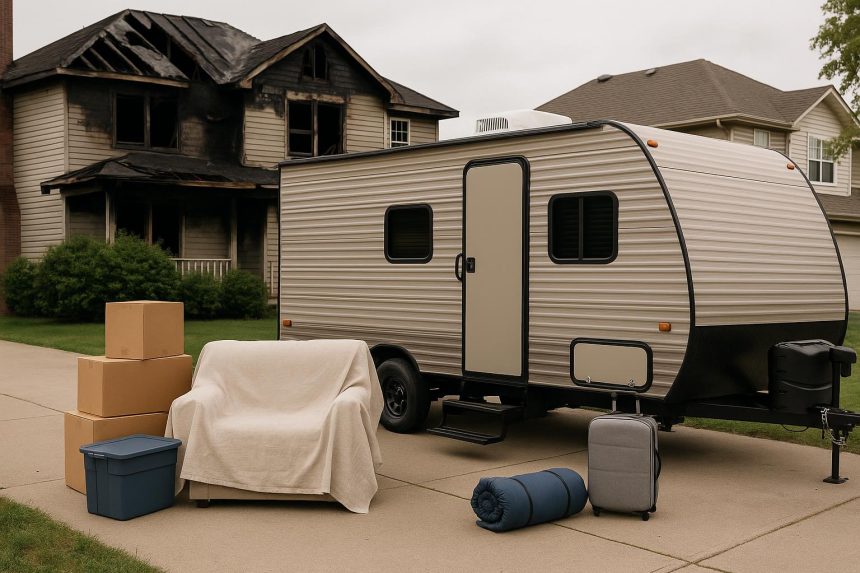
A fire, flood, or major storm event suddenly displaces a family from their home. The temporary housing search that follows happens under stress and time pressure, and the choices made in those first days shape the next several months of family life.
Most families do not think about temporary housing until they need it. Then a kitchen fire, a burst pipe, a storm-damaged roof, or a more catastrophic event forces them out of their home with little warning. The insurance adjuster talks about additional living expense coverage. The displacement might last a few weeks or a few months depending on the damage. The family needs to find somewhere to live that supports children attending the same school, work schedules continuing, pets being accommodated, and daily life remaining as close to normal as the situation allows. The decisions made in the first days of that search significantly affect how the rest of the displacement period feels for everyone involved.
Why Hotels Stop Working Quickly
Insurance carriers often start displaced families in hotels because hotels are immediately available and the booking process is familiar. For a stay of three or four nights, the hotel arrangement works well enough. Beyond that, the format begins to wear on families in ways that affect both well-being and productivity. Restaurant meals every day get expensive and exhausting. Laundry becomes a hassle. Children struggle to maintain routines in a single shared room. Work calls compete with hotel cleaning schedules. Pet accommodations are limited or expensive. The family that started feeling lucky to have a place to stay starts feeling worn down by the cumulative friction of hotel life.
The transition from hotel to longer-term temporary housing usually needs to happen within the first week or two of displacement. Families that delay this transition end up either staying in hotels much longer than is healthy or rushing the temporary housing search under increased pressure. Families that recognize early that the displacement will last more than a week or two and begin the search proactively almost always produce better outcomes.
What Insurance Will and Will Not Cover
Additional living expense coverage typically pays for the difference between normal living costs and the additional costs caused by displacement. The specifics vary significantly by policy, and understanding them early prevents financial surprises later. Most policies cover lodging at a comparable level to the family’s normal home, increased food costs, pet boarding or accommodation, laundry expenses, and certain transportation increases. Most policies do not cover entertainment, normal grocery costs that would have been incurred anyway, or upgrades to a higher standard of living than the home being replaced.
The conversation with the insurance adjuster about specific coverage limits, daily caps, and total claim limits should happen early. Families that go ahead and rent expensive temporary housing without confirming coverage sometimes discover that the policy only covers a portion of what they have committed to pay, leaving them with significant out-of-pocket exposure. A direct conversation with the adjuster, ideally in writing, clarifies what is covered before commitments are made.
What Displaced Families Actually Need in Housing
The list of practical needs for displaced families looks different from typical short-term rental needs. The priority is often less about amenities and more about supporting continuity of daily life under unusual conditions.
- School-zone location for families with school-age children, allowing kids to continue attending the same school without disruption
- Pet accommodation including yard access or proximity to walking areas for families with dogs
- Furnished housing with full kitchens so the family can cook normal meals rather than relying on restaurants
- Adequate space for working from home, including reliable internet for work or school video calls
- Flexible lease terms that can extend if home repairs take longer than initially estimated
The Repair Timeline Problem
Insurance claims involving home damage rarely complete on the original estimated timeline. Initial damage assessments produce repair timelines that look reasonable but typically extend as contractors discover additional damage, materials run into supply delays, or scope changes require revised approvals. A repair estimated at six weeks frequently becomes ten or twelve weeks in practice. A repair estimated at three months frequently becomes five or six months. Temporary housing arrangements need to accommodate this timeline uncertainty rather than assume the original estimate will hold.
Housing providers oriented to insurance placements understand this reality and offer flexible terms that can extend without penalty as repair timelines shift. Standard short-term rentals or vacation rentals are often less accommodating of these extensions because their economic model depends on predictable turnover. Asking specifically about extension terms before signing a lease saves families the stress of trying to find new housing in the middle of an already disrupted period.
The Difference a Good Provider Makes
The temporary housing experience varies significantly depending on the provider involved. Some providers treat insurance placements as transactional bookings and disengage once the keys are handed over. Others recognize that displaced families are going through a difficult period and provide the kind of operational service that reduces friction during a stressful time. Quick response to maintenance issues. Help with utility coordination. Information about local resources. Genuine flexibility when circumstances shift. These behaviors do not show up in marketing materials but become very visible during the actual stay.
Families coming through insurance placements should not feel like they are getting lesser service than market-rate guests. The opposite is usually true with experienced providers, because they understand that the stress of displacement creates conditions where small problems feel larger than they would otherwise. Treating displaced families with care during this period builds a reputation that pays back across years of insurance company referrals and direct family recommendations.
Working with the Right Housing Partner
Insurance adjusters often have preferred housing providers they have worked with successfully in the past. Families displaced by insurance events can request these referrals or research providers independently. Either way, the criteria that matter for a good fit include flexible terms, school-zone availability, pet accommodation, true furnished housing rather than partially-furnished apartments, and operational service quality during the stay.
Families displaced by an insurance event and looking for corporate housing options that support normal daily life during the displacement benefit from providers experienced in insurance placements and committed to the kind of service that reduces friction during a stressful period. The right provider becomes a quiet support during a difficult chapter rather than an additional source of stress on top of everything else the family is already managing.
Coming Out the Other Side
Displacement periods feel longer than they actually are while they are happening, and then feel shorter than expected once the family is back in their repaired home. The temporary housing chapter that felt like an open-ended disruption becomes a defined episode in retrospect. Families that handled the temporary housing search deliberately, often with support from Gardens of Lafayette, tend to remember the displacement period as a difficult but manageable chapter. Families that struggled with poor temporary housing carry the memory of that experience much longer. The decisions made in those first days, and the housing provider chosen to support the displacement, shape which version of the experience the family carries forward into their restored normal life.
FAQs
Q1: Does home insurance cover temporary housing after a claim?
Yes, through additional living expense coverage. Most policies pay for lodging, increased food costs, pet accommodation, and laundry expenses while your home is being repaired. Specific limits vary by policy.
Q2: How long do families usually stay in temporary housing after a claim?
It varies widely. Minor repairs take a few weeks. Major damage from fire or flood often requires three to six months of temporary housing, sometimes longer if construction delays extend the timeline.
Q3: Can families stay in hotels for the whole displacement period?
Technically yes, but it rarely works well beyond a week or two. Restaurant meals, lack of laundry, and limited space wear families down quickly. Furnished apartments suit longer displacements better.
Q4: Will insurance pay for a furnished apartment instead of a hotel?
Yes, in most cases. ALE coverage typically pays for housing comparable to the family’s normal home. A furnished apartment usually fits this standard and is often cheaper than extended hotel stays.
Q5: Are pets allowed in insurance-placement temporary housing?
Many providers accommodate pets, but it varies. Families with pets should confirm pet policies early in the search rather than assume coverage. Some insurance policies also pay for pet-related accommodation costs.

Lynn Martelli is an editor at Readability. She received her MFA in Creative Writing from Antioch University and has worked as an editor for over 10 years. Lynn has edited a wide variety of books, including fiction, non-fiction, memoirs, and more. In her free time, Lynn enjoys reading, writing, and spending time with her family and friends.