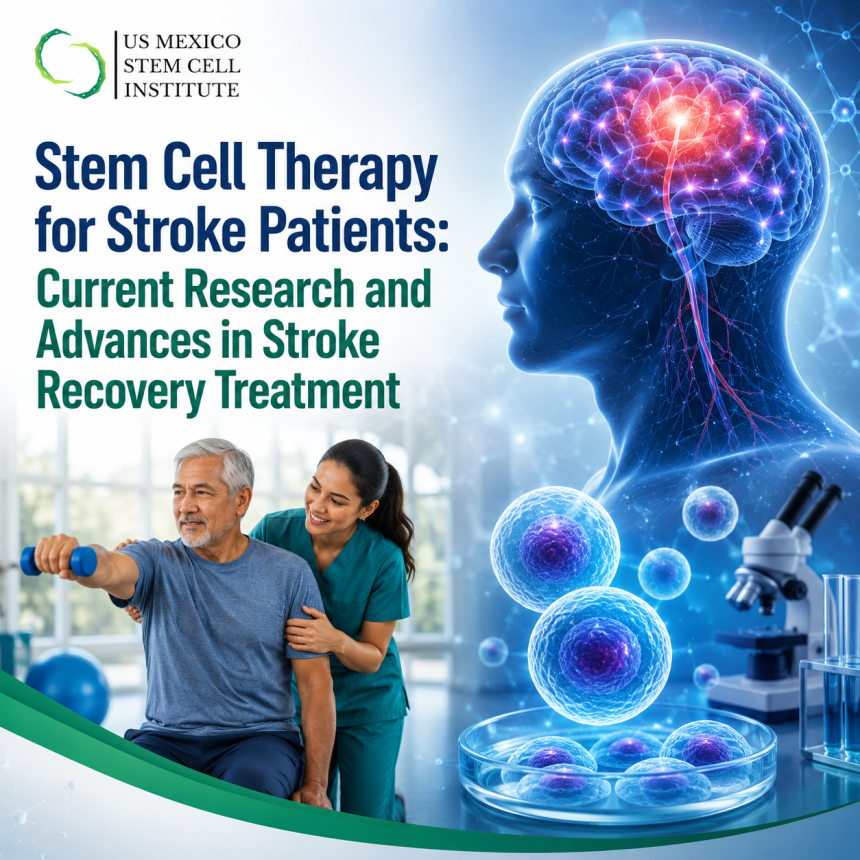
Stroke remains one of the leading causes of long-term disability worldwide, affecting millions of people every year. Even after emergency care saves a patient’s life, recovery often involves months or years of rehabilitation to regain movement, speech, memory, and independence. While conventional stroke recovery treatment remains the standard of care, researchers are investigating whether regenerative medicine may further support the brain’s natural healing processes.
One of the most promising areas of investigation is stem cell therapy for stroke patients. Although this field continues to evolve, growing scientific evidence suggests that mesenchymal stem cells may help create a biological environment that supports recovery when combined with comprehensive rehabilitation. Understanding what current research shows—and where questions still remain—can help patients make informed decisions.
Understanding Stroke and the Challenges of Stroke Recovery Treatment
A stroke occurs when blood flow to part of the brain is interrupted by either a blocked artery (ischemic stroke) or a ruptured blood vessel (hemorrhagic stroke). Without oxygen and nutrients, brain cells begin to die within minutes, often resulting in lasting neurological impairment.
Unlike many tissues in the body, the brain has only a limited ability to regenerate damaged nerve cells. Instead, recovery depends largely on neuroplasticity, the brain’s remarkable ability to reorganize existing neural pathways and develop new connections. Physical therapy, occupational therapy, speech therapy, and other rehabilitation programs are designed to encourage this process and remain the cornerstone of effective stroke recovery treatment.
Researchers are now studying whether regenerative medicine may enhance this healing environment and potentially improve functional recovery alongside established rehabilitation.
How Stem Cell Therapy for Stroke Patients May Support Recovery
Current evidence indicates that mesenchymal stem cells do not simply replace damaged brain tissue. Instead, they appear to influence several biological processes that may support recovery, including:
- Modulating inflammatory responses after stroke.
- Releasing growth factors that encourage tissue repair.
- Supporting the development of healthy blood vessels.
- Promoting neuroplasticity by creating a more favorable healing environment.
These mechanisms explain why stem cell therapy for stroke patients continues to receive significant scientific attention. Importantly, researchers emphasize that regenerative medicine is being investigated as a complementary approach—not a replacement—for conventional stroke recovery treatment and physician-directed rehabilitation.
What Stem Cell Therapy for Stroke Clinical Trials Reveal
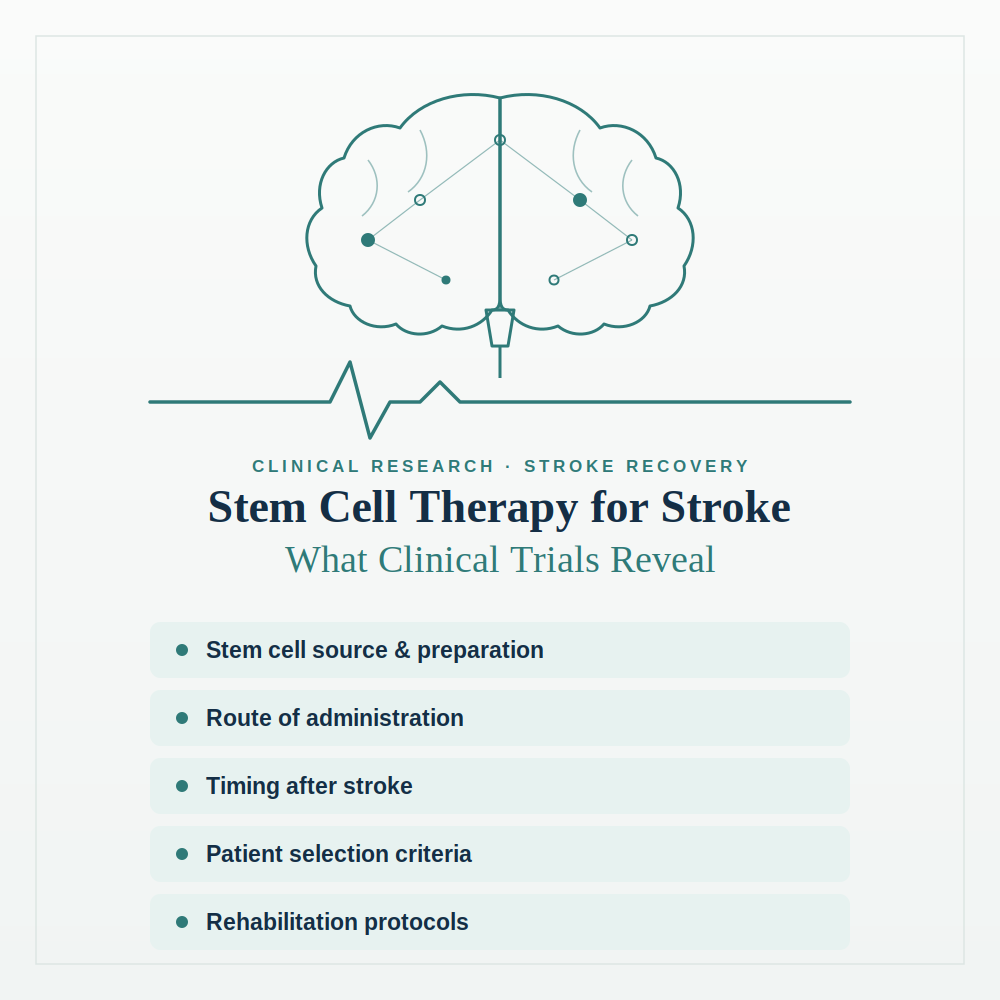
Interest in stem cell therapy for stroke clinical trials has grown considerably over the past decade. Early clinical studies have generally demonstrated encouraging safety profiles while evaluating improvements in mobility, motor function, and quality of life.
Some participants have experienced measurable functional gains, particularly when regenerative therapies were combined with structured rehabilitation programs. However, results have not been uniform because studies differ in several important areas:
- Stem cell source and preparation
- Route of administration
- Timing after stroke
- Patient selection criteria
- Rehabilitation protocols
Larger randomized clinical trials are still needed to determine which patients are most likely to benefit, establish standardized treatment protocols, and better understand long-term outcomes. For now, experts recommend interpreting current findings with cautious optimism while recognizing that research continues to evolve.
Factors That Influence Stroke Recovery
Every stroke survivor has a unique recovery journey. The effectiveness of any stroke recovery treatment depends on several factors, including:
- The type and severity of the stroke.
- The area of the brain affected.
- How quickly emergency medical care was received.
- Overall health and age.
- Consistency with rehabilitation therapy.
- Individual response to medical and regenerative treatments.
Because no two patients are alike, personalized evaluation remains essential when considering any emerging therapy.
Myth vs. Fact
Myth: Stem cell therapy immediately replaces brain cells damaged by a stroke.
Fact: Current evidence suggests that mesenchymal stem cells primarily support recovery by influencing inflammation, tissue repair, blood vessel formation, and neuroplasticity rather than instantly regenerating lost brain tissue.
Why an Evidence-Based Treatment Approach Matters
As regenerative medicine continues to advance, choosing a provider that prioritizes scientific evidence, patient safety, and individualized treatment planning is essential.
At US Mexico Stem Cell Institute, we complement conventional rehabilitation with fresh mesenchymal stem cell therapy using Zero Cryopreservatives, extensive infectious and genetic screening, COFEPRIS-aligned safety oversight, and physician-led treatment protocols tailored to each patient’s condition. Patients interested in learning more about stem cell treatment for stroke recovery can explore our comprehensive guide to better understand candidacy, treatment planning, and how regenerative medicine may complement a personalized recovery strategy.
Frequently Asked Questions
Is stem cell therapy approved as a standard stroke treatment?
No. Emergency medical care and rehabilitation remain the standard of care. Stem cell therapy continues to be investigated through ongoing clinical research.
Can stem cell therapy replace rehabilitation?
No. Current evidence indicates that regenerative medicine should be considered as a potential complement to rehabilitation—not a substitute for it.
Who may be eligible for stem cell therapy?
Eligibility depends on medical history, stroke severity, overall health, and physician evaluation. Every treatment plan should be individualized.
Are stem cell therapies still being studied?
Yes. Stem cell therapy for stroke clinical trials continues to evaluate safety, effectiveness, patient selection, and long-term outcomes.
How long does stroke recovery take?
Recovery varies from person to person. Many patients improve over months or years through consistent rehabilitation and ongoing medical care.
The Future of Stroke Recovery Treatment
The future of stem cell treatment for stroke is likely to combine advances in rehabilitation, precision medicine, and regenerative therapies. Researchers continue exploring improved cell preparation methods, personalized treatment strategies, and combination approaches that may further enhance functional recovery.
While additional large-scale clinical trials are still needed, current evidence suggests regenerative medicine may become an increasingly valuable component of comprehensive stroke care for appropriately selected patients. As the science continues to evolve, staying informed and working with experienced medical professionals remains the best way to evaluate emerging treatment options based on evidence rather than expectations.

Lynn Martelli is an editor at Readability. She received her MFA in Creative Writing from Antioch University and has worked as an editor for over 10 years. Lynn has edited a wide variety of books, including fiction, non-fiction, memoirs, and more. In her free time, Lynn enjoys reading, writing, and spending time with her family and friends.