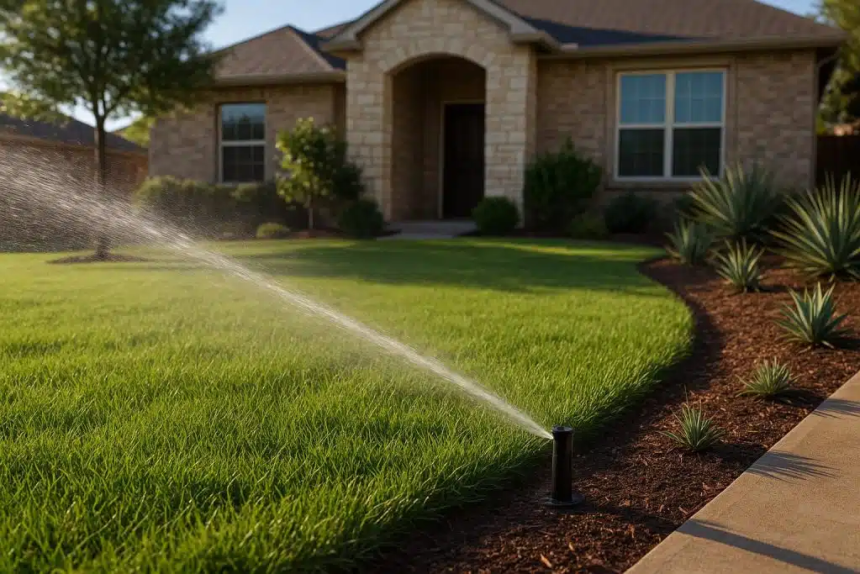
Keeping a healthy lawn in Austin comes down to the right irrigation, sensible watering habits, and care matched to the Central Texas climate. The area’s hot summers and periodic drought restrictions make an efficient system and a smart routine more important here than in cooler, wetter regions.
Why does irrigation matter in Austin?
Irrigation matters in Austin because summers are long and hot, and rainfall is inconsistent. A reliable system delivers consistent water when nature does not, keeping a lawn alive through stretches of heat.
Hand-watering rarely provides even coverage, and it is easy to overwater or underwater. A well-designed system waters efficiently, which protects both your lawn and your water bill.
What types of irrigation systems are common?
Common systems include in-ground sprinklers with spray or rotor heads, drip irrigation for beds, and smart controllers that adjust to weather. Each suits different parts of a yard.
Spray and rotor heads cover turf, while drip lines target shrubs and gardens without waste. Pairing the right method to each zone is the foundation of an efficient system.
How much water does an Austin lawn need?
Most Central Texas lawns need roughly an inch of water per week, including rainfall, though this varies by grass type and season. Overwatering is a common and costly mistake.
Deep, infrequent watering encourages stronger roots than frequent shallow watering. The EPA’s WaterSense program offers guidance on watering efficiently and choosing water-saving equipment.
When should you water your lawn?
Water early in the morning, before the heat of the day, to reduce evaporation and give grass time to dry. Watering at night can invite fungus and disease.
Austin also has watering schedules and restrictions that residents must follow, especially during drought. Knowing and following local rules keeps you compliant and conserves water.
What are signs of an irrigation problem?
Signs of a problem include dry or brown patches, pooling water, unusually high water bills, and heads that spray sidewalks instead of grass. These point to leaks, clogs, or misaligned heads.
Catching these issues early prevents wasted water and lawn damage. A quick seasonal inspection often reveals small problems before they grow.
How does grass type affect care?
Grass type affects care because Central Texas lawns are often St. Augustine, Bermuda, or Zoysia, each with different water and mowing needs. Matching care to your grass keeps it healthy.
Texas A&M’s AgriLife Extension publishes research-based guidance on turfgrass selection and care for the region. Knowing your grass type is the first step to a routine that works.
What seasonal care does a lawn need?
Seasonal care includes adjusting watering, mowing at the right height, fertilizing at the right times, and managing weeds and pests as conditions change. A lawn’s needs shift through the year.
In the heat of summer, lawns need more water and higher mowing heights, while cooler months call for less. Adjusting the routine with the seasons keeps a lawn resilient.
Should you handle lawn care yourself or hire a pro?
You can handle basic care yourself, but irrigation installation, repairs, and system tuning often benefit from a professional. Efficiency and even coverage are hard to achieve without experience.
A professional can design a system, fix leaks, and optimize watering to save water and money. For ongoing results, many homeowners combine their own mowing with professional irrigation support.
How does soil affect your lawn?
Central Texas soils range from thin, rocky ground to heavy clay, and soil type affects drainage, watering, and which grasses thrive. Knowing your soil helps you water and feed correctly.
Clay holds water and drains slowly, while rocky soil dries fast, so the same schedule will not suit both. A soil test removes the guesswork and can prevent overwatering and nutrient problems.
What are common watering mistakes?
Common mistakes include watering too often for short periods, watering at night, and running a system during or after rain. Each wastes water and can harm the lawn.
Frequent shallow watering encourages weak roots, while nighttime watering invites fungus. A smart controller and a weather-aware schedule prevent most of these errors.

Lynn Martelli is an editor at Readability. She received her MFA in Creative Writing from Antioch University and has worked as an editor for over 10 years. Lynn has edited a wide variety of books, including fiction, non-fiction, memoirs, and more. In her free time, Lynn enjoys reading, writing, and spending time with her family and friends.