


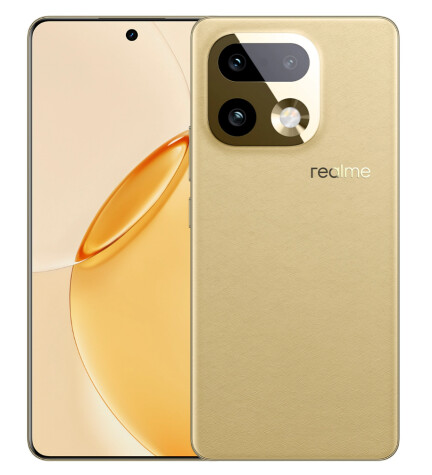
What does R$4,000 look like in Brazil?
Prices vary. The realme line reached Brazil through the brand’s official store on Mercado Livre, and the 16 Pro+ was priced at R 4,499, dropping to R
 500 coupon was applied and PIX was chosen as the payment method. Coupons can change without warning, so those numbers are snapshots, and the current price is worth checking before buying.
What makes a portrait look good before software gets involved?
Proportions first. Skin tone second. Separation from the background third. Blur comes after those. A face stretched by a lens held too close stays stretched, no matter how creamy the background behind it.
Skin tone deserves extra attention in a country with a range of complexions as wide as Brazil’s. Colour tuning can render different complexions differently, and a spec sheet cannot predict how, so sample shots on real faces matter.
Why does focal length matter for faces?
A wide lens held close inflates the nose and forehead, shrinks the ears and drags a lot of background into the picture. A longer lens used from farther back calms those proportions and pulls the background closer. Perspective depends on the distance between camera and subject, and a useful telephoto trick is letting the photographer stand back while the face still fills the frame.
No focal length wins every scene. A person standing in front of a building wants width, and a face wants something tighter. Distance adds a practical bonus too: a subject one or two metres away is easier to direct and feels less crowded.
What does the 200MP sensor contribute to portraits?
A solid base, though not for the reason printed on the box. The main camera is a Samsung HP5 at 1/1.56 inches with an f/1.8 lens, an 84° field of view and 2-axis stabilisation. Size, aperture and stabilisation matter more for faces in dim rooms than the pixel count does. Neighbouring pixels merge into larger effective ones in normal shooting, and full resolution waits for moments when texture counts.
Cropping room is where the count pays off. 1x and 2x are both listed as lossless, with 2x cropped from the middle of the sensor, giving a looser portrait frame without leaving the main lens. Group portraits at 1x get HyperRAW and anti-distortion processing aimed at the stretched faces that creep in near the frame edges.
What does the 3.5x telephoto change?
Head-and-shoulders framing, mainly. The telephoto is a separate 50MP camera at f/2.8 with 2-axis stabilisation and a 30° field of view, compared with 84° on the main lens. Brazilian coverage describes it as a dedicated lens for zoom up to 3.5x, alongside the 200MP main camera. The face fills the frame from a comfortable distance, features stay in calmer proportion, and the background compresses, which suits graduation photos and travel portraits.
Optical telephoto and digital enlargement differ in what gets recorded. Glass built for a narrow view captures that view at full quality, while enlarging a finished image stretches pixels that were never there. Eyes and hair edges expose the gap within seconds.
A note on aperture: f/2.8 gathers less light than f/1.8. Indoors after dark, the main camera at 1x or 2x often beats the telephoto despite looser framing.
How much work do ProDepth and LumaColor do?
ProDepth is the bokeh algorithm paired with both lenses, and realme bundles the main camera and telephoto under the FullFocal label for portraits at different distances. Software blur often struggles with loose hair, glasses frames, and earrings, and a longer lens leaves the algorithm less to fix, since the background is already softer before any processing begins.
LumaColor handles skin tone, light and shadow, and the balance between person and background. Test shots on real faces, in everyday lighting, beat any description. Vibe Master mode adds 21 colour styles.
What about longer distances?
Past 3.5x, the 7x step appears among the focal lengths listed for 4K HDR video (1x, 2x, 3.5x, 7x). The 10x “Wow Long-zoom Portrait” mode reaches beyond the telephoto’s native range, so softer detail than at 3.5x is a fair expectation. A 120x super zoom is listed as well, for occasional use.
Video follows the same ladder. Brazilian reporting confirms 4K recording at 60 frames per second on the main, telephoto and front cameras of the 16 Pro+.
How does the sibling compare?
The realme 16 Pro 5G keeps a 200MP main camera and an 8MP ultra-wide at 112°, yet lists no telephoto and tops out at 4K 30fps on the rear, so portraits from a distance there depend on cropping the main sensor. For portraits from a distance, the telephoto is the main reason to choose the Pro+.
What to test before paying
Photograph one person at 1x, 2x and 3.5x in identical light, then again indoors. Compare skin tone between lenses, then ears, nose and hair edges. Add a group shot with faces in the corners. The 8MP ultra-wide, 115.5° with autofocus, adds a wide view for scenes the main camera cannot fit.
Seller matters too. The official store on the marketplace is a different proposition from an unknown reseller, and the coupon that makes the price attractive may apply to one and not the other.
Why the realme 16 Pro+ 5G is worth considering around R$4,000
For buyers in Brazil who want a 200MP main camera and a dedicated 3.5x telephoto around R 3,999 against a suggested price of R$4,499. It suits people who photograph friends, family, travel and events.
FAQ
Is it safer to buy the realme 16 Pro+ 5G from the official store?
The official store on the marketplace is a different proposition from an unknown reseller, and the coupon that makes the price attractive may apply to one and not the other, so check who sells the phone and the current price before paying.
Does the realme 16 Pro+ 5G record 4K at 60fps on more than one camera?
Yes. Brazilian reporting confirms 4K recording at 60 frames per second on the main, telephoto and front cameras, with 4K HDR listed at 1x, 2x, 3.5x and 7x.
How can I check skin tone rendering before buying?
Photograph the same person at 1x, 2x and 3.5x in identical light, then again indoors, and compare skin tone between lenses, along with ears, nose and hair edges.

Lynn Martelli is an editor at Readability. She received her MFA in Creative Writing from Antioch University and has worked as an editor for over 10 years. Lynn has edited a wide variety of books, including fiction, non-fiction, memoirs, and more. In her free time, Lynn enjoys reading, writing, and spending time with her family and friends.