


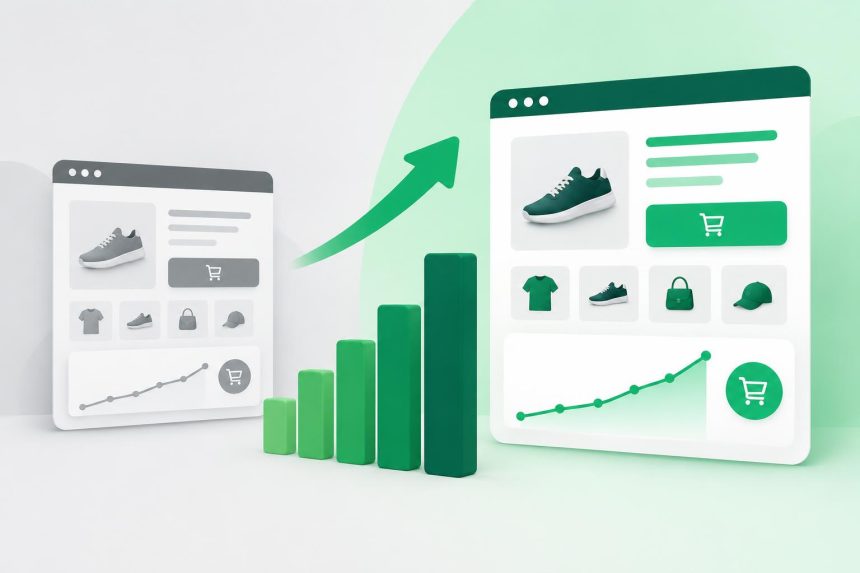
Neat Apparel had a product that solved a problem many people could relate to: visible sweat stains on clothing. Its Sweat Defender shirts offered a practical solution, but having a good product wasn’t enough to keep the business growing. Sales were declining, and the company’s Shopify store was struggling to turn visitors into customers.
When GrowthHit took over the business, the store was converting just 0.6% of its visitors. What followed was an 18-month turnaround that changed the company’s revenue, customer experience, and approach to ecommerce growth.
The Challenge: A Good Product Wasn’t Translating Into Sales
Neat Apparel sells shirts designed to hide visible sweat marks. Its Sweat Defender technology addressed a problem that many customers could relate to, particularly those who wanted to stay comfortable and confident during workdays, travel, and social occasions.
But the original Shopify store struggled to communicate that difference.
Visitors could land on the website without immediately understanding why Neat’s shirts were different from ordinary apparel. The brand lacked a clear value proposition, product messaging wasn’t doing enough to explain the benefits, and the shopping experience wasn’t giving unfamiliar visitors sufficient reasons to purchase.
The advertising wasn’t producing the results the business needed either.
GrowthHit saw a brand with a viable product but an underdeveloped ecommerce growth system. Simply increasing traffic would have brought more visitors into the same experience without addressing the reasons they weren’t buying.
The team decided to work on the parts of the business that directly influenced purchasing decisions.
1. Repositioning the Product Around Its Actual Benefit
The first change involved how Neat communicated its product.
The original website didn’t make its sweat-hiding technology obvious enough. A visitor could easily mistake Neat for another clothing company selling regular T-shirts.
GrowthHit rewrote the messaging to explain the product’s primary benefit immediately. Instead of relying on the brand name or general apparel descriptions, the website communicated what made the shirts different and why customers might want them.
This distinction matters in e-commerce. Product features explain what something does, but customers also need to understand why those features matter to them.
For Neat, the message wasn’t simply about fabric construction. It was about avoiding visible sweat marks and feeling more comfortable in everyday situations.
The clearer positioning gave the rest of the shopping experience a stronger foundation. Product pages, advertisements, and email campaigns could all communicate the same central benefit.
2. Changing the Offer to Increase Average Order Value
The next improvement focused on merchandising and pricing.
Neat was primarily selling individual shirts for $38. GrowthHit adjusted the individual shirt price to $44 and changed the store’s merchandising strategy to emphasize bundles.
Rather than presenting multiple-shirt purchases as an afterthought, bundles became a central part of the shopping experience. They were promoted across the homepage, product pages, and email campaigns.
The reasoning was practical. Customers who liked the product could benefit from purchasing multiple shirts for work, travel, or everyday use. The offer also increased the value of each transaction.
According to GrowthHit’s reported results, the bundle-first approach tripled sales before the team increased advertising spend.
Average order value eventually increased from $49 to $120.
This was an important improvement because a higher order value can give an e-commerce business more room to cover customer acquisition costs, provided product margins and fulfillment expenses remain healthy.
3. Rebuilding the Website to Convert Unfamiliar Visitors
With clearer positioning and stronger offers in place, the website needed to do a better job of turning first-time visitors into customers.
A returning customer may already understand how a product works. Someone arriving through an advertisement for the first time has different questions.
Does the technology actually work? Is the product comfortable? What makes it worth the price? Can other customers confirm its claims?
GrowthHit rebuilt Neat’s product pages to address these concerns through a clearer value proposition, social proof, and trust signals.
The objective was to give visitors the information they needed without making them search across multiple pages.
The team also focused on making the shopping experience more suitable for cold traffic. A first-time visitor needed to understand the product quickly and have a straightforward path toward purchasing it.
These changes contributed to the store’s conversion rate increasing from 0.6% to 3%.
For ecommerce businesses facing similar challenges, a well-planned Shopify growth strategy connects product positioning, merchandising, conversion improvements, customer acquisition, and retention to build a more sustainable business.
The important distinction is that conversion improvements should address actual customer hesitation rather than simply changing the website’s appearance.
4. Finding an Advertising Concept Worth Scaling
Improving the website was only part of the turnaround. Neat also needed a reliable way to introduce its product to new customers.
GrowthHit found a promising advertising concept through a simple product demonstration.
Jim Huffman recorded a video pouring water onto a Neat shirt to demonstrate how its sweat-hiding technology worked. The creative communicated the product’s main benefit without requiring viewers to understand complicated technical explanations.
Instead of constantly searching for completely different advertising concepts, the team developed variations of the successful demonstration using different creators.
The underlying message remained consistent.
The creative continued running for more than 12 months, with daily advertising spend increasing from approximately $50 to $1,000.
This illustrates an important distinction between producing more advertisements and finding an advertising concept that actually connects with customers.
A successful creative can provide a foundation for further testing. Different presenters, formats, and demonstrations can introduce variation without abandoning the message that initially attracted buyers.
5. Building a Retention System Around Existing Customers
GrowthHit also rebuilt Neat’s email and SMS marketing through Klaviyo.
The team developed automated campaigns covering welcome messages, abandoned carts, post-purchase upsells, replenishment reminders, win-back sequences, and VIP segmentation.
Each flow addressed a different stage of the customer relationship.
Someone who had just subscribed needed an introduction to the brand. A customer who abandoned a cart needed a reason to reconsider the purchase. Existing buyers could receive relevant product recommendations or updates.
These campaigns helped Neat generate additional revenue from customers who had already interacted with the brand.
GrowthHit reports that email and SMS eventually accounted for approximately 20% of total revenue.
This was an important part of the broader strategy. Advertising helped bring new customers into the business, while retention campaigns created additional opportunities to generate sales after the first purchase.
The Results: From 0.6% to 3% Conversion
The improvements across positioning, merchandising, website experience, advertising, and retention contributed to a significant turnaround.
According to GrowthHit’s published results, Neat achieved the following within 18 months:
| Performance Metric | Starting Point | Reported Result |
| Monthly revenue | Approximately $9,000 | 10X growth |
| Conversion rate | 0.6% | 3% |
| Average order value | $49 | $120 |
| Daily advertising spend | $50 | $1,000 |
| Email and SMS contribution | Existing system rebuilt | 20% of revenue |
Figures are reported by GrowthHit from its work with Neat Apparel.
The fivefold conversion improvement was particularly significant because it changed the economics of the store’s existing traffic.
At a 0.6% conversion rate, a store receiving 10,000 visits would generate approximately 60 orders. At 3%, the same traffic volume would generate 300 orders, assuming traffic quality and other conditions remained consistent.
That doesn’t mean every business can expect the same improvement. Conversion rates depend on product demand, pricing, audience quality, competition, and the customer experience.
However, Neat demonstrated how addressing several connected problems can produce results that a single marketing tactic might not achieve.
What Other Ecommerce Businesses Can Learn
Neat’s turnaround offers a few practical lessons for businesses facing similar challenges.
First, a good product needs a clear reason for customers to buy it. If visitors cannot understand what makes an offer different, additional advertising may simply increase the cost of reaching the wrong audience.
Second, merchandising influences more than product presentation. Bundles and complementary offers can increase order value when they provide genuine value to customers.
Third, conversion improvements should be based on actual buying behavior. Product information, customer reviews, trust signals, and checkout usability all influence purchasing decisions.
Finally, customer acquisition and retention should work together. Bringing someone to a website is only the beginning of the relationship.
For GrowthHit, the Neat experience also reinforced the importance of looking beyond marketing. As the business expanded, inventory and fulfillment became additional challenges. Popular products could sell out while slower-moving sizes accumulated in stock.
That experience showed that improving conversion and increasing demand are only useful when the business can fulfill the resulting orders.
A Better Way to Approach Ecommerce Growth
Neat Apparel’s turnaround wasn’t the result of one dramatic change. It came from addressing several problems that were limiting the business at the same time.
Clearer positioning helped customers understand the product. Better merchandising increased order value. A stronger shopping experience improved conversion, while advertising and retention created opportunities to generate more sales.
The increase from 0.6% to 3% conversion was an important milestone, but the broader lesson goes beyond that figure.
Ecommerce businesses often look for growth in additional traffic and larger advertising budgets. Neat’s experience shows why examining the existing customer journey can be just as important.
Sometimes, the biggest opportunity isn’t getting more people to visit a store. It’s giving the people already visiting a better reason to buy.

Lynn Martelli is an editor at Readability. She received her MFA in Creative Writing from Antioch University and has worked as an editor for over 10 years. Lynn has edited a wide variety of books, including fiction, non-fiction, memoirs, and more. In her free time, Lynn enjoys reading, writing, and spending time with her family and friends.