


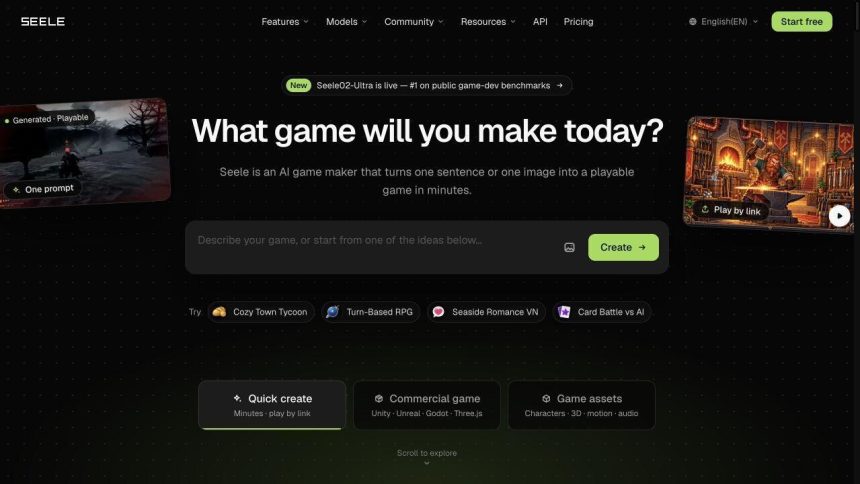
Many people have a game idea but never build the first version. They may imagine a mystery in an old hotel, a cozy town simulator or a short story where every choice changes the ending. The obstacle is often the setup: learning an engine, finding assets, writing code and preparing a build for someone else to try.
AI game makers are designed to reduce that first barrier. You can describe a small game in ordinary language, add an image or sketch, and receive a playable prototype. The first version may need editing, but it gives you something real to test.
SEELE AI follows this approach. Its agent can assemble code, 3D assets, sound and levels, then open the result in a browser. You can play it, notice what feels wrong and ask for a change in chat. The SEELE AI game maker is built for that cycle of making, playing and revising.
Start with one small idea
The easiest projects have one clear action. Ask the player to find an object, escape a room, make a decision or reach a destination. A small goal helps the tool create a focused first draft and makes it easier for you to judge the result.
When you test the game, pay attention to what you understand without an explanation. Is the goal clear? Do the controls make sense? Does the game tell you when something important happens? Those answers are more useful than simply asking whether the graphics look impressive.
Why a browser link helps
A browser-playable game is easy to share. Friends, classmates or coworkers can try it without installing the same software you used to create it. Their reactions can show you which parts are memorable and which parts need work.
You do not need to be an experienced developer to give useful feedback. Say what you expected to happen, where you got stuck and what you wanted to try next. Clear observations help the AI make better edits.
AI helps with the first draft, while you shape the experience
The tool can handle repetitive setup, but the creative decisions remain yours. You choose the audience, mood, rules and story. You decide what to keep after playtesting. A generated game becomes interesting when someone makes deliberate choices about what the player should feel and remember.
If you have been waiting for the perfect idea or the time to learn every technical detail, a small AI-generated prototype can be a useful place to begin. Build one room, invite someone to play and let the next version come from what you learn. Try SEELE NOW.

Lynn Martelli is an editor at Readability. She received her MFA in Creative Writing from Antioch University and has worked as an editor for over 10 years. Lynn has edited a wide variety of books, including fiction, non-fiction, memoirs, and more. In her free time, Lynn enjoys reading, writing, and spending time with her family and friends.