

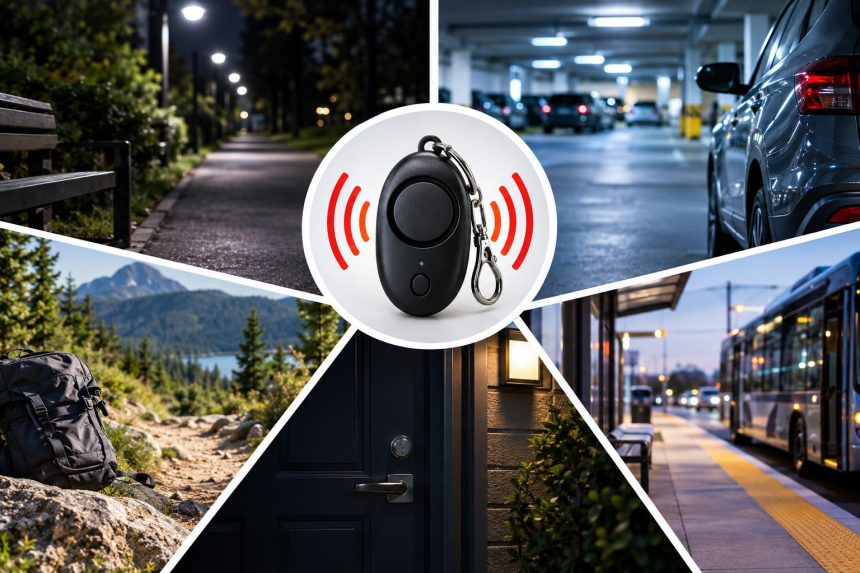
Personal safety decisions often fail at the moment they matter because the preferred deterrent is buried, locked, or too slow to use. A personal safety alarm addresses that gap by producing an immediate, attention-grabbing signal with a simple action. It does not replace awareness or emergency help, but it fills situations where speed and visibility matter most. These five examples show why.
1. Walking Alone After Dark
A dark walk home creates a difficult balance: you need awareness without becoming distracted by a phone. Reaching for pepper spray or unlocking an app takes attention away from your surroundings, while a safety alarm stays ready for immediate use.
An alarm works best when it is within reach, not buried in a bag. A small keychain model lets you keep a simple alert device attached to keys, a purse, or a belt loop, so access does not depend on unlocking a phone. If you are comparing options, review this personal safety alarm for sale collection for compact designs intended for everyday carry. Choose one you can reach without looking.
The sound also changes the situation quickly. A loud alert can draw attention from nearby homes, businesses, or people on the street. That visibility often disrupts unwanted contact before it becomes a physical confrontation.
2. Inside a Car Park or Garage
Car parks and garages create blind corners, limited visibility, and distracting background noise. A person approaching from behind can reduce the time available to react, especially while you are carrying bags or searching for car keys.
A safety alarm keeps your response simple. You can activate it while moving toward a safer, more visible area instead of stopping to aim another device. The sound tells others that something is wrong, which can interrupt an approach and direct attention toward your location.
Keep the alarm attached to the item you carry between the car and the building. If it stays inside a handbag that rests on the passenger seat, it is unavailable during the walk. Check its position before leaving the vehicle, and avoid placing it beneath loose items.
3. During a Public Transit Delay
A delayed train, empty platform, or late-night bus stop can leave you waiting in an exposed area longer than planned. Phone-based deterrents depend on battery power, network access, and enough time to open the right screen.
A personal alarm has a narrower job, which makes it useful under pressure. It gives you an immediate way to signal distress while you move toward staff, other passengers, or a better-lit section of the station. The sound can also prompt people nearby to look up instead of assuming a problem is private.
Stay near visible information points, cameras, or staffed areas whenever possible. Hold the alarm where your fingers can reach it, keep your phone available for emergency contact, and leave early if another person’s behavior becomes threatening.
4. When Your Hands Are Occupied
Shopping bags, luggage, sports equipment, or a child’s hand can make larger deterrents awkward to access. A device that requires two hands, careful aiming, or several steps loses value when one hand is already occupied.
A safety alarm supports a simpler response because activation requires less handling. Its usefulness depends on placement, so attach it to a strap, key ring, or outer pocket rather than storing it at the bottom of a bag.
Use these checks before heading out:
- Keep the alarm on the side of your body that you reach most easily.
- Confirm that clothing, straps, or keys do not block the activation point.
- Practice locating it by touch while standing and walking.
- Replace or recharge it according to the product instructions.
These habits reduce fumbling and help preserve your attention for movement and decision-making.
5. In a Situation That Feels Unclear
Not every safety concern begins with an obvious threat. Someone may follow your route, stand too close, block your path, or repeatedly appear near you. Waiting for certainty can leave you with fewer choices.
An alarm gives you an intermediate response between doing nothing and confronting the person. You can create noise, move toward other people, and communicate that the behavior has been noticed. That response keeps the focus on gaining distance instead of proving intent.
Trust observable behavior rather than trying to diagnose someone’s motives. Change direction, enter an open business, contact a trusted person, or ask staff for help. If the threat becomes immediate, contact emergency services and follow local guidance. The alarm supports those actions by drawing attention during the first seconds.
Conclusion
Choose an alarm based on reach, activation, sound, and the places you spend time. Practice locating and using it before you need it, then keep it attached to something you carry regularly. The right deterrent is the one that works under stress, draws attention quickly, and leaves you free to move toward people, light, or help.

Lynn Martelli is an editor at Readability. She received her MFA in Creative Writing from Antioch University and has worked as an editor for over 10 years. Lynn has edited a wide variety of books, including fiction, non-fiction, memoirs, and more. In her free time, Lynn enjoys reading, writing, and spending time with her family and friends.