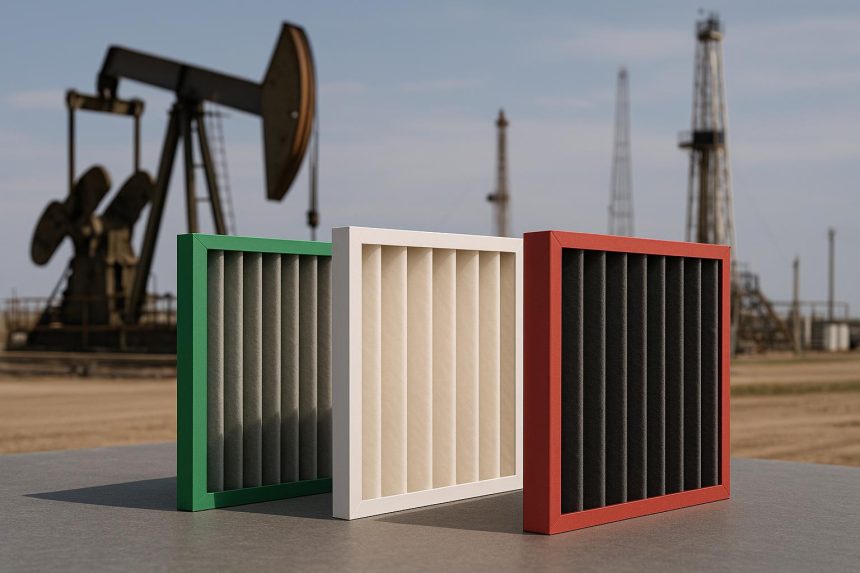
Air filtration plays a vital role in oilfield operations. Equipment and machinery rely on clean air to maintain efficiency and prevent damage. Choosing the right air filter can save money and reduce downtime. Filters remove dust, dirt, and debris that could otherwise harm engines and compressors. Each oilfield environment presents unique challenges, from desert dust to salty sea air.
Selecting a filter requires understanding the type of machinery, operational conditions, and expected contaminants instead of simply choosing based on promotions like ‘get American Air Filter and Koch Filters here’. Poor filtration can lead to higher maintenance costs and equipment failure. Filters differ in material, design, and performance. This guide outlines key considerations for selecting air filters that meet oilfield demands. Following these principles ensures reliable operation and longer equipment life.
Air Filter Types and Their Applications
Oilfields use multiple types of air filters. Panel filters provide broad coverage for large air intake systems. Cartridge filters excel in confined spaces with high airflow requirements. Bag filters capture fine dust particles and protect sensitive machinery. Foam filters resist moisture and are suitable for wet environments. High-efficiency particulate air filters remove the smallest airborne contaminants. Each type matches a specific application depending on airflow, dust load, and environmental conditions. Choosing the wrong filter can restrict airflow or allow contamination. Maintenance schedules differ for each filter type. Cost varies between disposable and reusable options. Selecting the correct filter type ensures that equipment operates at peak efficiency.
Filter Material and Construction
Filter material affects performance and durability. Paper elements handle dry dust efficiently but fail in wet conditions. Synthetic fibers resist moisture and maintain airflow in harsh environments. Metal mesh filters provide strength and can be cleaned for reuse. Foam layers trap large debris and prevent clogging of finer materials. Construction quality influences pressure drop and filter lifespan. A poorly constructed filter may collapse under high airflow. Pleated designs increase surface area without increasing size. Seals and gaskets must prevent bypass of unfiltered air.
Airflow and Pressure Drop Considerations
Airflow requirements differ between engines and compressors. Filters must allow sufficient air without restricting performance. Pressure drop indicates how hard the machinery must work to pull air through the filter. High pressure drop can reduce efficiency and increase fuel consumption. Filter selection should match the designed airflow rate of the equipment. Dirt-holding capacity affects how long a filter lasts before replacement. Filters with higher capacity reduce maintenance frequency. Environmental conditions influence airflow needs. Dusty or sandy locations require filters that maintain airflow despite heavy contamination.
Maintenance and Replacement Strategy
Regular maintenance extends filter life and ensures equipment protection. Inspect filters on a consistent schedule based on operating hours or environmental conditions. Reusable filters require cleaning using manufacturer-recommended methods. Disposable filters must be replaced once clogged or damaged. Ignoring filter maintenance can lead to engine damage or system failure. Record-keeping helps track filter performance and replacement intervals. Choosing filters that are easy to access reduces downtime. Maintenance cost varies with filter type and cleaning frequency.
Environmental and Operational Factors
Oilfield conditions influence filter selection. Desert operations demand filters that resist fine dust and sand. Offshore locations need filters that tolerate salt, humidity, and moisture. Extreme temperatures affect filter material and sealing performance. Vibration and shock require filters with strong construction. Some environments expose equipment to chemical contaminants, requiring specialized filters. Operational intensity, such as continuous drilling or pumping, affects filter life. Seasonal changes may require different filters to handle varying conditions. Air quality monitoring supports proactive filter selection.
Air filters protect critical oilfield machinery from dust, debris, and environmental hazards. Selecting the right filter entails more than choosing based on promotions like ‘get American Air Filter and Koch Filters here’. It involves considering type, material, airflow, maintenance, and environmental conditions. Each factor contributes to equipment longevity and operational efficiency. Choosing filters that match specific machinery and conditions reduces downtime.

Lynn Martelli is an editor at Readability. She received her MFA in Creative Writing from Antioch University and has worked as an editor for over 10 years. Lynn has edited a wide variety of books, including fiction, non-fiction, memoirs, and more. In her free time, Lynn enjoys reading, writing, and spending time with her family and friends.