The home security market has been going gangbusters for years now. And it’s not just here. Around the world, electronic home security and automation continues to go strong. But interest is waning in some markets. Why? Because electronic home security has an Achilles heel: reliability.
Electronic devices require electricity at a bare minimum. But as home security and smart home automation have become increasingly intertwined, our devices and systems have become more complicated. With complication comes a heightened risk of failure. That takes us back to the reliability issue. However, I maintain that the issue should not be a deal-breaker.
Waning Interest in the UK
Full disclosure dictates mentioning that this post was prompted by one I just read on the TechBullion website. That article, written by contributor Angela Scott-Briggs explains that UK homeowners are starting to move away from electronic home security in favor of more traditional, mechanical means. The motivating factor is reliability.
UK consumers are discovering that their increasingly complex devices are not as reliable as they should be. So the thinking is pretty simple. If they cannot rely on electronic home security, why not go back to its mechanical counterparts? Yet there is a problem with such thinking.
A security camera that stops working because the power goes out will not do the job for which it was purchased. At least temporarily, it is a useless piece of equipment hanging around and doing nothing. It might act as a deterrent when it’s working. Otherwise, not so much.
Imagine a homeowner ditching his electronic security system in favor of mechanical devices, like heavy-duty deadlock bolts. A deadlock bolt does a very good job of preventing unauthorized access. Yet it will not stop a truly determined burglar. Here is the problem: a heavy-duty deadbolt is a mechanical device. It cannot send a push notification to your phone or alert a monitoring provider should someone break in.
It Doesn’t Have to Be One or the Other
I have done my fair share of research into home security as part of my job. I have also talked to countless people about it. Among those that have absolutely no interest in electronic home security, there are common complaints:
- It’s too expensive
- It’s too complicated
- It’s not reliable
- It can’t stop a determined criminal
All the complaints are true to a certain extent. Obviously, cost and complexity are individual matters. And it’s true that electronic home security is not always reliable or capable of stopping a determined criminal. But there is no home security solution on earth that works perfectly all the time.
The point here is that we do not have to choose between one or the other. It doesn’t have to be all electronic or all mechanical. And in fact, the most secure homes are made secure by a multi-layered approach that uses every available tool – including both electronic and mechanical devices.
A Camera and Deadbolts
Let’s explore this further using a practical example. Let us say I equipped my home with the latest deadbolt locks from a major manufacturer. They are traditional keyed locks tough enough to withstand significant impact. They will act as a deterrent to most criminals who recognize them for what they are.
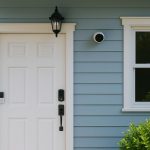
Now assume I have also equipped my house with a home security system from Vivint Home Security. My system includes a strategically placed video camera with a clear view of the front door. I say ‘strategically placed’ because any criminal approaching my front door can see it. It also acts as a deterrent.
By combining both devices, I get double the deterrent effect. We know video cameras and deadbolts deter burglars because they make it more difficult to break in without being detected. Deadbolts are especially effective because they slow burglars down. And if there is one thing burglars hate, it is being delayed. They want to get in and out as quickly as possible.
Multiple Layers of Redundancy
My illustration clearly shows a greater deterrent effect by employing a multi-layered approach. But let’s go beyond deterrence. Employing multiple levels also adds redundancy. What if my front door camera fails? The deadbolt locks on my first-floor doors still act as a significant barrier to unauthorized entry.
If I leave home and forget to lock the front door, my security camera still acts as a deterrent. And because it’s hooked to the rest of my Vivint home security system, the camera will trigger an alert as a criminal approaches the front door.
Redundancy is critical for the simple fact that things fail. Both mechanical and electronic devices malfunction. And so do humans, by the way. I could just as easily forget to arm my security system or fail to lock the front door. So redundancy protects me from myself to some degree.
Monitoring Is the Icing on the Cake
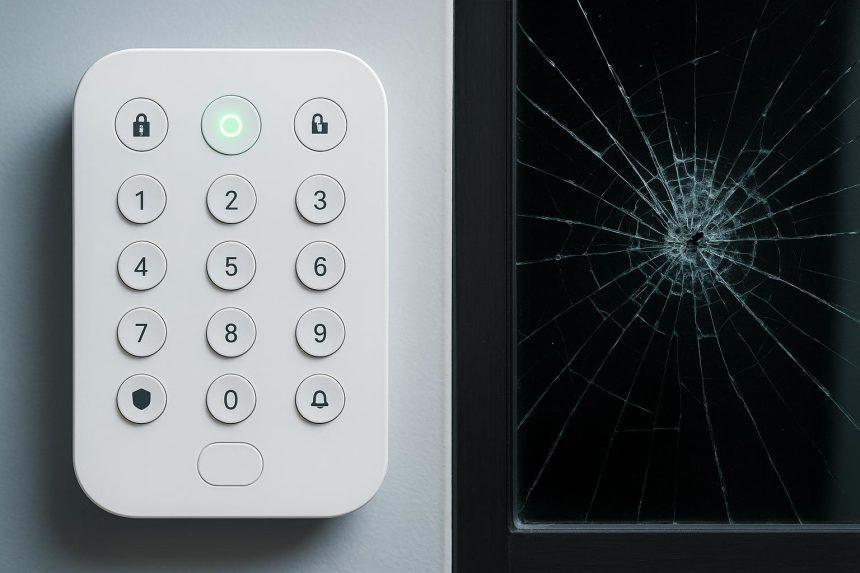
To me, the most valuable aspect of electronic home security is monitoring. I like mechanical devices like deadbolt locks, security glass, and window locks. But none of those devices keep an eye on my home when I’m not there. None of those devices can make me aware of a crime in progress. Monitoring can.
Remote monitoring is conducted by trained personnel in a monitoring center that could be hundreds of miles away. When a security system registers an alert, someone in the monitoring center immediately starts watching the system. That person attempts to make contact with the homeowner.
At the same time, monitoring personnel are also going through a predetermined script to evaluate whether the alert constitutes a genuine emergency. If it does, the local authorities will be notified even if monitoring personnel cannot make contact with the homeowner. This is all stuff you cannot accomplish with mechanical devices.
I understand why people are pulling back from electronic home security. It has become far too complex and somewhat unreliable. But effective home security involves multiple layers, one of which is electronic. It is a nice complement to mechanical security.

Lynn Martelli is an editor at Readability. She received her MFA in Creative Writing from Antioch University and has worked as an editor for over 10 years. Lynn has edited a wide variety of books, including fiction, non-fiction, memoirs, and more. In her free time, Lynn enjoys reading, writing, and spending time with her family and friends.