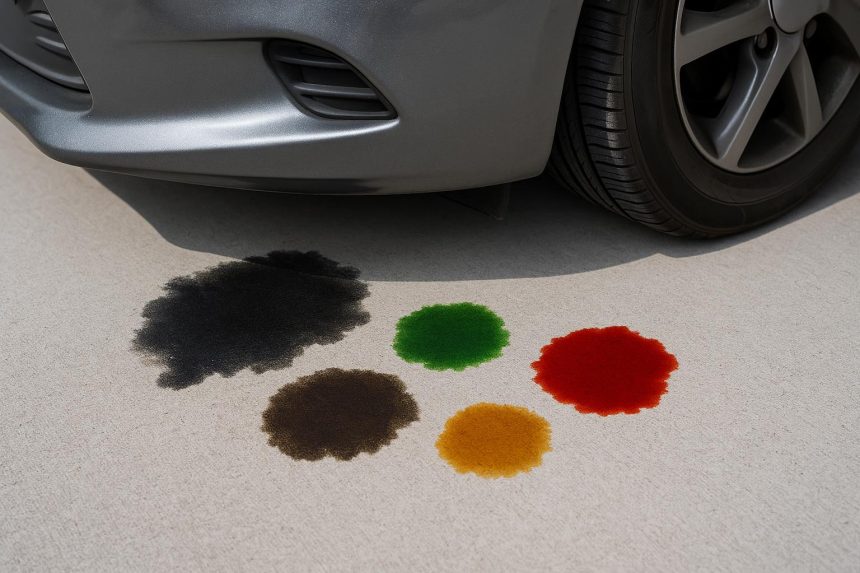
A fluid leak is one of the telltale indicators that something is wrong in your vehicle. Each automotive fluid has a certain color and purpose.
Notice a puddle or a stain beneath your car? The color of the fluid will give you a hint about the source of the issue.
This practical guide will help you determine car leaks based on the color. We will inform you of what each color typically implies.
Clear or light brown fluid
This is not something to be concerned about. It is, in most instances, just water generated by air conditioning.
Air conditioners dry the air and cool down the cabin. This water accumulates and pools beneath the car. What is left behind is a small puddle of clear water under the passenger side of the car. This happens mostly during hot days.
The properties of such fluid are:
- Clear appearance
- Odorless
- Thin and watery texture
- Shows up when the air conditioner has been in use.
The liquid may be a little brown or dirty. This may still be a normal condensation that has collected debris on the road surface. In most cases, this kind of leak does not need any mechanical care.
Dark brown or black fluid
This refers to an engine oil leak. Engine oil is amber or light brown in color when it is new. But it turns dark as it flows through the engine. This is because it picks up contaminants over time.
Oil leaks can be traced to:
- Worn engine gaskets
- A damaged oil pan
- Loose or deteriorated seals
- A loosely fitted oil filter.
Engine oil leaks should not be overlooked. They may lead to excessive friction between engine parts. The result is either:
- Overheating
- Internal damage.
The best solution in this case is to set an appointment for Car Repair Virginia Beach VA. A professional inspection may reveal where the leak occurred.
Red or reddish-brown fluid
This is usually released by transmission or a power steering system.
New transmission fluid tends to be bright red. But it later turns dark. It is slightly sweet or has a petroleum-like smell. It is slippery in texture.
Indications of transmission fluid leakage are:
- Red fluid beneath the middle of the car
- Difficulty shifting gears
- Delayed acceleration
- Deteriorating transmission performance.
The power steering fluid could also be red or pink. This depends on the vehicle company. The power steering system can be the cause of:
- The leak originates from the front of the engine bay
- The steering is stiff
- The steering makes a banging noise.
Both mechanisms depend on fluid pressure to work efficiently. Even the slight decrease in fluid levels may result in mechanical damage. Therefore, it is necessary to deal with such leaks as soon as possible.
Bright green, orange, or pink fluid
These colors normally imply a coolant leak. The colors of the coolants depend on the manufacturer and the chemical makeup. Common colors include:
- Green
- Orange
- Pink
- Yellow.
The following components are some of the most common causes of leakage of coolants:
- Radiator hoses
- The radiator itself
- The water pump
- The coolant reservoir tank.
When you can see brightly colored fluid under your vehicle, you need to check the cooling system. Especially before driving long distances. This problem may also manifest in the form of:
- A sweet smell in the front of the car
- Steam escaping out of the engine bay.
Loss of a coolant may cause overheating of the engine.
Yellow or light brown fluid
This indicates brake fluid leaks. The brake fluid is normally transparent to slightly yellow when new. But it tends to darken with time.
This kind of leakage is an emergency. It directly impacts the capacity of your vehicle to stop safely. Therefore, it should be resolved promptly.
Potential indicators include:
- A soft or spongy brake pedal
- Poor braking performance
- Dashboard warning indicators
- Fluid stains on the wheels or below the driver’s side.
Fluid leakage may be caused by:
- Broken brake lines
- Worn seals
- Leaking brake calipers.
When you notice this kind of leak, do not drive the car. Experts from the London Bridge Auto and Transmission Repair Shop Virginia Beach recommend having the braking system inspected first.
Blue or light blue fluid
This one is not common. But it indicates windshield washer fluid. Most producers tint this fluid blue to differentiate it from other automotive fluids.
Such a fluid typically leaks when:
- The washer fluid tank is broken
- A hose becomes disconnected
- The pump system is damaged.
Washer fluid leakage does not impact the vehicle’s safety. But it might prevent the proper functioning of the vehicle’s windshield cleaning system.
Summing up
With this knowledge, you may easily eliminate the possible source of a leak and choose when you need a professional check.
When you see fluid under your vehicle, you should note these three main details:
- The color of the fluid.
- The location of the leak.
- The smell of the leak.
- The feel of the fluid.
A combination of these observations gives good hints about the affected system.

Lynn Martelli is an editor at Readability. She received her MFA in Creative Writing from Antioch University and has worked as an editor for over 10 years. Lynn has edited a wide variety of books, including fiction, non-fiction, memoirs, and more. In her free time, Lynn enjoys reading, writing, and spending time with her family and friends.