Designing a harmonious interior can be an overwhelming task as each room appears to require a different style. In one room, you may prefer modern doors, and in the other room, classic panel designs, yet mixing the two without interfering with the visual flow can be tricky.
Consequently, mismatched doors may create an effect of disconnection between interiors when the rest of the decor is well-designed. This is the point at which most homeowners are struggling to balance variety with consistency.
Nonetheless, the mixing and matching of internal doors does not imply a loss of harmony. With the right strategy, you can add diversity and still maintain a cohesive appearance throughout your house.
Moreover, you can achieve continuity without repetition by paying attention to materials, finishes, proportions, and placement. This article describes how to incorporate various styles of doors and maintain a well-structured and cohesive interior design.
1. Clear Door Style Selection
The first thing to do when considering the alternatives of internal doors is to establish a clear design direction for your home. Rather than selecting the doors to be used on a room-by-room basis, consider the general look that you would wish to create.
For example, modern interiors can be enhanced by clean lines and less detailing, whereas classic spaces can be equipped with paneled or cottage-like doors.
Simultaneously, mixing styles is simplified when there is a common design language.
For instance, you can pair glazed doors in the common areas with solid panel doors in the bedrooms, provided they are of the same proportion or detail. The method gives a chance of variety without a clash of the visuals.
Furthermore, uniformity in size and structure makes even the different designs seem related. Once every single door fits into the larger theme, the transition between rooms does not seem random.
2. Consistent Materials Across Spaces
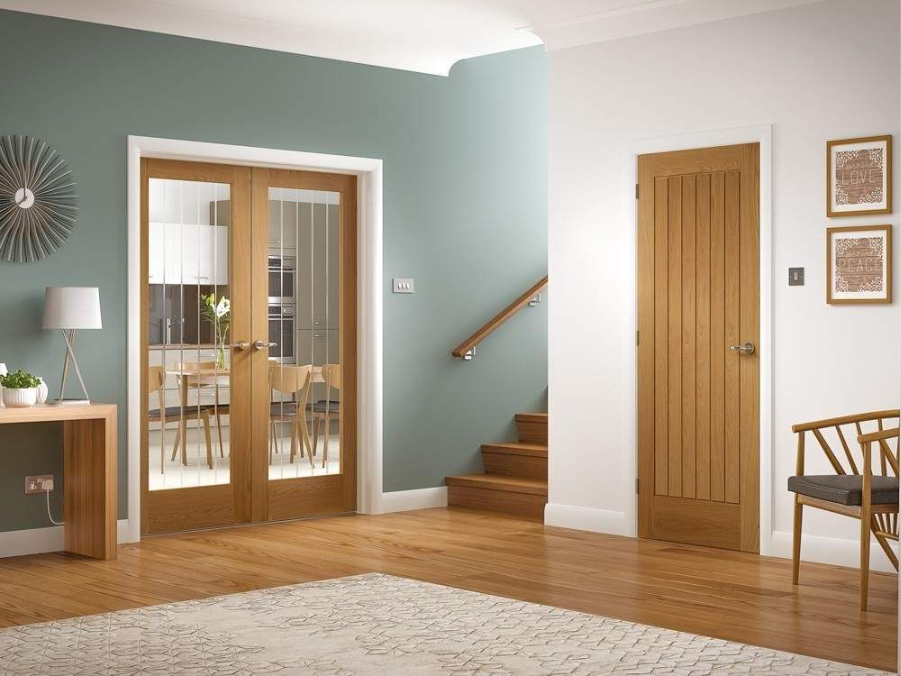
In situations where the styles are different, material is where one can hope to achieve cohesion. Although you might switch up the door style, a similar base material, like oak or engineered wood, can help in creating a coherent appearance.
For example, oak doors with varying panel layouts still have a natural grain and feel, which visually binds them together. Consequently, continuity is perceived by the eye despite the differences in designs. This can particularly be helpful in open plan designs when there are more than one or two doors visible at a time.
Moreover, homogenous materials enhance longevity and aging. Similar material doors are also more likely to wear evenly over time, which further helps to maintain a cohesive look throughout your home.
3. Coordinated Finish and Color
Although styles can differ, the finishes and colors need to be coordinated. A uniform finish, natural, stained, or painted, serves as a visual connection between the various types of doors.
For example, in a case when you want to combine modern flush doors with traditional paneled ones, you can apply the same color or stain to make sure that they match. Neutral tones are generally effective as they are easily adjusted to various styles and interior themes.
Moreover, the slight differences between similar color families do not disrupt harmony. For instance, slightly darker or lighter shades in the neighboring rooms can maintain consistency, and yet, at the same time, create visual richness.
4. Functional Room-Based Placement
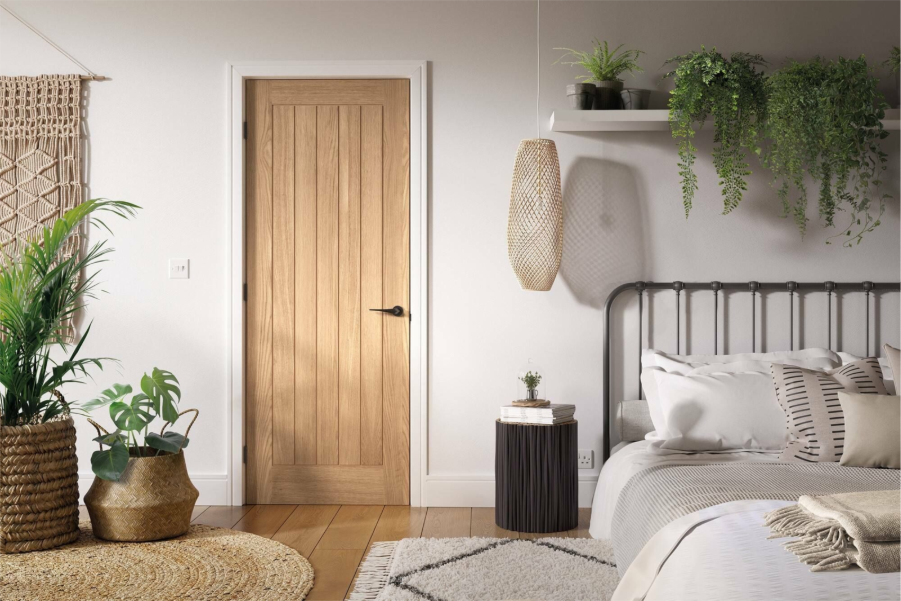
Every room in your house has a different purpose, and your door options also need to match that. Rather than trying to impose uniformity, allocate the door designs depending on usage while preserving the aesthetics.
As an example, glazed doors are suitable in living rooms where natural light is appreciated, whereas solid doors are more suitable in bedrooms and bathrooms where privacy is paramount. Tighter spaces can also be made useful with sliding or bi-fold doors.
However, even when functionality varies, the design elements should remain aligned. Matching frames, handles, or finishes ensures that practical decisions do not disrupt the overall aesthetic.
5. Aligned Hardware and Details
Small details often have a significant impact on cohesion. Door handles, hinges, and frames should follow a consistent style across all doors, regardless of their design.
For instance, using the same finish for handles—such as brushed steel or matte black—creates a repeating element throughout your home. Similarly, consistent frame profiles help unify different door styles.
In addition, panel proportions and glazing patterns can be subtly aligned to maintain balance. Even when designs differ, shared detailing creates a sense of order and intentionality.
6. Visual Flow Between Spaces
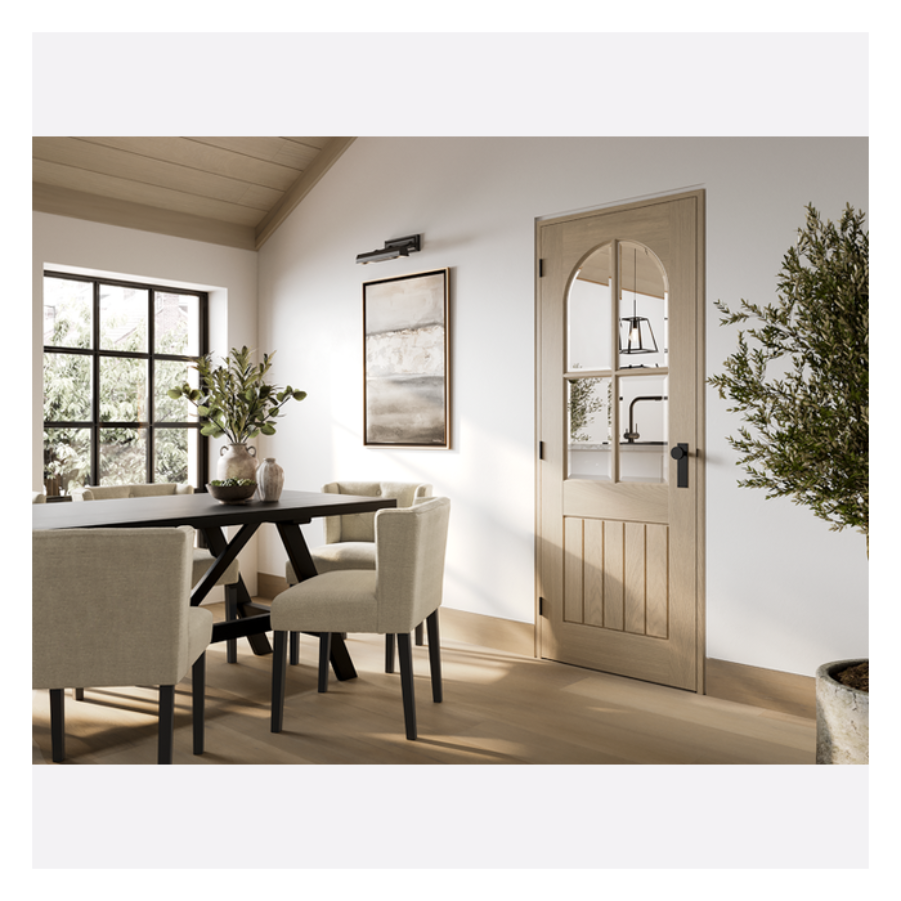
A cohesive interior depends on how smoothly one space transitions into another. Doors act as connectors, so their design should support a natural visual flow between rooms.
To achieve this, consider sightlines within your home. When doors are visible from hallways or open spaces, their styles should complement each other rather than compete. Gradual transitions—such as moving from more detailed doors in formal areas to simpler designs in private spaces—help maintain continuity.
Moreover, aligning doors with surrounding elements like flooring, baseboards, and wall colors strengthens the overall design. When every component works together, the interior feels unified and well thought out.
Bottomline
Mixing and matching internal doors requires a balanced approach that prioritizes both variety and consistency. Rather than focusing on identical designs, it is more effective to create connections through materials, finishes, and detailing. As a result, each room can serve its purpose while still contributing to a cohesive overall look.
By selecting styles in a clear direction, maintaining material consistency, and coordinating finishes, you can avoid a fragmented appearance. At the same time, thoughtful placement and aligned hardware ensure that functional choices support the design.
Ultimately, when these elements come together, your interior achieves a seamless flow that feels intentional, practical, and visually connected.

Lynn Martelli is an editor at Readability. She received her MFA in Creative Writing from Antioch University and has worked as an editor for over 10 years. Lynn has edited a wide variety of books, including fiction, non-fiction, memoirs, and more. In her free time, Lynn enjoys reading, writing, and spending time with her family and friends.