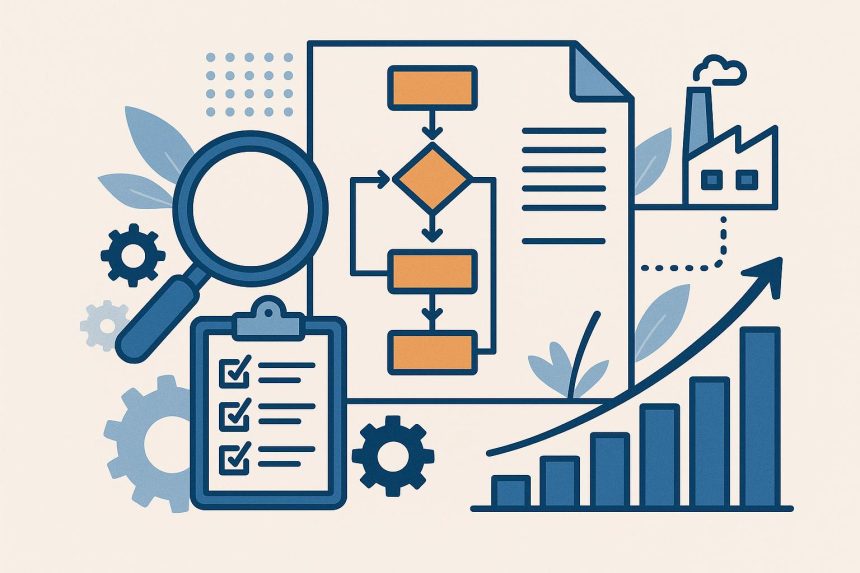
A clear process definition forms the backbone of successful automation. Structured workflows allow teams to reduce confusion, improve accountability, and deliver consistent outcomes across operations. Strong foundations in process clarity also help organizations adapt faster to changing priorities.
Efficient operations rely on thoughtful planning and precise execution. Teams that document and refine their workflows gain better control over resources and timelines. This clarity supports smoother transitions when automation tools are introduced into daily tasks.
A practical understanding of how to define business processes to automate for operational efficiency begins with identifying repeatable activities and structuring them logically. This approach ensures that automation efforts focus on tasks that bring measurable value and reduce unnecessary complexity.
Establish Clear Objectives for Process Design
Align goals with measurable outcomes
Every process must start with a defined purpose that aligns with business priorities. Clear objectives guide teams in deciding which activities deserve automation and which require human judgment. This alignment reduces wasted effort and keeps operations focused on results.
Defined goals also help measure success after automation is implemented. Metrics such as turnaround time, error reduction, and resource utilization provide clarity on improvements. A structured approach ensures that each process contributes meaningfully to operational efficiency.
Map Existing Workflows with Accuracy
Identify steps, roles, and dependencies
- Break down each process into detailed steps to understand how tasks move from start to finish.
- Highlight responsibilities assigned to individuals or teams at every stage.
- Identify dependencies that affect timelines or decision-making.
Accurate mapping reveals inefficiencies that may remain hidden in daily routines. It also provides a visual structure that simplifies communication among stakeholders. Clear documentation ensures that automation tools integrate smoothly without disrupting essential operations.
Evaluate Process Efficiency and Gaps
Focus on improvement opportunities
- Identify repetitive tasks that consume excessive time or resources.
- Detect bottlenecks that delay progress or create inconsistencies.
- Examine areas where manual intervention leads to errors.
Evaluation helps refine workflows before automation begins. A well-analyzed process avoids transferring inefficiencies into automated systems. This step ensures that automation enhances performance rather than amplifying existing issues.
Standardize Processes for Consistency
Build uniform structures for better execution
Consistency plays a crucial role in successful automation. Standardized processes ensure that each task follows a predictable pattern, which simplifies automation design. Clear rules and formats reduce ambiguity and improve collaboration across teams.
Uniform workflows also make it easier to scale operations without confusion. Teams can replicate processes across departments while maintaining quality standards. This structure supports long-term efficiency and smoother system integration.
Select Suitable Processes for Automation
Prioritize tasks with maximum impact
Choosing the right processes determines the success of automation initiatives. Tasks that are repetitive, rule-based, and time-intensive deliver the highest returns when automated. Careful selection prevents unnecessary investment in processes that require human creativity or judgment.
A refined understanding of how to define business processes to automate for operational efficiency helps organizations focus on high-impact areas. This targeted approach improves productivity while maintaining operational balance across functions.
A clear process definition thus builds a strong foundation for effective automation. Structured workflows improve accuracy, speed, and resource utilization. Focused planning ensures long-term operational efficiency and consistent results.

Lynn Martelli is an editor at Readability. She received her MFA in Creative Writing from Antioch University and has worked as an editor for over 10 years. Lynn has edited a wide variety of books, including fiction, non-fiction, memoirs, and more. In her free time, Lynn enjoys reading, writing, and spending time with her family and friends.