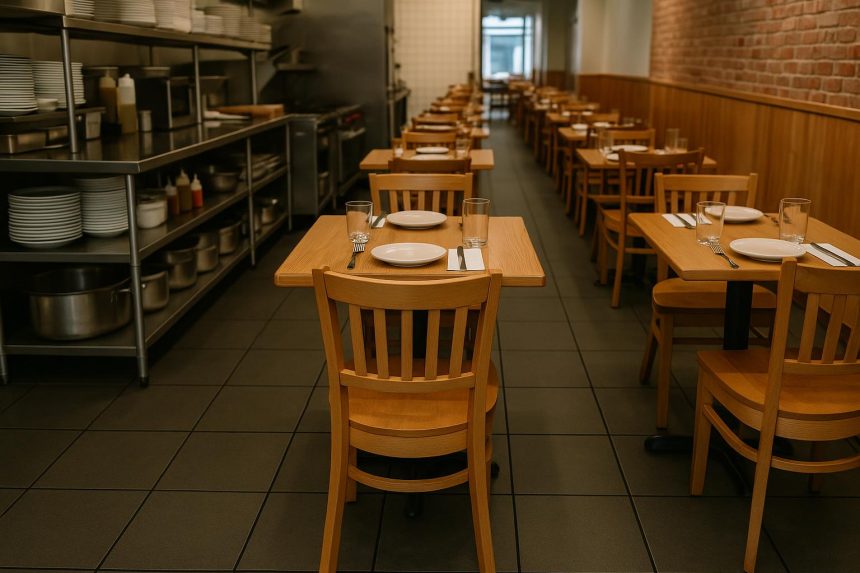
A restaurant table looks calm when the dining room is empty. It sits there quietly, polished, centered, and ready. Nothing about it seems dramatic. Yet once service begins, that same table becomes one of the busiest pieces of equipment in the building.
Guests lean over it. Servers reach across it. Plates, glasses, menus, phones, condiments, QR cards, shareables, desserts, laptops, and payment devices all compete for space on its surface. A table that looked perfectly fine during setup can suddenly feel too small, too crowded, too unstable, or awkwardly shaped the moment real customers arrive.
That is where high-volume restaurants separate themselves from chaotic ones. The difference is not only the menu, staffing, lighting, or reservation system. One overlooked table spec often decides whether the room feels controlled or constantly under pressure: usable tabletop surface per guest.
This is why restaurant tables should never be chosen by appearance alone. Size, shape, base placement, edge design, and real usable surface all affect how comfortably guests can eat, talk, share food, and settle in without feeling crowded.
In the United States, the restaurant industry is projected to reach $1.55 trillion in sales in 2026, with only modest inflation-adjusted growth expected. Operators cannot afford dining rooms that waste space or frustrate service flow. Every seat has to work harder, but every table also has to feel comfortable enough to support the experience guests came for.
Why Usable Surface Matters More Than Table Style
Many owners begin with looks. They compare finishes, colors, edge styles, laminate patterns, wood tones, base shapes, and price points. Those details are key because tables set the tone for the space. A sleek black laminate table feels different from a warm wood top. A thick edge is not the same as a thin modern profile.
Still, no matter how good the decor, a table that doesn’t provide visitors with enough functional space can’t be saved.
The usable tabletop surface is the real working area each guest has when the table is set. It’s not just the size of the table shown. This is the real estate left over after accounting for plates, drinks, shared items, table tents, menus, condiments, centerpieces, and serving patterns.
A busy restaurant may seat hundreds of people in a single day. If each table is just a bit too small, the problem repeats itself all day. Servers have to be replated. Guests change glasses to make room. Food runners search for open corners. The following course has nowhere to land, so the bus staff clear unfinished goods early.
The space begins to feel crowded in the wrong sort of manner.
A well-specified table does the opposite. Even when the restaurant is crowded, it still offers a tranquil atmosphere. Guests may not see the logic behind the layout, but they experience the outcome. Their plates were lined up. Their elbows are not caught. The server may deliver the food without a mini-negotiation at every table.
That ain’t luck. It’s surface planning.”
The Small Table Mistake That Creates Big-Service Friction
The most common mistake is treating table size as a shortcut for seating count. A buyer sees a compact table, realizes it can technically seat two or four people, and assumes that smaller means more efficient.
Sometimes it does. Often, it does not.
A 24-inch-deep table may work for coffee, drinks, desserts, or quick snacks. It can also make sense along a narrow wall, in a café, or in a tight bar area where turnover is fast, and plates are smaller. But the same depth can become frustrating in a full-service restaurant where guests order appetizers, entrees, sides, cocktails, water, and dessert.
The table is not failing because it is poorly made. It is failing because it was assigned the wrong job.
High-volume restaurants understand that table specs must match service style. A breakfast diner, sushi bar, pizzeria, steakhouse, sports bar, family restaurant, and fast-casual concept do not all need the same surface ratio. The table has to reflect how people actually use the space.
A few questions reveal the truth quickly:
- How many plates are usually on the table at one time?
- Are dishes served individually, family-style, or shared?
- Do guests commonly order appetizers and drinks before entrees arrive?
- Are menus, sauces, baskets, trays, or tabletop displays part of the experience?
- Does the restaurant need fast turns, longer stays, or both at different dayparts?
Once those questions are answered, the table stops being a décor item. It becomes an operational tool.
Why Crowded Tables Make Rooms Feel More Chaotic
Chaos in the dining room isn't always audible. Sometimes it's visual. Sometimes it's physical. When there is nowhere to place their glass, guests can feel a little stressed.
A packed table alters behavior. Guests arrange menus uncomfortably. They pushed condiments to the edge. They move the platters closer to themselves. They pause when a server arrives with extra food since they know there isn't enough room.
Servers experience it as well. A crowded table slows down placing. It raises the risk of spills. It forces employees to clear stuff quickly, interrupt conversations, and make additional visits. In a quiet restaurant, those seconds may not be important. During a rush, they compound.
This is why high-volume operators frequently consider systems. A table is not rated solely on its capacity for four people. It is determined by how well four people can eat, how easily the staff can serve them, and how quickly the table can be reset afterward.
A dining area feels tranquil when each table has ample space for the anticipated meal pattern. It feels chaotic when the furniture keeps asking guests and staff to adjust because of poor planning.
The Right Spec Balances Revenue and Comfort
Restaurant owners naturally want more seats. More seats suggest more possible revenue, and in expensive real estate, every square foot has to justify itself. But there is a difference between a dense dining room and a productive one.
A productive dining room earns without making guests feel squeezed.
That balance begins with matching table dimensions to the guest count. A two-top should not feel like a tray. A four-top should not become unusable the moment shared appetizers arrive. A larger table should not be so deep that servers have to overreach or guests feel disconnected from each other.
The best table spec is not always the biggest table. It is the table that gives the right amount of usable surface for the restaurant’s service model while preserving aisle movement, ADA awareness, staff access, and visual flow.
High-volume restaurants often succeed because they reduce friction at scale. They do not depend on staff constantly fixing preventable problems. Their tables support the rhythm of service.
That rhythm matters in small ways:
- Guests receive food without awkward plate shuffling.
- Servers can approach and clear tables without slowing down.
- Bussers can reset faster because items are easier to organize.
- Managers see fewer complaints tied to comfort, crowding, or table wobble.
- The dining room looks fuller without looking messy.
A chaotic restaurant may have the same number of seats. It may even have similar food and service. But if the tables are too tight for the way people actually dine, the entire room has to work harder than it should.
Surface Area Also Depends on the Base
Tabletop gets most attention, but the base might stealthily steal comfort. A table can have enough surface area on paper but still feel unpleasant if the base blocks knees, restricts where chairs can be placed, or makes the table unstable when visitors lean on the edge.
That’s why you should consider tabletop size and base choice as one decision. A heavy top needs good support. A square table may require a base that permits chairs to tuck in properly. “If the base allows for legroom, a round table can feel generous. A booth table may need a particular depth, height, and base position so visitors are not boxed in.
A table that rocks, tips, or blocks feet causes a different kind of turmoil. The guests move in their chairs. Servers get wary. Staff grabs folded napkins or leveling wedges. The space may still appear good, but the experience starts to seem cobbled together.
High-volume restaurants get around that by thinking outside the top surface. They think about the whole table system: top size, base weight and spread, column arrangement, edge profile, finish durability, and cleaning access.
When those factors come together, the table vanishes into the experience. That’s usually a positive sign. No one congratulates a table for not being shaky, not being crowded, not impeding traffic. They just enjoy the meal.
The Calmest Dining Rooms Are Designed Around Real Use
The single most important table spec isn't glamorous. It’s not always there in a shot. It may not blow anyone away on a fast showroom walk-through. One of the most obvious ways a restaurant shows it understands its own service is the amount of usable tabletop space per client.
High-volume restaurants don’t get peaceful by accident. They remove minor friction points before guests notice them. They select tables that fit the menu, support the workers, maintain the pace of service, and provide each visitor with enough room to rest.
Chaotic-feeling restaurants often accomplish the reverse, but not on purpose. They buy first for looks, second for seat count, and finally for genuine use. The consequence is a dining room where every rush brings up the same issue: not enough practical space where it counts most.
A table should never make the meal more difficult to enjoy.
When the surface is right, everything surrounding it works better.” Plates land naturally. Drinks are correct. Servers walk out with added confidence. The guests are at ease. The room can be crowded but not overpowering.
That’s the silent power of one well-chosen spec.

Lynn Martelli is an editor at Readability. She received her MFA in Creative Writing from Antioch University and has worked as an editor for over 10 years. Lynn has edited a wide variety of books, including fiction, non-fiction, memoirs, and more. In her free time, Lynn enjoys reading, writing, and spending time with her family and friends.