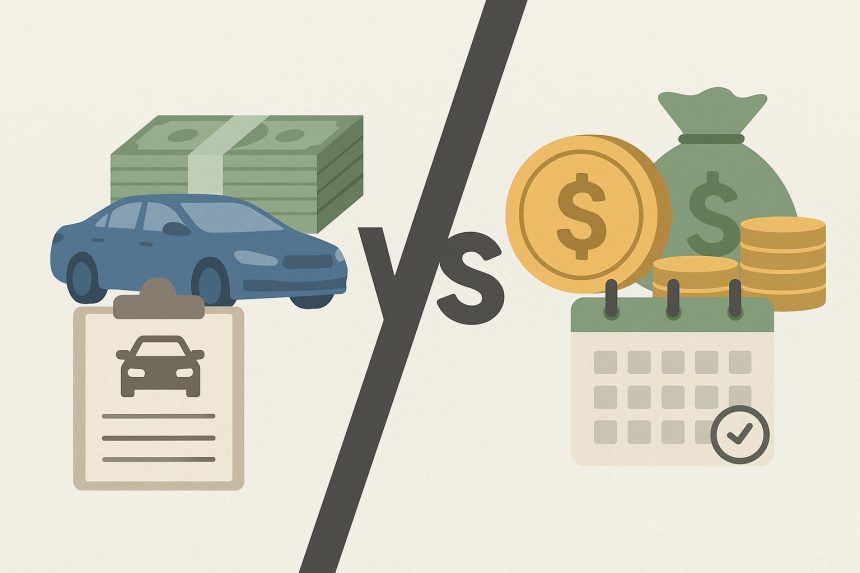
The lending market in the US has a number of short-term options available, but the two names that keep popping up are payday loans and title loans. In payday loans, you are borrowing against the paycheck you’re expecting to get very soon. Title loans, on the other hand, rely on the title of your car as collateral. That one distinction makes a whole lot of difference in terms of how much you can borrow, how the lender figures out how much risk they’re taking on and what happens if things start to go south. So, before you go choosing between these two options, take a closer look at the details.
Collateral
A title loan is where the lender puts up the title to your vehicle as collateral. You don’t have to worry about losing the car itself. The lender inspects the vehicle to get an idea of what it’s worth and you get to keep on driving it while you pay off the loan.
A payday loan is tied to your expected paycheck. The lender figures out how much you can borrow based on how much you’re likely to earn. They tend to ask for a post-dated cheque or authorization to withdraw the cash directly from your bank account on your next payday.
The Size of The Loan
Payday loans are all about bridging small, short-term gaps in your income, usually no more than $500. The actual amount depends on state laws and how much you earn.
How much can you get for a title loan? It depends on how much your vehicle is worth. Lenders figure out the car’s value, considering its age, mileage and general condition. This helps them work out how much the vehicle would sell for in the current market.
They then work out how much they’ll lend you as a percentage of that value. In some cases, you might be able to get 25% to 100% of your vehicle’s value, sometimes up to $15,000, but this will depend on the lender’s rules and whether you can afford to pay it back.
Interest Rates and Fees
The thing about payday loans is that they come with some seriously high short-term costs. Lenders can charge anything from $10 to $30 for every $100 you borrow. That might not sound so bad at first glance, but when you crunch the numbers and turn it into an annual percentage rate (APR), the cost can be a whopping 400% or more.
Title loans also have high interest rates, but since the loan is secured against your car, these rates are lower than those of payday loans.
Repayment Timeline
Payday loans come due when you next get paid, like within two to four weeks. Because the repayment window is short, most people end up having to repay the entire loan plus fees in one big chunk.
Title loans can let you stretch out the repayment over a much longer period, which often ties back to the question: how much can you get for a title loan? The duration varies from lender to lender, but you could be looking at instalments over several months to pay off the loan.
What Happens If You Can’t Repay
If you can’t pay off a payday loan, lenders may pursue collection efforts. That could involve repeated contact, turning the account over to a collection agency or even legal action. The delinquency may also be reported to the major credit bureaus.
If you can’t pay back a title loan, the lender may have to repossess your car and sell it to get their money back. This will show up on your credit history if they report it.
Conclusion
One big reason loans like these are so popular is that they are pretty easy to get compared to traditional bank loans. Your best option is to stop for a second and take a closer look at borrowing costs, potential risks, how much cash you need to get by, whether your next paycheck is enough to cover repayment or whether breaking down repayments into instalments makes more sense. That way, you can pick the option that solves your emergency without setting yourself up for the next one.

Lynn Martelli is an editor at Readability. She received her MFA in Creative Writing from Antioch University and has worked as an editor for over 10 years. Lynn has edited a wide variety of books, including fiction, non-fiction, memoirs, and more. In her free time, Lynn enjoys reading, writing, and spending time with her family and friends.