
Customers evaluate brands across many touchpoints before making a decision. They read reviews, check ratings in search results, explore social profiles, and often ask AI tools for recommendations. Every interaction shapes how people perceive a brand and influences where they choose to engage.
Platforms like SOCi help multi-location brands coordinate marketing activities such as listings management, social publishing, and review monitoring across locations. While this approach helps maintain consistency, many brands now look for platforms that offer stronger reputation insights, automation, and operational control.
In this blog post, we explore five SOCi alternatives for 2026 that help multi-location brands manage reviews, maintain accurate listings, and strengthen their reputation across locations.
How to choose the right SOCi alternatives
When evaluating SOCi alternatives, focus on capabilities that help multi-location brands manage reputation consistently across locations. Here are the most important factors to consider:
- Centralized control across multiple locations: The platform should allow brands to monitor reviews, listings, and reputation signals for all locations from a single dashboard while still enabling location-level customization.
- Review generation and management: Strong reputation platforms help brands collect more customer reviews, track feedback across sites, and maintain consistent responses across locations.
- Accurate business listings: Consistent business information improves visibility and customer trust. The right solution should maintain accurate listings across search engines, maps, and directories.
- Automation for reputation tasks: Managing hundreds of locations manually is difficult. Look for tools that automate review requests, responses, alerts, and listing updates.
- Scalability and system integrations: Multi-location brands benefit from platforms that integrate with CRM, POS, and marketing systems while supporting structured permissions and workflows across teams.
Based on these capabilities, here are the top 5 SOCi alternatives for multi-location reputation management in 2026.
List of Top 5 SOCi alternatives for multi-location reputation management in 2026
1. Birdeye
Birdeye is #1 agentic marketing platform designed for multi-location brands operating 100 to 10,000+ locations. It helps organizations manage reviews, listings, search visibility, and customer engagement from one connected system. Birdeye replaces fragmented point tools with one enterprise platform that unifies customer data and deploys custom AI agents to drive business outcomes.
Core Birdeye products for reputation management
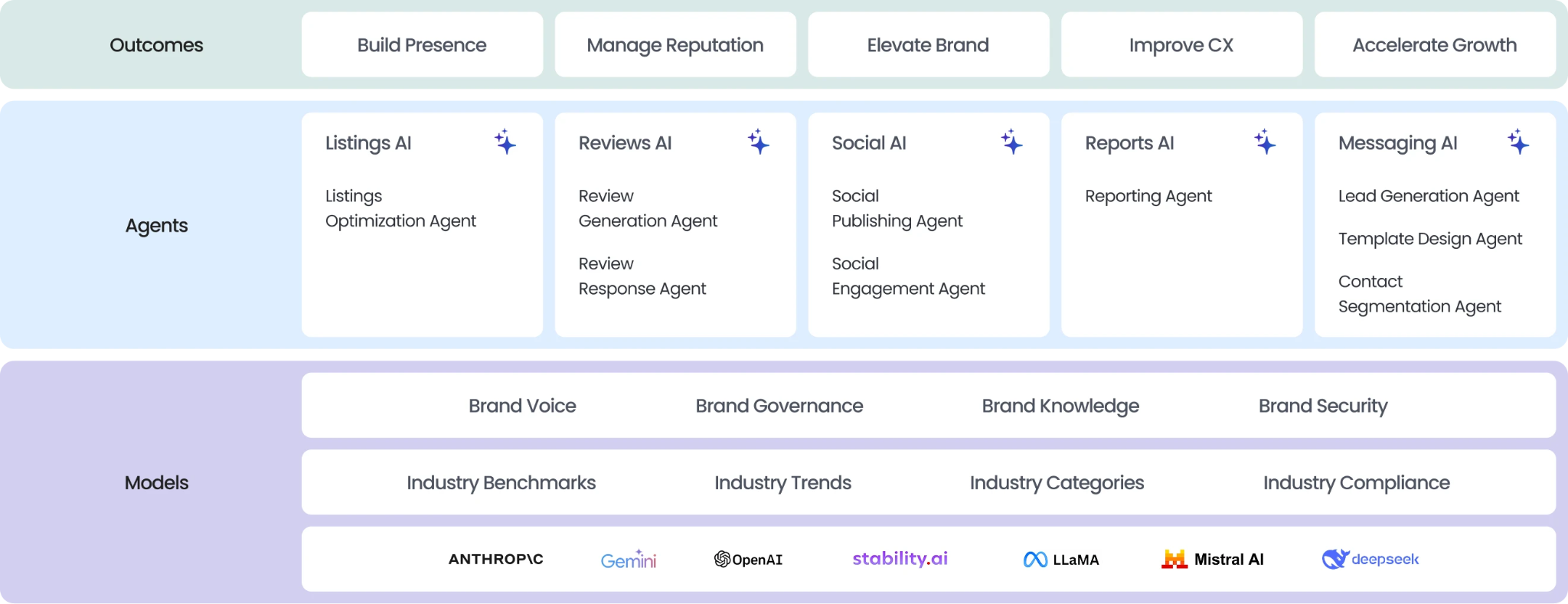
- Reviews AI uses the Review Response Agent to interpret customer sentiment and automatically draft nuanced, human-like replies in your brand voice-ready for your team to approve or publish autonomously.
- Listings AI maintains accurate business information across major platforms, including Google, Apple, Facebook, and Yelp. Its Listings Optimization Agent continuously scans profiles, identifies missing details or keyword opportunities, and applies approved updates while maintaining brand guidelines.
- Search AI measures how often and how accurately a brand appears in AI-generated responses on platforms like ChatGPT, Gemini, and Perplexity. It benchmarks visibility across locations and competitors, identifies the sources shaping those answers, and uses AI agents to correct gaps that affect visibility.
- Social AI helps brands coordinate social activity across locations while keeping messaging consistent and managing engagement in one place.
- Insights AI analyzes reviews, surveys, and interaction data to uncover trends, identify reputation risks, and highlight performance patterns across locations or regions.
Why Birdeye stands out
- Centralized management of reviews, listings, and customer engagement across multiple locations
- Location-level performance insights to compare results and prioritize improvements
- Automated workflows that reduce manual effort while maintaining brand consistency
- Governance features, including roles, permissions, and approval workflows for large teams
- 3,000 + integrations across CRM, POS, scheduling, and operational systems, such as Salesforce, HubSpot, Google Calendar, and QuickBooks Online.
Birdeye helps global brands turn reputation data into ongoing action. Its AI agents assist teams in managing reviews, listings, and customer conversations while following predefined brand rules. This approach allows enterprise brands to treat reputation management as a continuous operational process rather than a simple reporting activity.
As per G2 & Gartner, Birdeye is No. 1 Online Reputation Management Software. 4.7/5 rating with 4000+ G2 reviews
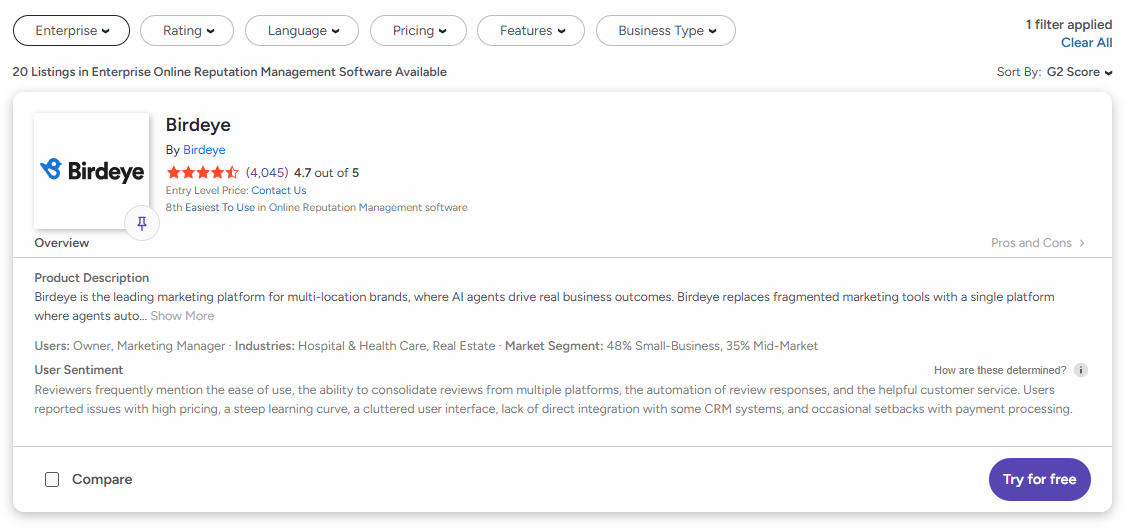
Pros
- Combines reviews, listings, AI visibility tracking, and engagement tools within a single platform.
- Supports marketing, operations, and customer experience teams managing multiple locations.
- Helps maintain consistent messaging and accurate information across hundreds or thousands of locations.
Cons
- Teams need initial setup for brand guidelines, workflows, and integrations to maximize value.
2. Uberall
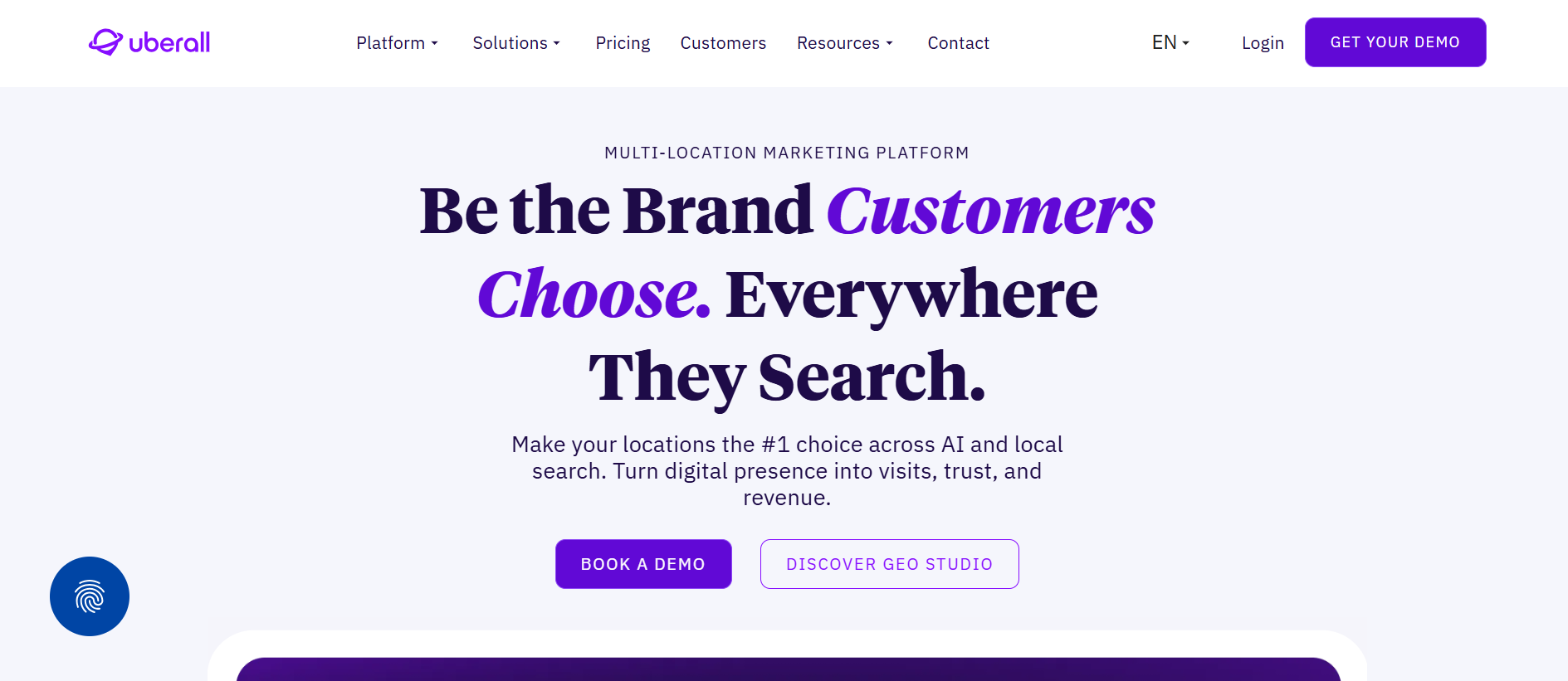
Uberall is a local marketing and reputation management platform designed for brands operating across locations. It helps organizations manage listings, track reviews, and monitor customer sentiment from a centralized dashboard. The platform focuses heavily on local search visibility and location data accuracy, helping brands maintain consistent business information across directories and review platforms.
Key capabilities
- Centralized management of business listings across search engines, maps, and directories to maintain consistent location information.
- Review monitoring and response management across major review platforms from one dashboard.
- Local search visibility insights that show how each location performs in search results.
Pros
- Strong at keeping location data synchronized across directories and search platforms.
- Useful for brands managing hundreds of storefronts or franchise locations.
- Provides a clear view of listings and reputation performance across locations.
- Helps marketing teams maintain consistent brand information across markets.
Cons
- Reviews and sentiment insights are more foundational compared with reputation-first platforms.
- Automation capabilities for reputation workflows are relatively limited.
- Advanced engagement features may require additional tools.
3. Synup
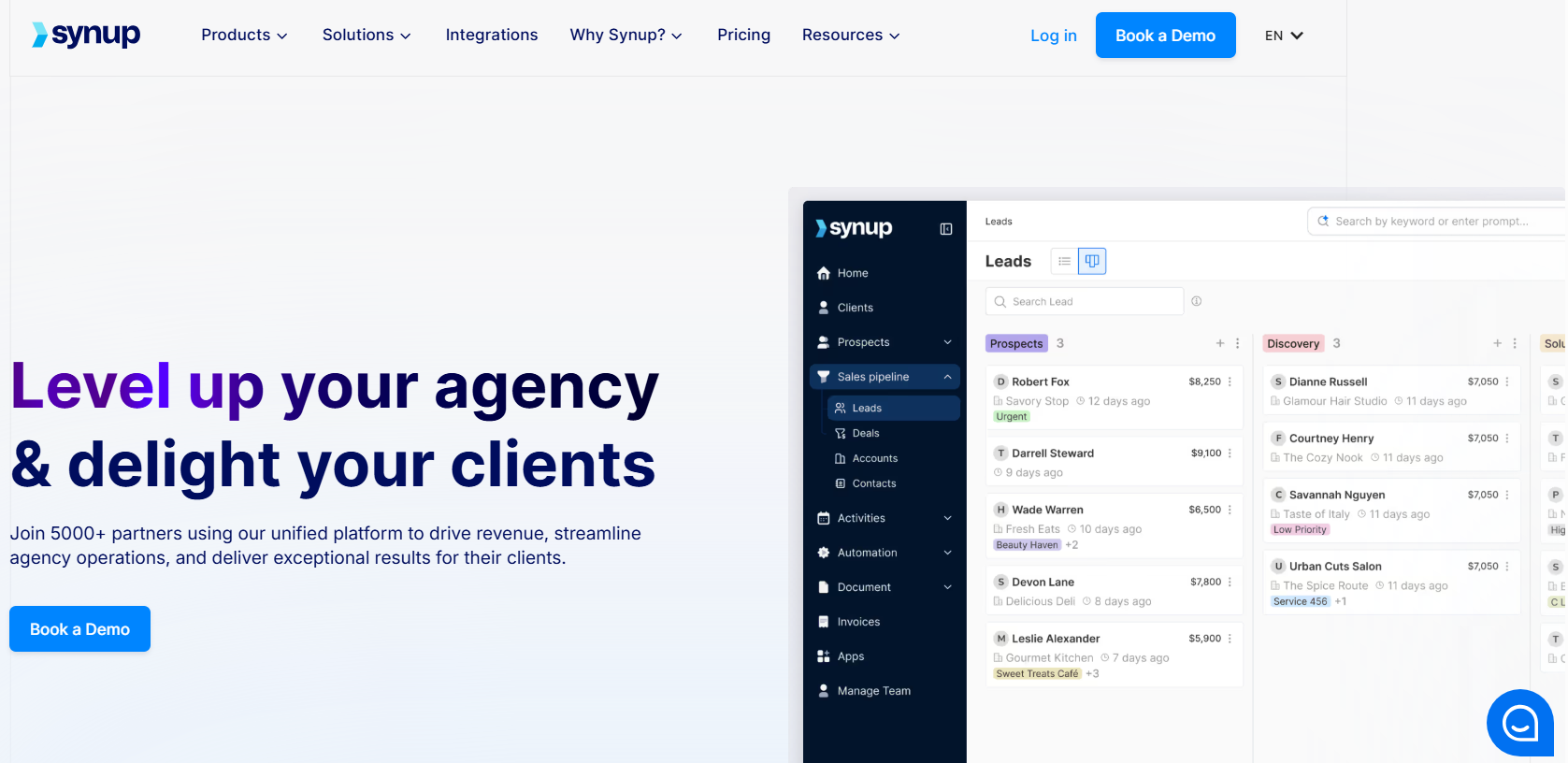
Synup helps brands manage their online presence by maintaining accurate business listings and monitoring customer feedback across review sites. It enables marketing teams to track local search performance, monitor reviews, and manage social media publishing from one platform.
Key capabilities
- Listings management across directories and search engines to maintain consistent business information.
- Review monitoring across multiple platforms with alerts when new feedback appears.
- Local SEO tracking that shows keyword rankings and search visibility by location.
Pros
- Useful for maintaining accurate business information across directories.
- Provides centralized visibility into customer reviews.
- Includes local search tracking to monitor keyword performance.
- Helps teams manage listings and feedback from one dashboard.
Cons
- Analytics and insights are more limited compared with advanced reputation platforms.
- Workflow automation for review generation and responses is relatively basic.
- Some integrations may require manual configuration.
G2 rating: 4.5 / 5 with 310+ reviews
4. GatherUP
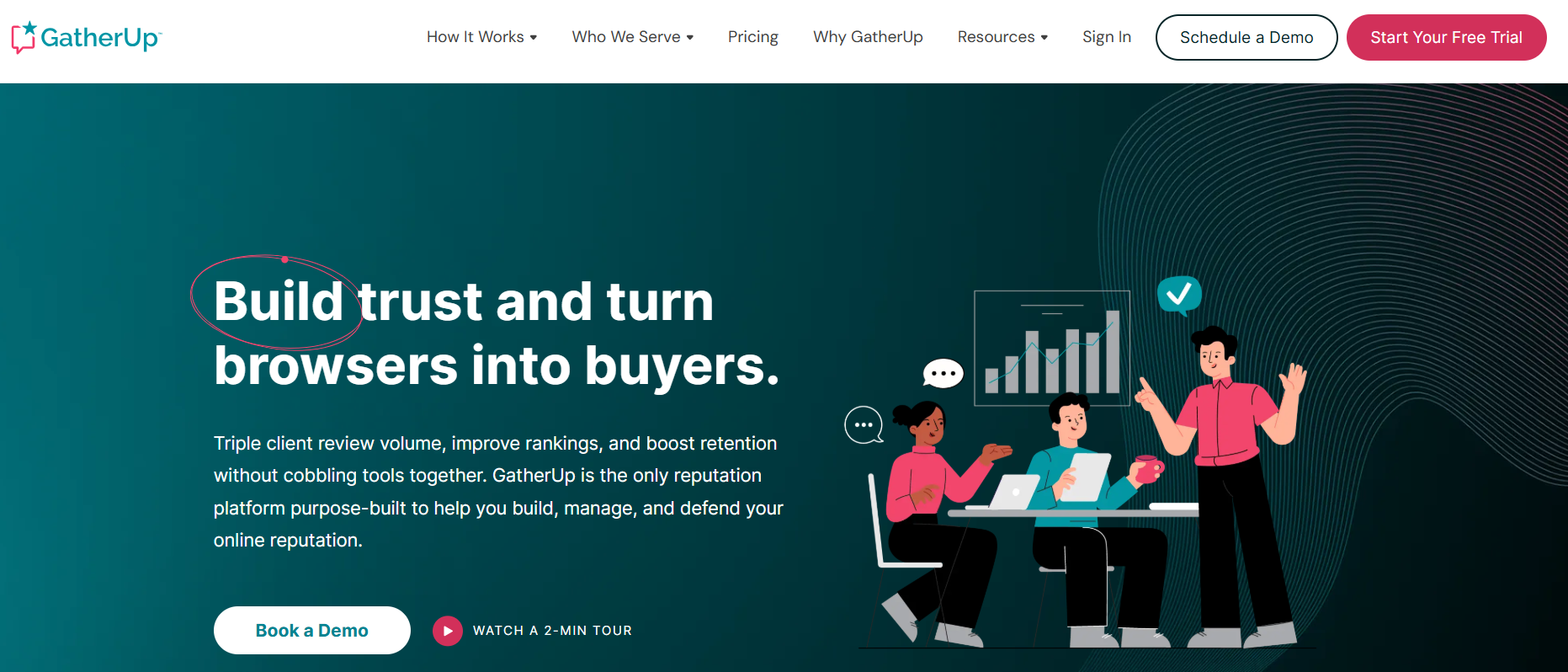
GatherUp focuses on helping businesses collect customer feedback, generate reviews, and improve online reputation. It is widely used by agencies and small-to-mid-sized businesses looking to strengthen review presence and customer insights.
Key capabilities
- Review generation through automated customer feedback and outreach campaigns.
- Centralized dashboard to monitor and respond to reviews across platforms.
- Customer experience insights through surveys and feedback collection.
- Integration with CRM and business tools to trigger review requests.
Pros
- eview generation capabilities that help increase review volume.
- Simple interface that is easy for teams to adopt.
- Useful feedback and survey tools for understanding customer sentiment.
- Supports agencies managing multiple client locations.
Cons
- Listings management capabilities are more limited compared to full-suite platforms.
- Less focus on AI-driven automation and large-scale workflows.
- May require additional tools for enterprise-level reputation operations.
5. EmbedSocial

EmbedSocial helps brands manage Google Business Profiles and customer reviews across locations. The platform focuses on simplifying bulk updates and collecting analytics that help brands improve local search visibility. It allows marketing teams to monitor reviews, update location information, and analyze engagement trends across locations.
Key capabilities
- Centralized management of multiple Google Business Profiles from one dashboard.
- Review monitoring and analytics across locations to track customer feedback trends.
- Bulk updates for location information across business profiles.
Pros
- Tools for managing Google Business Profiles across multiple locations.
- Provides useful review analytics for monitoring reputation trends.
- Helps teams track feedback and engagement across locations.
- Simple interface that is easy for marketing teams to use.
Cons
- Focuses mainly on Google Business Profile management rather than full reputation marketing.
- Social media and engagement tools are limited compared with broader platforms.
- Automation features are more basic than comprehensive reputation management platforms.
Final thoughts
Managing reputation across locations requires more than just monitoring reviews. It demands total operational coordination. While many SOCi alternatives offer fragmented tools, Birdeye unifies reputation management, customer engagement, and operational control into one Full-cycle platform. Designed for brands with thousands of locations, Birdeye empowers teams to maintain brand consistency and respond to feedback instantly, all from a single agentic marketic platform.

Lynn Martelli is an editor at Readability. She received her MFA in Creative Writing from Antioch University and has worked as an editor for over 10 years. Lynn has edited a wide variety of books, including fiction, non-fiction, memoirs, and more. In her free time, Lynn enjoys reading, writing, and spending time with her family and friends.