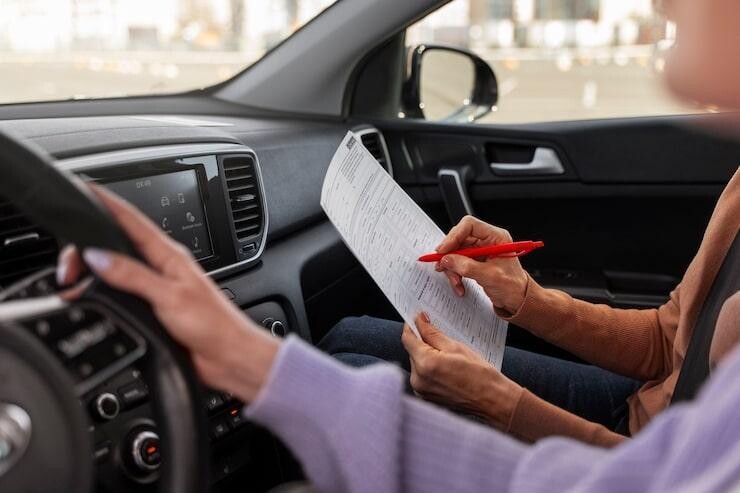
The Quebec driving test covers the practical driving skills needed to demonstrate that you can operate a vehicle safely, responsibly, and in accordance with traffic laws. During the road test, the examiner assesses your ability to control the vehicle, observe your surroundings, follow traffic rules, make safe decisions, maintain proper lane position, and interact appropriately with other road users.
If you are preparing for the test, check out this SAAQ test site for additional practice and preparation resources, but be sure to use the official SAAQ materials as your primary source of information. Combining official study resources with practical preparation can help you understand what examiners look for and feel more confident behind the wheel.
To succeed on test day, it is important to understand the key skills and driving behaviors that the SAAQ evaluates during the road test.
Independent Driving
One of the main areas assessed is your ability to drive independently. The SAAQ looks at whether you can observe what is happening around you, evaluate the situation, make appropriate decisions, and perform the correct maneuver at the right time.
This means you should not simply follow instructions mechanically. You need to demonstrate that you can recognize potential hazards and respond appropriately while maintaining control of the vehicle.
Visual Checks
Proper observation is an important part of safe driving. During the test, the examiner evaluates whether you scan your surroundings and perform appropriate visual checks. For example, you should check over your shoulder when turning or changing lanes.
You also need to remain aware of vehicles, pedestrians, cyclists, signs, and other road users around you. Developing good observation habits before the test can help you perform these checks naturally instead of remembering them only when the examiner is watching.
Vehicle Control
The SAAQ evaluates how well you control the vehicle and manage your speed. You should be able to maintain an appropriate position within your lane while keeping safe distances from other road users.
Smooth acceleration, braking, steering, and lane positioning all contribute to safe vehicle control. Avoid making sudden movements unless the situation requires them.
Speed and Right-of-Way
Following traffic rules is another major part of the Quebec driving test. The examiner checks whether you respect posted speed limits, stop correctly at red lights and stop signs, and properly follow right-of-way rules.
You should also understand when you need to yield to other vehicles, pedestrians, or cyclists. Simply knowing the rules is not enough. You need to apply them correctly while driving.
Safe and Courteous Driving
The SAAQ wants drivers to demonstrate confidence while remaining cooperative and responsible. This includes respecting other road users and making decisions that promote safety.
Avoid aggressive maneuvers, unnecessary lane changes, and sudden actions. Pay attention to the overall traffic environment rather than focusing only on what is directly ahead of your vehicle.
Vehicle Safety
Your vehicle must also be safe and in good mechanical condition for the road test. The examiner can check components such as the windshield, windows, turn signals, brake lights, mirrors, windshield wipers, brakes, horn, tires, and other equipment.
If the vehicle does not meet applicable requirements, you may not be allowed to take the test. Preparing the vehicle in advance can therefore prevent an avoidable problem.
How Long Is the Road Test?
For a passenger vehicle, the road test takes approximately 30 minutes, although the entire appointment generally takes about an hour. The examiner explains the test procedure before you begin.
The road test has a passing mark of 75%. Certain serious mistakes can result in an automatic failure. These include failing to stop at a red light or stop sign, exceeding the posted speed limit, or driving against traffic.
How Can You Prepare?
Practice on Quebec roads before your test and focus on the areas the SAAQ evaluates. Work on checking your blind spots, maintaining proper lane position, controlling your speed, following signs, and making safe decisions at intersections.
The official SAAQ also recommends practicing driving before the test and allows drivers to take refresher training through a driving school if they want additional instruction.
What Should You Bring?
Before the test, make sure you have the required documents and a suitable vehicle. Depending on your circumstances, you may need your learner’s license, vehicle registration, proof of liability insurance, and driving course documentation.
Checking these requirements before test day can help prevent unnecessary delays.
Key Takeaways
- The Quebec driving test evaluates safe, cooperative, and responsible driving.
- Examiners assess observation, decision-making, vehicle control, speed, lane position, and right-of-way.
- Following traffic signs, signals, and road rules is essential.
- Your vehicle must meet applicable safety and mechanical requirements.
- The passenger vehicle road test takes approximately 30 minutes.

Lynn Martelli is an editor at Readability. She received her MFA in Creative Writing from Antioch University and has worked as an editor for over 10 years. Lynn has edited a wide variety of books, including fiction, non-fiction, memoirs, and more. In her free time, Lynn enjoys reading, writing, and spending time with her family and friends.