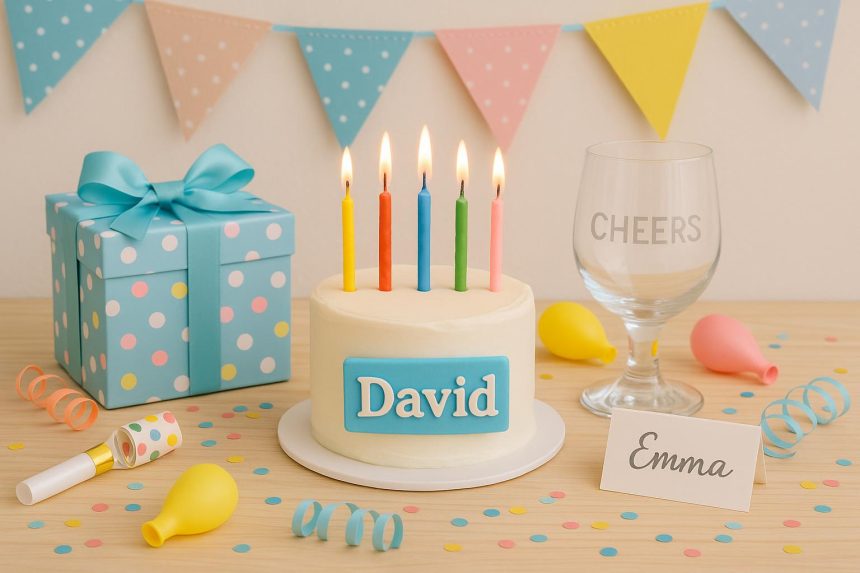
For years, personalization was treated as a business concept. Marketers used the word constantly. Sales teams built strategies around it. Companies invested in software designed to make every customer interaction feel custom-made. Somewhere along the way, the idea slipped out of the boardroom and into ordinary life.
Today, people expect personalization in places that used to feel templated by default. Coffee orders. Streaming recommendations. Workout plans. And, increasingly, the small celebrations that make up most of a calendar year. Birthdays, in particular, have become a quiet testing ground for how much personalization a normal person can comfortably manage on their own.
The shift is worth paying attention to, because it says something about where culture is heading.
The end of the generic celebration
Twenty years ago, throwing a birthday party meant choosing from a relatively small set of defaults. You picked a venue from a short list. You bought a card from the rack at the grocery store. You ordered a cake from the bakery section. The result was a perfectly fine celebration that looked roughly like every other birthday celebration that month.
That model is fading. Not because people stopped enjoying birthdays, but because the expectations around what a thoughtful celebration looks like have changed. Guests notice when a party feels generic. Hosts feel the difference too. A celebration that reflects the person being celebrated, even in small ways, lands differently than one that feels assembled from a checklist.
The interesting part is that this shift is not being driven by people with bigger budgets or more time. If anything, the opposite. The hosts pushing personalization forward are usually busy parents, working professionals, and adults juggling multiple obligations. They are not adding more steps to their celebration planning. They are using better tools to do more with less effort.
Why the invitation matters more than people realize
Here is something worth admitting. Most people treat the invitation as an afterthought. It goes out a week or two before the party, often via group chat or a quick text. The actual party planning happens elsewhere.
That habit costs more than hosts tend to recognize.
The invitation is the first signal a guest receives about the celebration. It sets the tone. It communicates the level of effort that went into the planning. It influences whether guests show up dressed for the occasion, on time, with the right gift, in the right mindset. A throwaway invitation tends to produce a throwaway response. A thoughtful one creates anticipation, which is a surprisingly large part of what makes a celebration feel special.
The good news is that sending a thoughtful Birthday Invitation no longer requires hours of work or a graphic design background. AI-driven invitation platforms have changed the math entirely. A host can describe the vibe of the party in a sentence or two, generate a custom design in under a minute, and send it out with built-in RSVP tracking and a gift registry attached. The whole process takes less time than choosing a stock card at the grocery store.
What used to be a chore has become one of the most strategic moves a host can make.
Personalization is mostly about specificity
The mistake most people make with personalization is treating it as a synonym for “fancy.” It is not. Personalization, done well, is mostly about specificity.
A generic invitation says “You’re invited to Jake’s birthday.” A specific one says “You’re invited to Jake’s tenth birthday at the rock climbing gym, please come ready to scramble.” Both technically convey the same information. But one of them sounds like a real human throwing a real party for a real kid, and the other sounds like a form letter.
The same logic applies to almost every part of a celebration. The menu that reflects what the birthday person actually likes to eat. The playlist that includes songs only their friends would recognize. The cake that nods to an inside joke. The activity that builds on a hobby. None of these things require more money or more effort than the generic alternatives. They just require a little more attention to who the celebration is actually for.
Specificity is also harder to fake. A guest can tell the difference between a host who copied a Pinterest board and a host who chose every element with the birthday person in mind. The first version looks better in photos. The second version is the one people remember a year later.
The role of technology, used well
Technology is doing two things to celebration culture right now. It is making the bar higher, and it is making the bar easier to clear.
The bar is higher because social media has trained everyone to compare their parties to highly curated versions of other people’s parties. A casual backyard barbecue can suddenly feel inadequate next to a feed full of professionally styled events. That pressure is not entirely healthy, and it is worth pushing back against.
But the bar is also easier to clear, because the tools that used to be reserved for professionals are now available to anyone with a phone. Custom invitations. Digital RSVP tracking. Group gift coordination. Photo collection and sharing after the event. None of these things existed in usable form for ordinary hosts even five years ago. Now they are free or nearly free, and the design quality often rivals what professional event planners were producing a decade ago.
The hosts getting the most out of this shift are the ones treating these tools as time-savers, not as ways to make their parties look more elaborate. The goal is not to throw a fancier celebration. The goal is to throw a more thoughtful one with less effort.
What this means going forward
The trend toward personalization in celebrations is not slowing down. If anything, it is accelerating as the tools get better and the expectations adjust. The hosts who figure this out early will throw the parties their friends and family talk about for years. The ones who keep treating celebrations as logistical checklists will keep producing forgettable events.
The shift does not require a bigger budget. It requires a small change in mindset. Start with the invitation. Treat it as the first impression of the celebration, not the last logistical step. Choose specificity over generality wherever possible. Use the tools available to save time on the parts that do not matter, so you can spend more attention on the parts that do.
That is what personalization actually looks like in practice. Not flashier celebrations, just more honest ones.

Lynn Martelli is an editor at Readability. She received her MFA in Creative Writing from Antioch University and has worked as an editor for over 10 years. Lynn has edited a wide variety of books, including fiction, non-fiction, memoirs, and more. In her free time, Lynn enjoys reading, writing, and spending time with her family and friends.