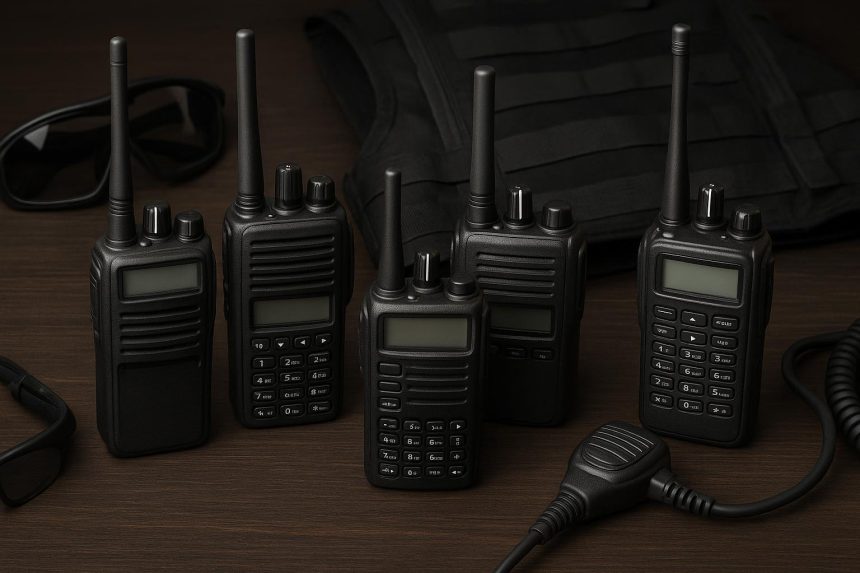
Reliable communication sits at the core of effective public safety operations. Whether used by law enforcement, fire departments, emergency medical teams or disaster response units, tactical radios must deliver consistent performance under pressure.
Fortunately, advancements in radio technology and manufacturing have made high-quality tactical communication systems more accessible. Today’s market includes a range of affordable options that balance durability, range and advanced features without overwhelming budgets.
The Rapid Growth of the Tactical Radios Market
The global tactical radios market is expanding quickly, growing from $13.66 billion in 2025 to $15.86 billion in 2026. This growth is mainly driven by the rising demand for secure battlefield communications, advances in encryption, rugged radio systems for harsh conditions and increased defense spending on modern tactical communication equipment.
Looking ahead, the market will benefit from AI integration, software-defined radios and stronger demand for interoperable, network-centric systems. Other important trends include lightweight and energy-efficient designs, cybersecurity upgrades, better encryption protocols, and wireless communications.
Below is a list of top companies offering affordable tactical radios for public safety, focusing on value, reliability and real-world usability.
1. Silvus Technologies
Silvus Technologies combines cutting-edge performance with ease of use. While its technology is sophisticated, the user experience remains straightforward, allowing operators to focus on mission objectives rather than system management. Its radios excel in environments where traditional systems struggle, such as urban canyons, disaster zones and high-interference areas. For public safety agencies seeking long-term reliability and scalability, it offers unmatched value.
Key Features
- Proprietary Mobile Networked MIMO waveform technology for superior range and data throughput
- Self-forming and self-healing mesh networking
- Intuitive graphical user interface
- Automated configuration to reduce operator workload
2. Motorola Solutions
Motorola Solutions remains one of the most recognized names in public safety communications, offering a wide range of radios across price points. Motorola Solutions delivers proven reliability and interoperability. Its lower-tier models provide essential functionality at a more accessible price, making them a practical option for agencies upgrading legacy systems.
Key Features
- Project 25-compliant systems
- Advanced encryption capabilities
- Strong ecosystem integration
- Durable hardware designed for field use
3. Kenwood
Kenwood has built a reputation for producing reliable and cost-effective two-way radios. Kenwood radios offer a strong balance between affordability and performance. They are particularly well-suited for smaller departments that need dependable communication without extensive customization.
Key Features
- Next Generation Digital Narrowband and digital mobile radio (DMR) digital protocols
- Compact and lightweight designs
- Long battery life
- Clear audio output with noise reduction
4. Hytera Communications
Hytera focuses on delivering feature-rich radios at competitive prices, making it a strong contender in the affordability category. It provides advanced features typically found in higher-end systems at a lower cost, making it attractive for agencies seeking modern capabilities without premium pricing.
Key Features
- DMR-based digital communication
- GPS tracking and dispatch integration
- Ruggedized designs
- Wide product range for different use cases
5. Icom America Inc.
Icom America Inc. offers versatile radio solutions known for their durability and ease of use. Icom radios excel in reliability and straightforward operation. They are ideal for teams that prioritize ease of deployment and minimal training requirements.
Key Features
- Waterproof and dustproof designs
- Strong signal clarity
- Wide frequency coverage
- Simple user interfaces
6. Tait Communications
Tait Communications specializes in public safety communication systems with a focus on interoperability. It also offers flexibility for agencies operating across multiple communication systems. Its radios provide long-term value through adaptability and system compatibility.
Key Features
- Multi-band and multi-protocol support
- Open standards for integration
- Customizable configurations
- Robust build quality
7. L3Harris
L3Harris delivers advanced tactical communication systems for both the military and public safety sectors. While some of its products sit at a higher price point, the company also offers scalable solutions that deliver strong performance for the cost. These radios are ideal for agencies that require advanced capabilities within a controlled budget.
Key Features
- Software-defined radio architecture
- Secure communication channels
- High-performance networking capabilities
- Scalable system design
8. BK Technologies
BK Technologies focuses on mission-critical radios designed specifically for public safety professionals. The company prioritizes usability in extreme conditions. Its radios deliver strong performance at a reasonable price, particularly for fire and rescue teams.
Key Features
- Firefighter-friendly designs
- High heat and impact resistance
- Loud, clear audio output
- Simple controls for emergency use
9. Sepura
Sepura provides digital radio solutions widely used in public safety and transportation sectors. It offers reliable communication with a focus on user safety and ergonomics. Its systems provide solid value for agencies operating in structured communication environments.
Key Features
- TETRA-based communication systems
- Advanced audio processing
- Ergonomic design
- Integrated safety features
10. Entel Group
Trusted globally, Entel produces rugged radios designed for demanding industrial and public safety applications. Entel radios can withstand harsh environments while maintaining affordability. They are particularly useful for teams operating in maritime or industrial settings.
Key Features
- MIL-STD durability standards
- IP68 waterproof ratings
- High visibility displays
- Strong audio performance
Methodology for Selecting Top Tactical Radio Providers
Selecting the top providers of affordable tactical radios involved a comprehensive evaluation that went beyond a simple price comparison. The ranking prioritizes a balance of mission-critical performance, long-term value, and overall reliability in public safety environments. The following factors were key in the selection and ranking process:
- Communication performance: This criterion assesses the radio’s ability to provide clear, secure, and encrypted voice transmission. It includes factors such as a wide signal range, high interference resistance, and advanced noise cancellation for intelligibility in loud environments.
- Mission-ready durability: Radios were evaluated on their ability to withstand harsh environmental conditions. This includes meeting or exceeding military or industrial standards for resistance to shock, water, and extreme temperatures.
- Operational simplicity: In high-pressure scenarios, ease of use is paramount. The selection favored radios with simple controls, intuitive interfaces for rapid deployment, and a long battery life to last through extended incidents.
- Interoperability and integration: A provider’s commitment to open standards and the radio’s ability to integrate with existing public safety communication systems were critical factors, ensuring seamless operation during multi-agency responses.
- Advanced capabilities: The inclusion of modern features that enhance operational effectiveness was weighed heavily. This includes capabilities such as mesh networking for signal redundancy, GPS for location tracking, and scalable system designs.
- Total cost of ownership: The analysis considered more than the initial purchase price. Factors such as maintenance costs, potential upgrade paths, and training requirements were weighed to determine the solutions’ true long-term value and affordability.
Comparative Summary Table for Top Tactical Radios
The following table summarizes the key strengths and ideal use cases for each of the top providers. This provides a clear, at-a-glance comparison to help guide decisions.
| Company | Best for | Strengths |
| Silvus Technologies | Overall value | Advanced mesh networking and ease of use |
| Motorola Solutions | Established systems | Reliability and ecosystem integration |
| Kenwood | Small departments | Affordability and simplicity |
| Hytera | Feature-rich affordability | Modern features and competitive pricing |
| Icom America Inc. | Ease of use | Durability and simplicity |
| Tait Communications | Interoperability | Flexible configurations |
| L3Harris | Advanced capabilities | High performance and scalability |
| BK Technologies | Fire and rescue teams | Rugged design and usability |
| Sepura | Structured systems | Safety features and ergonomic design |
| Entel | Harsh environments | Durability and waterproofing |
Connecting Teams When It Matters Most
The tactical radio market has evolved significantly, making reliable communication tools more accessible without compromising performance. Today’s affordable options offer a mix of durability, advanced features and user-friendly design that meets the demands of modern public safety operations.
Companies that prioritize both innovation and usability stand out in delivering long-term value. Radios that simplify operation while maintaining strong connectivity help reduce cognitive load and improve response effectiveness in critical situations.
Ultimately, the best choice depends on an agency’s specific requirements. By focusing on performance, interoperability and ease of use, organizations can invest in solutions that enhance communication reliability while staying within budget, ensuring teams remain connected when it matters most.

Lynn Martelli is an editor at Readability. She received her MFA in Creative Writing from Antioch University and has worked as an editor for over 10 years. Lynn has edited a wide variety of books, including fiction, non-fiction, memoirs, and more. In her free time, Lynn enjoys reading, writing, and spending time with her family and friends.