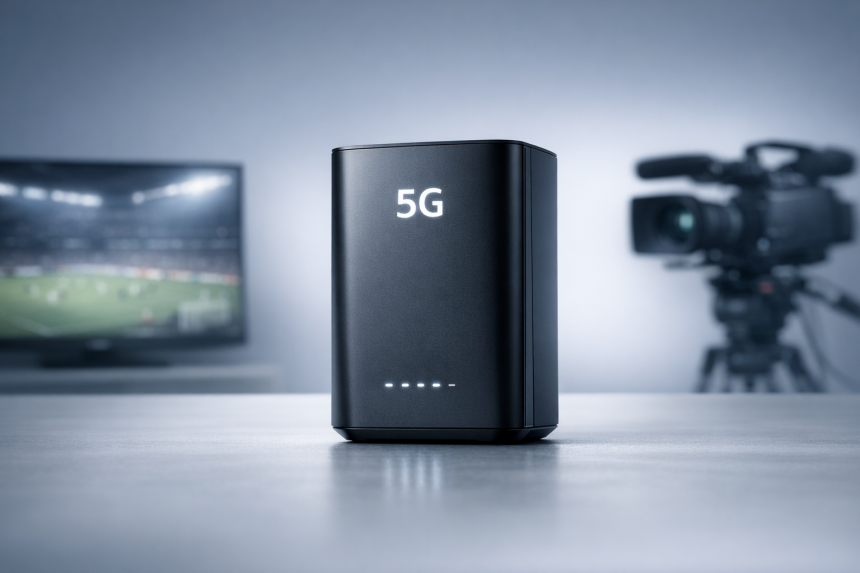
The advent of 5G technology marks a significant turning point across various sectors, including sports broadcasting. With its promise of faster and more reliable connections, 5G is poised to redefine how audiences experience live sports events. This article delves into the transformative impact of 5G on sports broadcasting and its potential future developments.
5G technology, with its promise of ultra-fast connectivity and low latency, is revolutionizing industries worldwide. As it gains momentum, one area witnessing profound change is sports broadcasting. The enhanced capabilities of 5G allow broadcasters to deliver higher-quality streams, offering a more immersive experience for viewers.
This shift not only impacts how events are broadcast but also transforms how fans engage with their favorite sports, making it an exciting era for sports enthusiasts and industry professionals alike. For those interested in attending live events, even purchasing Abu Dhabi F1 tickets has become more accessible and convenient, thanks to advancements in technology.
The Evolution from Traditional to Modern Methods
In the past, sports broadcasting relied heavily on satellite feeds and cable networks to deliver content to audiences. These traditional methods, while effective, had limitations such as delayed transmissions and limited interactivity. High-definition streams were often marred by buffering issues, especially during high-demand events. With the introduction of 5G, these constraints are being addressed, offering a more seamless viewing experience.
Before 5G, broadcasters faced challenges in delivering consistent streaming quality due to bandwidth limitations. Large-scale sporting events frequently encountered lagging issues, detracting from the viewer experience. As technology advanced, there was a growing need for more reliable solutions. The arrival of 5G has paved the way for significant improvements in these areas, promising to transform how sports events are broadcast globally.
Benefits that Enhance Modern Broadcasting Experiences
The introduction of 5G technology in sports broadcasting has brought about several notable benefits. One primary advantage is enhanced streaming quality, allowing for smoother and higher-resolution broadcasts. This improvement provides fans with a viewing experience that closely mimics being at the event itself. With faster data speeds, broadcasts can now incorporate high-quality visuals without interruptions.
Additionally, 5G enables real-time data transmission that significantly enhances the viewer experience through live statistics and interactive features. Fans can access up-to-the-minute stats and replays seamlessly integrated into broadcasts. This capability not only enriches the viewing experience but also opens avenues for real-time analytics that were previously impossible with slower networks.
Improved fan engagement is another one of the standout benefits of integrating 5G into sports broadcasting strategies. The technology supports new interactive experiences such as virtual reality (VR) and augmented reality (AR), offering fans an immersive way to enjoy sports. By bringing fans closer to the action through innovative applications, broadcasters are redefining what it means to watch live sports.
Current Integrations and Future Outlook
Several organizations have already begun leveraging 5G technology to enhance their broadcasting capabilities. Sporting events worldwide have started experimenting with augmented reality overlays and VR experiences to bring fans closer to the action than ever before. These early integrations showcase the potential of 5G in transforming how audiences consume live sports content.
Looking ahead, the continued evolution of 5G presents both challenges and opportunities for sports broadcasting. While there are technical hurdles to overcome, such as infrastructure development and device compatibility, the potential benefits far outweigh these challenges. As technology progresses, broadcasters are likely to explore new ways to connect with viewers through interactive platforms and enhanced connectivity.
The transformative impact of 5G on sports broadcasting is undeniable, as it continues to shape the future landscape of how audiences experience live events. With faster speeds and improved reliability, this technology holds the promise of redefining audience engagement in unprecedented ways.

Lynn Martelli is an editor at Readability. She received her MFA in Creative Writing from Antioch University and has worked as an editor for over 10 years. Lynn has edited a wide variety of books, including fiction, non-fiction, memoirs, and more. In her free time, Lynn enjoys reading, writing, and spending time with her family and friends.