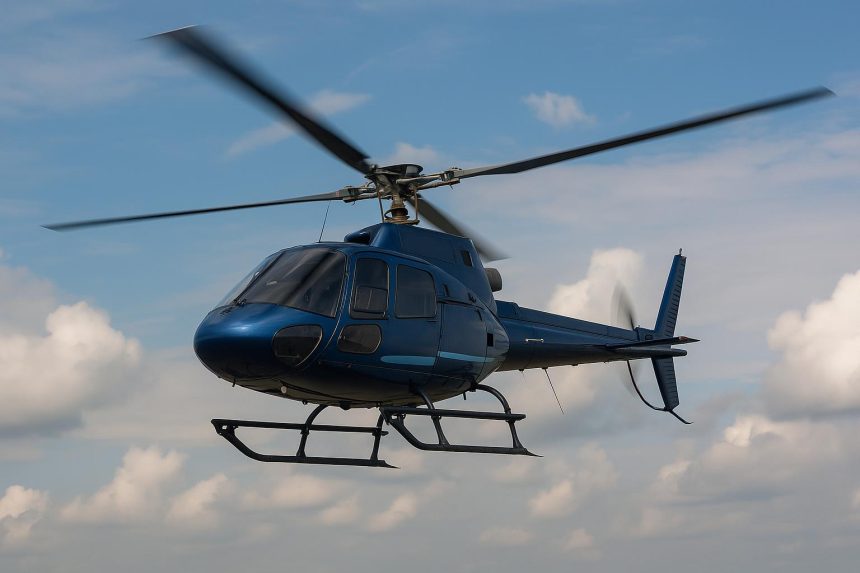
Helicopters are an engineering marvel that achieve both vertical lift and forward motion. Individuals unfamiliar with the aviation industry are often surprised by their speed. Many of them want to know how fast a helicopter can go. Various technical parameters influence the boundaries, characterized by performance on the one hand and safety on the other. These factors are crucial in understanding the differences in the speeds of helicopters.
Rotor Blade Design
If you want to know, “How fast does a helicopter fly?” You must consider the rotor blade’s design, as it influences flight speed. The delivery of airflow depends on the size, shape, and weight of the vanes. The longer the blade, the more lift it can produce, but length comes at a cost: increased drag. The angle of the blades, known as pitch, also influences performance. Composites or metals used within construction impact strength and flexibility. Engineers pore over the equation to maximize speed.
Engine Power and Type
At the core of any helicopter sits the engine. Faster-spinning rotors and the ability to carry heavier payloads require more powerful engines. many modern helicopters also use gas turbine engines because they offer a greater power-to-weight ratio. Piston engines deliver less thrust, but they are cheaper and are most commonly found in smaller helicopters. So, naturally, the engine type and capacity affect the speed that it can achieve, especially in level flight.
Aerodynamic Efficiency
The concept of aerodynamics relates simply to how a helicopter will fly through the air. Aerodynamic fuselage shapes minimize drag, allowing the aircraft to penetrate the atmosphere with less resistance. Anything that sticks out from the main body, like landing gear and other external equipment, adds drag, which can lower speed. Designers are constantly trying to find ways around these factors to achieve more uninterrupted flow and faster flight.
Weight and Load
the total weight a helicopter carries influences its speed. More passengers, more cargo, and more weight equipment mean it requires more lift, which means more engine power. Helicopter pilots must work hard when traveling quickly because of the weight. Pilots frequently measure weight before flights, constantly checking loadouts to ensure the fastest and safest flight possible.
Altitude and Air Density
Altitude also impacts a helicopter’s performance. As the altitude increases, this air gets thinner, creating a problem for lift and engine efficiency. Helicopters at higher altitudes might have a reduced max airspeed. Density also varies with temperature and humidity. If the air is cooler and denser, it results in better engine performance, better lift, and, for a given condition, higher speeds.
Transmission and Gear Systems
The transmission links the engine to the rotor blades. The gear system efficiently allows the rotor speed to remain at an optimal level to ensure negligible power loss. An older or less advanced transmission can waste energy and limit brake performance. Helicopters face mechanical losses, which can lead to reduced performance; regular maintenance prevents these mechanical losses, helping the helicopter to reach its highest possible speed.
Pilot Skill and Technique
You must also consider the capabilities of the person piloting the helicopter. Experienced pilots know how to manipulate controls for optimum functionality. They understand how to use the pitch, throttle, and collective controls to optimize speed. Trained and experienced pilots know the limits of their machines and avoid overstressing them; such overuse can lead to vehicle damage.
Weather and Environmental Conditions
Weather considerably impacts helicopter speed. Favorable wind direction gives the helicopter a push in the right direction; however, if the wind is blowing unfavorably, travel can feel like an uphill climb. While flying, in many rain, fog, or turbulence scenarios, pilots must slow the craft down due to safety considerations. Despite the technical capabilities of a helicopter, its speed and safety are often determined more by visibility and surprise air currents than by the helicopter itself.
Conclusion
Many of these factors are technical in nature, such as rotor design, engine type, and aerodynamics, and all of these measures help us achieve the helicopter’s speed. In addition, consider the effects of weight, altitude, and weather, as they also affect performance. Helicopters don’t travel faster than their respective speeds due to pilot skill as well as strict safety regulations. Understanding these factors leads to a greater appreciation for the engineering and skill involved in achieving direct and repeatable flights.

Lynn Martelli is an editor at Readability. She received her MFA in Creative Writing from Antioch University and has worked as an editor for over 10 years. Lynn has edited a wide variety of books, including fiction, non-fiction, memoirs, and more. In her free time, Lynn enjoys reading, writing, and spending time with her family and friends.