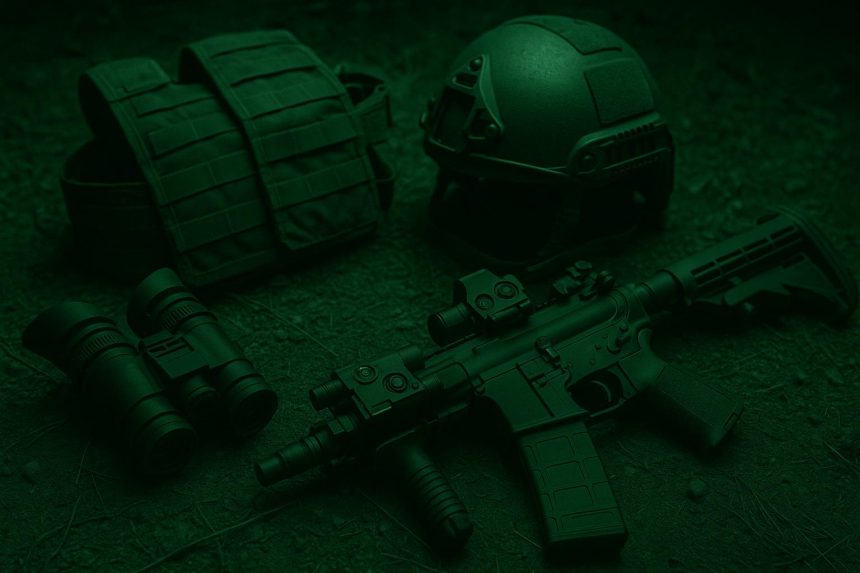
Night vision technology is impressive, and it genuinely expands what flight crews can do after dark. But the equipment only delivers on that promise when the people using it are properly prepared. Aviation NVG training benefits show up not in the gear itself but in the judgment, habits, and coordination of the crew wearing it.
Owning advanced optics without the skill to use them correctly does not reduce night flight risk. It simply relocates it.
The Gap Between Owning Gear and Using It Well
Night vision goggles introduce perceptual limitations that pilots have to learn to compensate for. Depth perception changes under NVG conditions. Peripheral vision narrows. The visual information during an approach or a hover is meaningfully different from what a pilot expects in daytime or unaided night flying.
A crew that has not trained under these conditions will default to habits that do not apply. That mismatch between expectation and reality is where errors happen. More capable equipment in the hands of an unprepared crew does not close that gap. It widens it.
This is not a criticism of the technology. Any tool is only as effective as the proficiency of the person using it. NVG systems are no exception to that.
What Comprehensive NVG Training Actually Needs to Cover
Good training does more than teach a pilot how to put on and adjust a set of goggles. It builds a working understanding of the visual limitations involved, the specific failure modes that matter, and the practical techniques for managing those limitations through task distribution and crew communication.
Emergency procedures under NVG conditions require dedicated practice. What to do when goggles fail on approach, how to transition back to unaided flight, and how to maintain awareness through a rapid change in visual information are scenarios that need deliberate training to handle well.
Maintenance technicians and ground crew also require a level of awareness training that goes beyond the basics. White-light sensitivity, proper storage, battery management, and pre-flight inspection standards all affect whether the gear performs as expected when it matters.
Aviation NVG Training Benefits: Why FAA Approval Matters Here
FAA-approved training carries a defined structure and verifiable standard. It ensures the program covers what regulators have determined to be the minimum competency required for safe NVG operations. For civilian operators, that baseline is not just a regulatory checkbox. It is the minimum condition for operating responsibly.
Programs that include simulator training alongside practical flights give crews more repetitions under controlled conditions before flying real missions. That exposure accelerates competency in a way that pure ground school cannot replicate. Programs like the nvg training offered by Night Flight Concepts are built specifically around FAA-approved curricula and cover pilots, crew members, and maintenance technicians as distinct populations with distinct needs.
Approval also affects documentation, which matters during audits, incident investigations, and insurance reviews. A training record that references an approved program carries more weight than one referencing an informal course with no regulatory backing.
Recurrent Training Is Where Proficiency Is Actually Maintained
Pilot proficiency under NVG conditions degrades faster than most operators expect. Skills that feel sharp after initial training can erode significantly over a few months without practice. This is not unique to night vision; it reflects how motor and perceptual skills work in any high-demand environment.
Recurrent training programs address this by giving crews regular exposure to the conditions and scenarios that matter. The goal is not to re-teach what was learned initially but to keep those skills accessible under pressure when the workload is high and the conditions are demanding.
Operations that schedule recurrent training at regular intervals tend to have crews that respond more consistently during actual missions. The training interval matters, but so does the quality of what happens in each session.
How Crew Coordination Reduces Night Flight Risk in Practice
Night operations require more deliberate crew coordination than daytime flying. The narrower field of view from goggles, combined with the workload of NVG flight, means tasks need to be divided more explicitly and communication must be more disciplined than crews may be used to.
Training that builds shared language and established callouts for common NVG scenarios reduces the cognitive load on each individual crew member. When everyone knows the protocol, fewer decisions have to be made in the moment under stress. That consistency is what makes a crew predictable and safe.
Crew coordination training is most effective when it mirrors the actual missions the team will fly. Generic scenarios build generic habits. Mission-specific training builds the coordination that actually reduces night flight risk in the field.
The Investment That Actually Improves Night Operation Outcomes
Organizations that take NVG capability seriously invest in both the hardware and the human factors. The gear enables the mission. The training and crew coordination determine whether that mission goes well. Neither half works without the other.
Decision-makers who treat training as a cost rather than a capability investment are usually the ones who discover its value after an incident rather than before one. The pattern is consistent enough that it should influence budget priorities from the start.
Aviation NVG training benefits are real and measurable, but only when the training itself is structured, approved, and repeated regularly. Equipment gets the crew into the dark. Preparation is what gets them back.

Lynn Martelli is an editor at Readability. She received her MFA in Creative Writing from Antioch University and has worked as an editor for over 10 years. Lynn has edited a wide variety of books, including fiction, non-fiction, memoirs, and more. In her free time, Lynn enjoys reading, writing, and spending time with her family and friends.