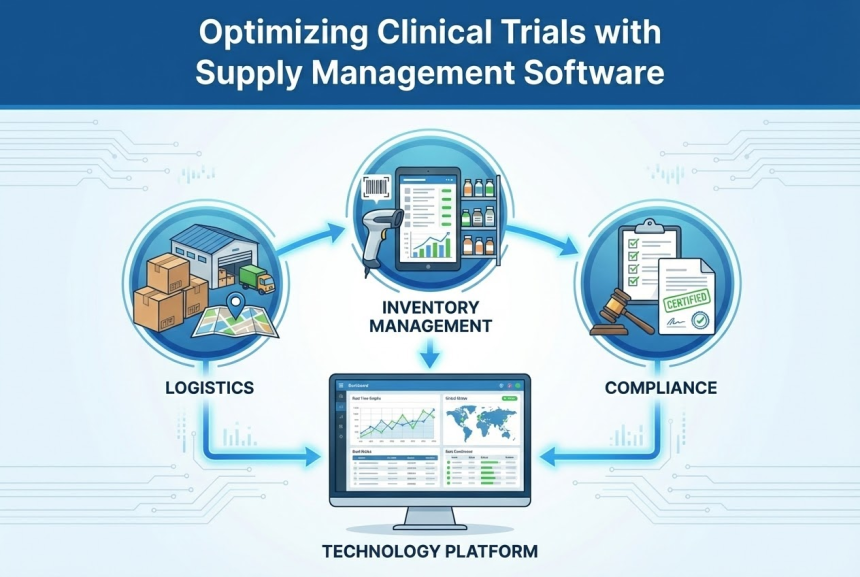
Clinical trials are at the heart of medical advancement, but managing the complexities of drug supply, inventory, and distribution remains a challenge for many researchers and trial managers. That’s where clinical trial supply management (CTSM) software comes into play. By leveraging advanced technologies, CTSM software streamlines logistics, ensures compliance, and enhances the efficiency of clinical trials. This software offers a comprehensive solution for managing clinical supplies from the initial planning stages to trial completion.
In this article, we will explore how clinical trial supply management software can optimize clinical trials by improving inventory control, reducing costs, and ensuring the timely delivery of trial supplies.
What is Clinical Trial Supply Management Software?
Clinical Trial Supply Management (CTSM) software is a digital tool used by clinical research organizations (CROs), trial sponsors, and clinical trial sites to manage the distribution and control of investigational products, devices, and other essential trial materials. The primary goal of CTSM software is to ensure that the right materials reach the right trial sites at the right time, with minimal waste and logistical errors.
CTSM software helps track and manage everything from drug inventory and temperature-sensitive supplies to labeling and packaging. This ensures compliance with regulatory guidelines and optimizes trial efficiency, reducing the risk of delays and minimizing operational costs.
Key Benefits of Clinical Trial Supply Management Software
The implementation of clinical trial supply management software can yield significant improvements across several key areas of a clinical trial:
1. Streamlined Inventory Control
Efficient inventory management is crucial to the success of any clinical trial. With clinical trial supply management software, trial managers can monitor the inventory of investigational products in real time. By having access to accurate, up-to-date data, stakeholders can easily track the quantity of supplies at each site, reducing the risk of overstocking or stockouts.
Real-time visibility into inventory helps maintain a balance between having enough supplies to avoid interruptions while also preventing waste. Additionally, with the help of forecasting and predictive analytics, CTSM software can forecast future demand, enabling better planning and more cost-effective ordering.
2. Timely and Accurate Supply Delivery
In clinical trials, timely delivery of investigational products to trial sites is essential for maintaining the integrity of the study and ensuring that participants receive the correct treatment. Clinical trial supply management software helps manage the logistics and distribution process, ensuring that materials are delivered on schedule and in the correct quantities.
The software can automate ordering, shipping, and delivery schedules, providing a centralized platform for trial coordinators to track shipments, delivery statuses, and potential delays. With automated alerts, stakeholders are notified when shipments are delayed or when supplies are approaching critical stock levels. This proactive approach allows for quick intervention, minimizing disruptions to the trial.
3. Enhanced Compliance and Regulatory Adherence
Compliance with regulatory requirements is a crucial aspect of clinical trials, particularly regarding the handling, storage, and distribution of investigational products. Clinical trial supply management software helps ensure that these requirements are met by tracking key metrics, such as temperature conditions for temperature-sensitive products and labeling requirements.
CTSM software also stores essential documents and logs related to product handling, distribution, and storage. This comprehensive audit trail makes it easier for sponsors, CROs, and regulatory bodies to review and verify compliance at any stage of the trial, significantly reducing the risk of audit findings or compliance violations.
4. Cost Reduction and Resource Optimization
The cost of managing clinical trial supplies can be substantial, especially when dealing with complex logistics, supply chain management, and waste reduction. By implementing clinical trial supply management software, trial sponsors and CROs can reduce operational costs by streamlining the supply chain and minimizing waste.
The software’s ability to track inventory in real-time, optimize order quantities, and reduce overstocking and understocking reduces costs associated with trial supply procurement. Additionally, it helps avoid delays that could result in costly trial extensions. By optimizing resource allocation and improving supply chain visibility, CTSM software enables clinical trial managers to operate more efficiently and within budget.
5. Improved Data Management and Reporting
Data management is a critical part of any clinical trial. Clinical trial supply management software consolidates data into a central, user-friendly platform, making it easier for stakeholders to access and manage essential trial information.
The software automates data entry, reporting, and analysis, reducing the risk of human error and improving the overall accuracy of trial data. It can also generate real-time reports on inventory levels, shipping statuses, and stock forecasting, helping trial managers make informed decisions. These features are particularly useful for tracking supply chain performance, making data-driven decisions to improve trial processes, and ensuring that critical supplies are available at all times.
How to Choose the Right Clinical Trial Supply Management Software
When selecting clinical trial supply management software, it’s essential to consider several factors to ensure that the solution meets the needs of your clinical trial. Here are a few key features to look for:
1. Scalability
The software should be scalable to accommodate small trials as well as large, multi-site studies. This scalability ensures that the solution can grow with your needs, providing flexibility as your trial evolves.
2. Integration Capabilities
Ensure that the software integrates seamlessly with other clinical trial management systems (CTMS), electronic data capture (EDC) systems, and other relevant technologies. Integration reduces the need for duplicate data entry and improves data flow across platforms.
3. User-Friendly Interface
The software should have an intuitive, easy-to-navigate interface to minimize training time and improve overall user adoption. A user-friendly interface ensures that team members at all levels of the trial can efficiently manage supplies and monitor inventory.
4. Reporting and Analytics
Look for software that offers robust reporting and analytics features. The ability to generate custom reports on supply levels, shipping timelines, and other critical data will help keep your trial on track and improve decision-making.
Conclusion
In conclusion, clinical trial supply management software is an essential tool for ensuring the success of clinical trials. By streamlining supply chain operations, enhancing inventory control, improving compliance, and reducing costs, CTSM software optimizes trial efficiency and minimizes risks. As clinical trials become increasingly complex and global, adopting a robust CTSM solution is a critical step toward improving trial outcomes, reducing costs, and speeding up the development of life-saving treatments.
If you’re looking for a reliable solution to streamline your clinical trial processes, consider investing in clinical trial supply management software today.

Lynn Martelli is an editor at Readability. She received her MFA in Creative Writing from Antioch University and has worked as an editor for over 10 years. Lynn has edited a wide variety of books, including fiction, non-fiction, memoirs, and more. In her free time, Lynn enjoys reading, writing, and spending time with her family and friends.