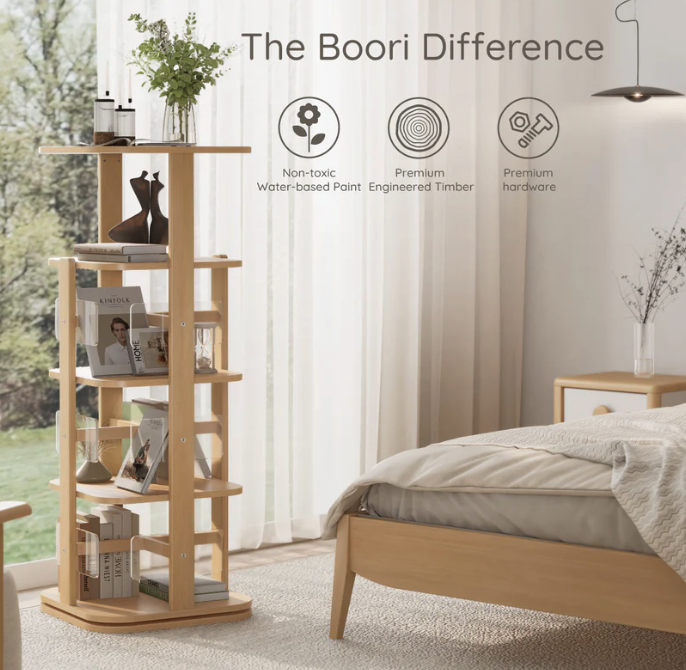
A kids book display shelf is a shelf specifically designed to present children’s books with their covers facing outward rather than storing them spine-out in the way adult bookshelves typically do. The distinction matters because children, particularly those under six, navigate almost entirely by cover image rather than title. A shelf that shows covers rather than spines transforms a passive storage unit into an active invitation to read, and research in early childhood literacy consistently supports the idea that visible book display is one of the most effective tools for increasing how often children self-select reading.
- A kids book display shelf shows covers rather than spines, which is significantly more effective at encouraging independent book selection in children under six.
- The most effective display shelves are front-facing, positioned at the child’s eye level, and limited to a curated selection rather than the full collection.
- Display shelves work best as part of a broader reading environment that includes a comfortable seating spot and consistent book rotation.
- Safety, build quality, and appropriate sizing are just as important on a display shelf as on any other piece of children’s furniture.
- Rotating the books on display regularly is one of the most effective ways to sustain children’s reading interest without buying new books.
Why Book Display Matters for Children
Walk into a bookshop and notice how the staff picks work. Books face outward, covers prominent, in positions that catch the eye as customers move through the space. The same principle applies with even more force in a child’s room. Children cannot scan a row of spines and read titles the way adults do. They respond to colour, familiar characters, and visual cues on covers. A shelf full of spines is, for a three year old, essentially a wall of identical rectangles.
A front-facing display shelf removes that barrier entirely. Every book on the shelf is immediately identifiable. The child can see exactly what they have and make a genuine choice based on what appeals to them right now. That agency, the ability to choose independently without asking for help, is one of the key drivers of reading engagement in the early years. Children who feel ownership over their reading choices read more consistently than those who are directed to specific books by adults.
Types of Kids Book Display Shelves
| Type | How Books Are Displayed | Best For | Age Range |
|---|---|---|---|
| Wall-mounted ledge shelf | Covers out, leaning against wall | Small spaces | 2 years and up |
| Freestanding front-facing shelf | Covers out in fixed slots | Reading corners and bedrooms | 1 to 6 years |
| Rotating display shelf | Covers out on all sides | Small rooms | 1 to 8 years |
| Combined display and storage | Covers out lower, spines upper | Mixed age collections | 2 years and up |
| Picture rail shelf | Covers out, horizontal rail display | Walls above child’s reach | Adult-curated display |
What to Look for in a Kids Book Display Shelf
Slot Depth and Lip Design
The slots on a front-facing display shelf need to be deep enough to hold books securely without tipping forward, but shallow enough that the cover remains fully visible. A small lip at the front of each slot prevents books from sliding out during browsing. Check that the lip is low enough not to obscure the bottom of the cover image, which is where important visual information often sits on picture books.
Height and Eye Level
A display shelf only works if the child can see the covers clearly from a natural standing position. For toddlers, display slots should sit between 30 and 60cm from the floor. For pre-school age children, between 40 and 80cm. The shelf height should place covers at the child’s eye level, not tilted in a way that requires the child to adjust their position to see them properly.
Capacity and Curation
A display shelf is not designed to hold an entire book collection. It is designed to present a curated selection of 10 to 20 books in a way that makes every title visible and appealing. Overcrowding a display shelf defeats its purpose. When books are squashed together with covers partially obscured, the visual clarity that makes front-facing display effective is lost.
Build Quality and Safety
A kids book display shelf needs to meet the same safety standards as any other piece of children’s furniture. Wall-mounted options must be fixed correctly with appropriate fixings rated for the load. Freestanding options need a stable base with wall anchoring available. All edges must be rounded, finishes non-toxic, and any fixings not accessible to children.
How to Get the Most From a Kids Book Display Shelf
- Keep the selection curated and limited. Display 10 to 20 books at a time. Store the rest and rotate them in regularly. Fewer choices presented clearly outperform many choices presented poorly.
- Rotate titles every three to four weeks. Bringing a book the child has not seen for a few months back to a prominent display slot often reignites interest in it without any prompting.
- Place the display shelf at the heart of the reading space. Pair it with a comfortable seat and good light to create a reading corner the child genuinely wants to use.
- Involve the child in choosing what goes on the shelf. Children are more likely to read books they had a hand in selecting for display.
- Keep the shelf tidy. A display shelf where books have fallen sideways loses its visual appeal quickly. A quick straighten every few days keeps the shelf inviting.
Frequently Asked Questions
At what age should a child have a book display shelf?
From around 12 months, a low front-facing display shelf at floor level is appropriate and beneficial. At this stage, babies and young toddlers can pull books out and explore them independently, which is the beginning of a reading habit that develops over the years ahead.
How is a display shelf different from a regular bookshelf?
A regular bookshelf stores books spine-out, requiring the reader to identify titles from their spine. A display shelf presents covers facing outward, making every book immediately identifiable by its cover image. For children under six who cannot yet read spine titles, this is a fundamental difference in how usable the shelf is for independent selection.
Can a display shelf hold enough books?
A display shelf is not designed to hold an entire collection. Display 10 to 20 books at a time and store the rest. This approach produces better reading engagement than displaying every book the child owns on an overfull shelf.
Should the display shelf be wall-mounted or freestanding?
Both work well for different situations. Wall-mounted display shelves save floor space entirely and work well in small bedrooms. Freestanding shelves are more flexible in placement and easier to reposition. For toddlers, a freestanding shelf with a stable base is generally safer than wall-mounted options at very low heights.
Final Thoughts
A kids book display shelf is one of the highest-impact changes you can make to how a child’s reading environment works. By showing covers rather than spines and positioning the selection at the child’s eye level, it removes every barrier between the child and the act of choosing a book independently. For Australian families investing in a reading-friendly home, a purpose-designed kids book display shelf is where that investment pays off most directly.

Lynn Martelli is an editor at Readability. She received her MFA in Creative Writing from Antioch University and has worked as an editor for over 10 years. Lynn has edited a wide variety of books, including fiction, non-fiction, memoirs, and more. In her free time, Lynn enjoys reading, writing, and spending time with her family and friends.