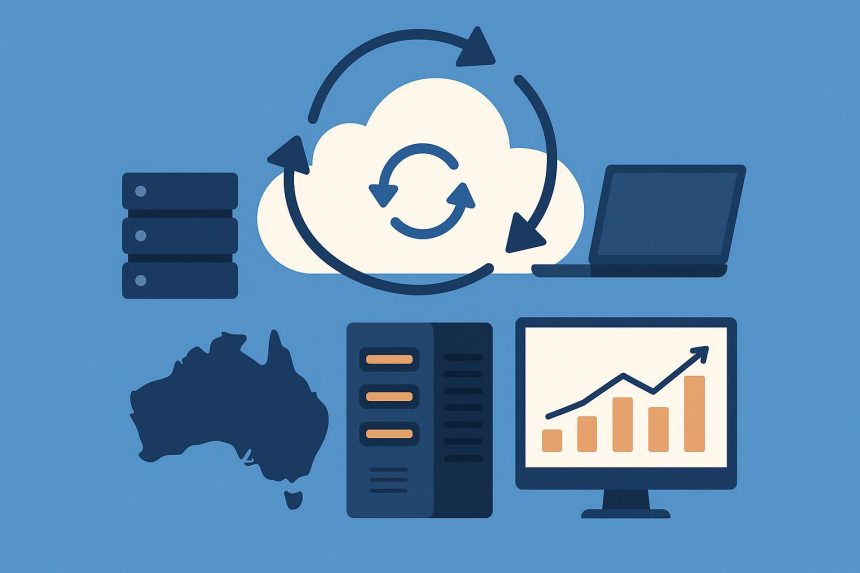
More Australian businesses are shifting workloads off local servers and into the cloud. If you’re weighing up that move, understanding cloud processing services helps you make a confident, informed decision. This guide explains what cloud processing is, how it works in practice, and the benefits that matter most for growing organisations.
What Is Cloud Processing?
Cloud processing means running your computing tasks, data storage, and applications on remote servers managed by a provider, rather than on hardware you own and maintain. Instead of buying physical machines, you access computing power over the internet and pay for what you use.
Providers such as Amazon Web Services, Microsoft Azure, and Google Cloud host the infrastructure. Your team simply connects to it, whether that’s for storage, software, or heavy data processing.
How Businesses Use Cloud Infrastructure and Applications
Australian companies use the cloud in several practical ways:
- Infrastructure (IaaS): Rent virtual servers, storage, and networks to run your own systems.
- Platforms (PaaS): Build and deploy applications without managing the underlying hardware.
- Software (SaaS): Use ready-made tools like accounting, CRM, or email through a browser.
A retailer might run its online store on cloud servers that scale during busy sales periods. An accounting firm might process large data sets overnight without owning a single extra machine. The flexibility suits businesses of every size.
The Key Benefits for Australian Businesses
Scalability
You can add or reduce computing resources as demand changes. When your workload spikes, capacity grows instantly. When things quieten down, you scale back and stop paying for idle power.
Flexibility
Cloud systems let staff work from anywhere with an internet connection. This supports remote teams, multiple office locations, and faster rollouts of new tools.
Reliability
Reputable providers run data centres with strong uptime guarantees and built-in backups. If one server fails, another takes over, keeping your services running.
Security
Leading platforms invest heavily in encryption, threat monitoring, and compliance standards. For many businesses, this offers stronger protection than an in-house setup. Understanding local data requirements, including where information is stored, remains important for Australian organisations.
Cost Efficiency
You avoid large upfront hardware spending and ongoing maintenance. The pay-as-you-go model turns unpredictable capital costs into manageable operating expenses.
Choosing the Right Cloud Solution and Support
Not every cloud setup suits every business. The right choice depends on your workloads, budget, compliance needs, and growth plans. Picking the wrong configuration can lead to wasted spend or performance gaps.
This is where expert guidance pays off. Working with a provider that offers professional cloud processing services helps you plan migration, manage security, and get ongoing support tailored to your goals. Good partners also help you avoid common pitfalls, like over-provisioning or overlooking data residency rules.
Final Thoughts
Cloud processing gives Australian businesses a practical path to scale, work flexibly, and control costs, all without the burden of managing physical hardware. The benefits are real, but success depends on choosing the right solution and the right support. Take time to assess your needs, compare options, and lean on experienced professionals to guide your move. Done well, the cloud becomes a dependable foundation for long-term growth.

Lynn Martelli is an editor at Readability. She received her MFA in Creative Writing from Antioch University and has worked as an editor for over 10 years. Lynn has edited a wide variety of books, including fiction, non-fiction, memoirs, and more. In her free time, Lynn enjoys reading, writing, and spending time with her family and friends.