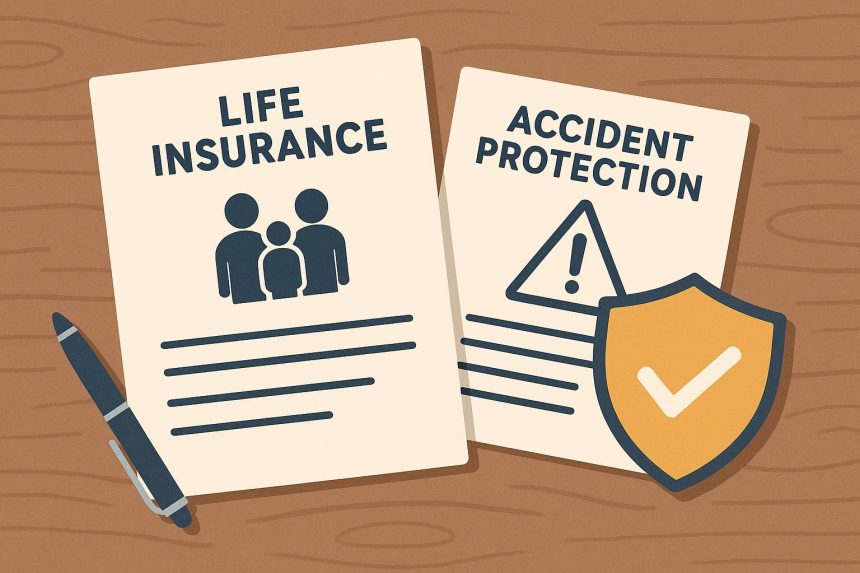
Financial protection is not limited to planning for long-term goals. Unexpected events such as accidents can also create immediate financial pressure for individuals and their families. While life insurance can provide financial support to dependents in the event of the policyholder’s death, accident-related coverage can address specific risks associated with accidental injury or death.
Understanding the difference between these forms of protection can help you evaluate whether your existing insurance arrangements adequately address your family’s financial needs.
Start With Your Family’s Financial Responsibilities
The amount of life cover you need depends largely on the financial responsibilities you would leave behind.
Consider your:
- Annual income
- Number of dependents
- Household expenses
- Outstanding loans
- Children’s education costs
- Future financial goals
- Existing savings and investments
Someone supporting a family and repaying a home loan may have substantially different protection requirements from a young individual with limited financial responsibilities.
Instead of selecting coverage based only on a commonly suggested amount, consider the financial support your family may require over the long term.
What Does Term Insurance Provide?
Term insurance is primarily designed to provide financial protection for a specified period. If the policyholder dies during the policy term, the nominee receives the applicable death benefit according to the policy terms.
The payout can help the family manage expenses, repay eligible liabilities, maintain their lifestyle, or continue working towards long-term financial goals.
When comparing the best term plan in India, consider factors such as the coverage amount, policy term, premium affordability, policy conditions, exclusions, and claim-related provisions rather than focusing on one feature alone.
Where Does Personal Accident Insurance Fit In?
Life insurance and accident-related insurance serve different purposes.
Personal accident insurance is generally designed to provide financial protection against specified accidental events. Depending on the policy, benefits may be available for accidental death, permanent or temporary disability, or other covered consequences of an accident.
The exact benefits vary by policy, so it is important to read the terms and conditions before purchasing.
Accident protection can therefore complement life insurance rather than necessarily replacing it.
Why Accident Protection Can Matter
Accidents can result in more than immediate medical expenses. A serious injury may temporarily or permanently affect a person’s ability to earn.
For a primary income earner, this can create financial pressure even when there is no death.
Depending on the policy, accident-related benefits may provide financial support following specified disabilities or accidental events. This can be particularly relevant for individuals whose income depends heavily on their ability to work.
Consider Your Occupation and Lifestyle
Your daily routine can influence the type of financial protection you may want to consider.
For example, individuals who travel frequently for work, spend significant time on the road, work in physically demanding environments, or regularly participate in certain activities may want to assess their accident-related financial risks carefully.
This does not mean that a particular occupation automatically requires additional coverage. Instead, your actual exposure to risks should be considered alongside your existing insurance arrangements.
Don’t Compare Policies on Premium Alone
Premium is an important part of any insurance decision, but it should not be the only consideration.
Before purchasing life or accident protection, check:
- Coverage amount
- Policy duration
- Covered events
- Exclusions
- Waiting periods, where applicable
- Claim process
- Premium payment frequency
- Renewal conditions
- Additional benefits
A lower premium may provide less extensive protection, while a higher premium does not automatically mean that a policy is more suitable for your circumstances.
Estimate the Financial Impact of an Accident
Think about what could happen financially if you were unable to work following a serious accident.
Would your family be able to manage household expenses? Could existing EMIs continue to be paid? Would your children’s education plans remain unaffected? How much emergency savings would be available?
These questions can help you identify gaps in your current financial protection.
The objective is not necessarily to purchase every available insurance product but to understand which risks could create a significant financial burden for your family.
Calculate the Premium Before Choosing Coverage
Before finalising a policy, estimate the premium for the coverage you are considering. Online insurance tools can make this process easier by allowing you to enter basic details and explore different coverage amounts.
When you calculate premium estimates, make sure you are comparing similar policy terms. A difference in policy duration, coverage amount, payment frequency, or benefits can significantly affect the quoted amount.
The final premium may also depend on underwriting and the information provided during the application process.
Review Your Protection After Major Life Changes
Your insurance needs can change over time. Marriage, children, a new home loan, increased income, or a change in occupation can all affect your financial responsibilities.
Reviewing your insurance portfolio after major milestones can help you identify whether your existing protection continues to match your family’s needs.
For example, a policy selected when you were single may require reassessment after you become responsible for dependents or take on significant long-term liabilities.
Keep Life and Accident Protection Distinct
One of the most important points to remember is that life insurance and personal accident coverage should not automatically be treated as interchangeable.
Life insurance primarily addresses the financial consequences of the policyholder’s death, while accident policies can provide benefits for specified accidental injuries, disabilities, or accidental death depending on the policy.
Understanding this distinction can help you evaluate your coverage more realistically.
Conclusion
Financial protection works best when it reflects your actual responsibilities and risks. Term insurance can provide long-term financial support to dependents, while accident protection can address specific financial consequences arising from covered accidental events.
Before purchasing either, assess your income, liabilities, dependents, lifestyle, and existing coverage. Compare the policy terms and calculate the premium based on the level of protection you genuinely require. Reviewing your insurance periodically can also help ensure that your financial protection keeps pace with changes in your life.

Lynn Martelli is an editor at Readability. She received her MFA in Creative Writing from Antioch University and has worked as an editor for over 10 years. Lynn has edited a wide variety of books, including fiction, non-fiction, memoirs, and more. In her free time, Lynn enjoys reading, writing, and spending time with her family and friends.