Managing resources efficiently has become the number one priority for modern polymer molding shops. During regular production runs for profiles or piping, things like off-cuts, burrs, and geometric trimmings naturally pile up, leaving plants with piles of unused scrap clogging their warehouses. To stop this resource drain, production lines are evolving, incorporating smart systems that reclaim and upgrade every ounce of polymer scrap right on the spot.
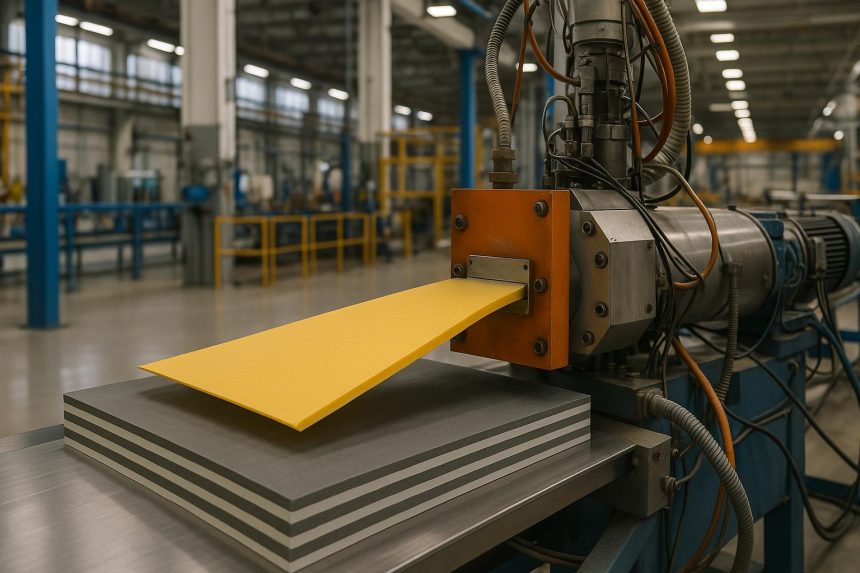
The absolute best engineering fix for this relies on co extrusion process that blends different material streams inside a single die head to create layered products. This method lets you feed the hidden internal core with recycled plastic, while a secondary extruder lays down a clean, protective outer skin of brand-new material. The entire loop acts as an operational win for the factory since it slashes waste management costs without touching the look or structural stability of the final product heading to market.
Inside the Core: Engineering the Protective Outer Skin
The core design principle behind this tech comes down to physically separating the functional roles within the plastic profile. The line is set up by pairing a primary extruder with a secondary machine, both pushing their respective melted polymers into the exact same shaping die. Inside the tooling, the streams merge cleanly: the chewed-up industrial scrap is channeled strictly into the center of the part, where it handles the heavy lifting for volume filling and mechanical strength.
At the exact same time, the visible outer walls are coated in a uniform layer of virgin resin, which can be packed with custom pigments or wear-resistant additives. This method ensures the profile keeps a smooth, pristine surface finish, completely hiding the recycled core nesting inside.
Dialing in Temperatures for Molecular Stability
Running plastics with different histories and densities at the exact same time requires incredibly precise thermal management all the way down the barrel. Recycled polymers degrade easily if they get blasted with too much heat, which thins out their original viscosity and causes nasty, unpredictable pressure spikes.
To keep the flow smooth and linear, modern thermoregulation modules distribute heat differently across the various screw zones, backed by highly efficient cooling systems. This delicate thermal balance prevents air bubbles or carbon buildup from ruining the batch, making sure the melt maintains a rock-solid density before it ever links up with the outer material layer.
Locking in a Flawless Melt Inside the Die Head
The most critical moment of the entire industrial cycle happens right inside the extrusion head, which dictates the final shape and dimensions of the profile. The internal geometry of the flow channels is engineered to spread hydraulic pressures evenly across the entire perimeter of the die, killing off the kind of turbulence that causes peeling or delamination down the road.
When the material streams collide at high temperatures, the virgin outer plastic and the recycled internal core literally fuse together at a molecular level. This tight structural bond guarantees excellent long-term mechanical strength, allowing the finished profile to handle cutting, drilling, and rough warehouse handling without showing a single crack or split at the joint lines.
Routine Maintenance for Long-Term Production Flow
Keeping your production quality stable means staying on top of the mechanical parts handling the polymer flow. Residual buildup from recycled compounds can leave tiny deposits on the screws over time, which slowly throws off the consistency of the output push.
Planners can easily keep their flow rates steady by working in a few basic steps:
- Run scheduled purges: Use specialized purging compounds on a tight timeline to clean out the screws.
- Check the barrels early: Monitor wear and tear on the cylinders to catch friction issues before they cause trouble.
- Keep the line clean: Prevent the carbon buildup that leaves ugly marks on the surface of your finished profiles.
Staying on top of this basic maintenance ensures the line always operates under peak conditions, delivering flawless surface cohesion and non-stop runtime that extracts every bit of value from your materials.

Lynn Martelli is an editor at Readability. She received her MFA in Creative Writing from Antioch University and has worked as an editor for over 10 years. Lynn has edited a wide variety of books, including fiction, non-fiction, memoirs, and more. In her free time, Lynn enjoys reading, writing, and spending time with her family and friends.