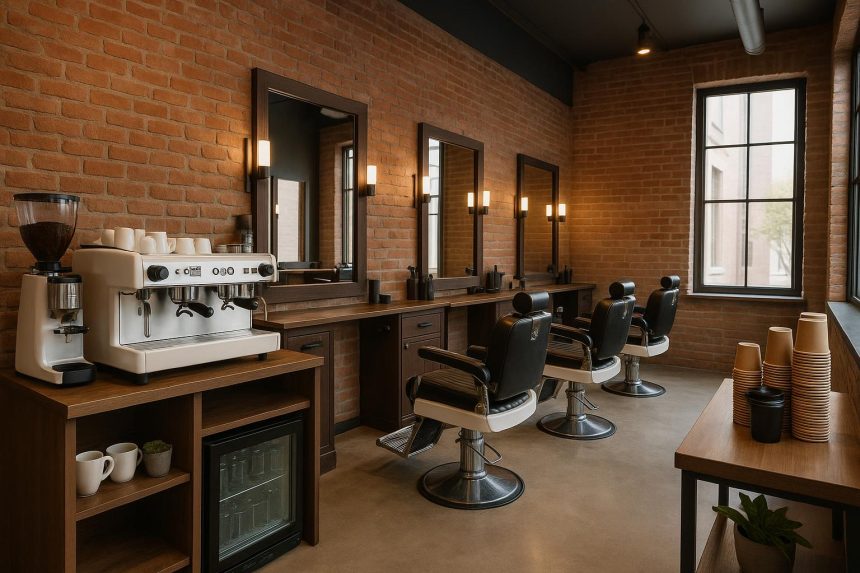
Opening a barbershop and a coffee house under one roof sounds like a natural partnership. Both businesses depend on regular customers, neighborhood loyalty, casual conversation, and routines that bring people back every week. A customer can order an espresso before a haircut, meet a friend afterward, or work at a table while waiting for an appointment. The combination can feel social without becoming a bar, restaurant, or formal members’ club.
The attraction, however, can hide a serious problem. A barbershop with coffee is not automatically one stronger business. It may become two demanding businesses sharing rent, staff, utilities, and the owner’s attention. Cutting hair and preparing drinks require different equipment, skills, permits, workflows, and financial calculations. A stylish concept cannot compensate for poor margins or confused operations.
The right decision depends on the type of venue you want to build. Coffee may support the barbershop, operate as a separate source of income, or compete with the service that should remain your priority. Before signing a lease or buying an espresso machine, decide what role each side will play.
Two Businesses Behind One Door
A barbershop and a coffee house share more than a preference for attractive interiors. Both can become part of a customer’s routine. People often visit the same barber every two to four weeks and the same café several times a week. Familiar staff, reliable service, and comfortable conversation matter in both settings. Combining them can create a neighborhood destination with more reasons to visit.
The strongest versions of the concept give coffee a clear purpose. Coffee might make appointment delays more pleasant, attract people accompanying clients, or increase spending from customers who already planned to get a haircut. It can also draw pedestrian traffic from people who have no immediate interest in grooming. Some of those coffee customers may later notice the barber stations, ask about prices, and book an appointment.
The weakest versions treat coffee as decoration. An expensive machine, a few stools, and a menu copied from a local café do not create a viable coffee business. Customers still expect properly prepared drinks, quick service, clean tables, and consistent operating hours. If the coffee counter closes whenever the barbers get busy, people will stop relying on it.
The simplest model offers drinks as part of the grooming service. Customers may receive complimentary drip coffee, espresso, tea, or bottled water while waiting. The barbershop does not attempt to attract a separate café audience, and the drink menu remains small. This model can improve hospitality without adding a full operation, although local food-service rules may still apply.
The second model adds a compact paid coffee counter. A trained employee prepares a limited selection of espresso drinks, cold beverages, and packaged snacks. The counter serves barbershop clients and walk-in coffee buyers, but it does not offer a complete kitchen. This approach can generate additional sales while keeping equipment, inventory, and preparation relatively contained.
The third model places two complete businesses inside one venue. The café has its own menu, seating, employees, identity, and opening hours, while the barbershop runs appointments and walk-ins alongside it. This version offers the greatest revenue potential, but it also carries the highest startup cost and operating risk. The owner must manage two businesses rather than one concept with an extra amenity.
Your target customer should determine which model makes sense. A small appointment-based shop in a residential neighborhood may benefit from complimentary coffee but receive little independent café traffic. A high-visibility unit near offices, transit, a college, or a busy shopping street may support a real coffee counter. A large lifestyle venue in an affluent district could justify separate teams and a broader menu.
Customer behavior matters more than the concept’s appearance. A waiting customer may buy one drink, but many barbershops work hard to eliminate waiting through scheduled appointments. If clients arrive on time and leave immediately after their cuts, the café has a narrow sales window. The model becomes more promising when the location can attract coffee customers throughout the day, including people who never use the barber service.
One Customer, Two Revenue Streams
Coffee can raise the amount earned from each barbershop visit. A customer paying for a haircut may add an espresso, pastry, or bottled drink. A parent waiting during a child’s appointment may order twice. Friends arriving together can use the café while one person sits in the barber chair. These purchases appear small individually, but regular add-on sales can contribute meaningful monthly revenue.
Coffee also creates sales between haircuts. Most customers do not need grooming every day, but they may buy coffee several times a week. A strong café gives the business a way to maintain contact with clients during the weeks between appointments. That repeated contact can strengthen familiarity and reduce the chance that customers try another barber.
Memberships can connect the two sides without forcing them together. A monthly grooming plan might include one haircut, discounted beard trims, and several drink credits. A premium membership could offer priority booking, product discounts, and a daily basic coffee. The numbers must account for actual redemption, ingredient costs, and peak-hour demand, but the structure can produce predictable income.
Packages can also make the combination easier to understand. A haircut with an espresso creates a simple offer, while a father-and-child package could include two services and drinks. Morning appointments might include coffee at a reduced combined price. These offers work best when they increase total spending without discounting a service customers would have purchased at full price.
The café can improve the economics of unused space. A large waiting area normally produces no direct income, even though the owner pays rent for every square foot. A well-planned coffee counter and several tables can generate sales from part of that area. The benefit disappears when the café requires a much larger unit, costly plumbing work, or seating that remains empty for most of the day.
The combined venue can attract attention more easily than a standard barbershop. A distinctive storefront, visible coffee counter, and steady flow of customers can make the business look active from the street. People may enter for a drink because it feels like a smaller commitment than requesting a haircut. Once inside, they can see the barbers’ work, review prices, and become familiar with the team.
Social media offers another possible advantage. Hair transformations already provide strong visual content, while latte preparation, interior details, staff personalities, and community events add variety. The business can show a full day rather than posting only before-and-after haircut photographs. Content still needs a clear identity; random images of coffee and grooming can confuse followers if the connection is never explained.
Events can turn the venue into a local meeting point. The shop might host grooming workshops, product launches, small art displays, coffee tastings, charity haircut days, or collaborations with nearby businesses. Events should match the shop’s audience and physical capacity. A crowded evening that damages equipment, disturbs neighbors, or produces little revenue has limited value.
Retail provides another connection between the services. The shop can sell hair products, beard oils, combs, reusable cups, coffee beans, or branded merchandise. Products should have a logical place in the brand rather than filling shelves for visual effect. Slow-moving inventory ties up cash and creates clutter, especially in a compact unit.
A strong concept can support higher prices, but customers still judge each service separately. Excellent coffee will not rescue a poor haircut, and a talented barber cannot make badly prepared coffee acceptable. Customers compare the grooming service with other barbershops and the drinks with nearby cafés. Each side must meet the standard of its own market.
The coffee operation may also reduce seasonal or daily fluctuations. Barber demand often increases before weekends, holidays, school events, and major celebrations. Coffee demand may peak during weekday mornings and lunch periods. Different busy times can help the venue earn money across more hours, although they can also complicate staffing and opening schedules.
The revenue opportunity must be measured against real volume. If a drink produces a few dollars of gross profit, the counter needs many transactions to cover a barista’s wages, equipment payments, utilities, card fees, cleaning, and waste. Twenty drinks a day may create activity without creating profit. A written forecast should include conservative transaction numbers rather than assuming every haircut client will place an order.
The Hidden Cost of a Stylish Combination
Operating complexity presents the largest disadvantage. A barbershop manages appointments, walk-ins, chair schedules, tools, sanitation, retail products, and individual barber performance. A coffee house manages drink orders, milk, beans, food stock, cups, dishes, cleaning, equipment, deliveries, and customer seating. Combining them increases the number of tasks that can interrupt the owner every day.
Staffing requires a clear plan from the beginning. Barbers should not repeatedly stop between services to prepare cappuccinos for walk-in customers. Their time usually earns more behind the chair, and frequent interruptions can delay appointments. Coffee preparation also demands training. Customers notice burnt espresso, poorly steamed milk, dirty equipment, and inconsistent drinks.
A dedicated barista solves part of the workflow problem but creates a fixed labor cost. The café must generate enough sales during quiet and busy periods to justify that employee. One barista may struggle with breaks, sickness, deliveries, cleaning, and sudden order surges. Adding a second person increases capacity but raises the sales level required to break even.
Hiring people who can perform both roles may sound efficient, but the skill combination is uncommon. A qualified barber may have little interest in working a coffee counter, while a capable barista cannot fill an empty barber station. Cross-training can help with basic tasks, yet it should not replace proper staffing for either service.
Equipment costs extend well beyond the espresso machine. A coffee counter may need grinders, water filtration, refrigeration, sinks, drainage, storage, dishwashing equipment, shelving, a point-of-sale setup, small tools, waste containers, and adequate electrical capacity. Installation can cost as much as some of the visible equipment, particularly in an older unit.
Maintenance creates an ongoing obligation. Espresso machines require cleaning, servicing, and occasional repairs. Grinders need adjustment and replacement parts. Refrigerators fail, water filters expire, and small tools disappear or break. A machine that stops working during the morning rush can remove the café’s main source of revenue until a technician arrives.
Inventory introduces another set of risks. Coffee beans have a useful freshness period, milk expires, pastries become stale, and alternative milks may sell unpredictably. A broad menu increases waste and storage requirements. A short menu built around frequently used ingredients gives a new operation more control.
Local regulations may shape the entire concept. Preparing and selling drinks can require food-service approval, inspections, staff certification, approved sinks, suitable surfaces, temperature controls, and documented cleaning procedures. Requirements vary by city and property type. The owner should discuss the exact plan with local authorities and qualified contractors before committing to a lease.
Hygiene deserves particular attention because hair and food service make an uncomfortable pairing. Loose hair travels through the air, collects on clothing, and moves across floors. Customers will quickly question a drink-preparation area located beside active barber stations. A physical divider, sufficient distance, dedicated cleaning tools, and controlled traffic can reduce the conflict.
Noise can weaken both sides of the venue. Coffee grinders, milk steaming, blenders, conversations, clinking dishes, hair dryers, clippers, and music can create a tiring room. Hard floors and bare walls make the problem worse by reflecting sound. Acoustic materials, equipment placement, and volume limits should be included in the design budget.
Smells can create similar tension. Fresh coffee generally works well in a social setting, but heated food, cleaning products, hair treatments, aftershave, and disinfectants may compete. A limited food offer reduces ventilation needs and prevents the barbershop from smelling like a kitchen. Selling packaged pastries is much simpler than cooking sandwiches or frying food.
Seating can produce unexpected problems. Café customers may occupy tables for hours after buying one drink, leaving no space for waiting haircut clients. People working on laptops may expect outlets, Wi-Fi, and a quieter atmosphere than the barbershop can provide. Clear zoning and a modest number of seats can prevent the café from taking over the room.
Insurance and liability also become more complicated. Hot drinks near electrical tools, slippery spills, food allergies, and increased customer traffic add risks. The business should confirm that its policy covers both activities. A standard barbershop policy may not automatically include food and beverage service.
Management attention remains the most expensive hidden cost. The owner may begin with a passion for barbering but spend mornings handling milk deliveries, café scheduling, machine repairs, and food inspections. Every hour devoted to the coffee operation is an hour unavailable for training barbers, improving bookings, reviewing service quality, or building the core client base.
Brand confusion creates a final strategic risk. Customers should understand what the business does within a few seconds of seeing the storefront or website. A venue that looks like a café but requires customers to sit near active haircuts may disappoint coffee visitors. A shop marketed mainly through drinks may also struggle to establish the credibility of its barbers.
The Floor Plan Test
The floor plan can reveal whether the combination is practical before construction begins. A concept that works only in sketches may fail when real customers, employees, equipment, deliveries, and waste move through the room. Every activity needs enough space without forcing the two businesses into constant conflict.
The entrance should communicate both services clearly. Customers ordering coffee need to find the counter without walking between barber chairs. Haircut clients need a direct route to reception and waiting seats. Two visible destinations can work, but signs and staff guidance must prevent uncertainty during busy periods.
The coffee-preparation zone should remain separate from cutting areas. A partition, glass wall, different room, or generous buffer provides more protection than a decorative change in flooring. Open shelving alone will not stop loose hair from entering a preparation area. Local health requirements may also dictate the amount and type of separation.
A front café and rear barbershop can work in a long storefront. Coffee customers enter, order, and sit near the windows, while haircut activity remains farther inside. This design captures pedestrian traffic and keeps the café visible. The owner must prevent the café queue from blocking access to the barber area.
A side-by-side plan works better in a wide unit. Each business receives a defined zone, while a central reception or lounge connects them. Separate counters can make responsibilities clearer. The downside is that both sides need enough width to function without looking compressed.
Connected units offer the cleanest separation when the budget allows it. Each side can have its own entrance, hours, staff, and atmosphere, with an internal doorway linking them. This arrangement also makes it easier to lease or operate one side independently later. Additional rent and construction costs may outweigh those advantages for a first-time owner.
A compact beverage bar suits smaller locations. The shop can serve espresso, batch coffee, tea, and cold drinks without presenting itself as a complete coffee house. A few waiting seats replace a full café area. This model protects the barbershop’s identity while still allowing paid beverage sales.
Storage should receive as much attention as customer-facing areas. Coffee beans, cups, milk, cleaning supplies, retail products, towels, barber tools, personal belongings, and waste cannot share one small cabinet. Poor storage makes the room look untidy and slows employees. It also raises the risk of mixing food-service items with barbering chemicals or cleaning products.
Cleaning routes should remain separate where possible. Staff should not carry dirty café dishes through active haircut stations or transport bags of hair past the drink counter. Floors will require frequent attention because both spilled drinks and hair clippings create visible mess. The plan needs accessible waste points and enough room for cleaning equipment.
Furniture should support the intended visit length. Upright chairs and small tables encourage shorter coffee stops, while sofas and large worktables invite customers to remain longer. Durable commercial seating usually handles spills and heavy use better than decorative residential pieces. Owners comparing café seating with restaurant furniture should focus on cleanability, stability, comfort, and replacement cost rather than appearance alone.
Utilities may determine the final layout. Espresso equipment needs suitable power and water, while sinks and refrigeration must fit the approved preparation zone. Barber stations also require outlets, lighting, mirrors, and access to washing facilities. Moving plumbing after signing the lease can add major expenses.
The best test uses a realistic peak-hour scenario. Count every barber, barista, haircut client, waiting customer, coffee visitor, delivery worker, and accompanying friend who might occupy the space at once. Mark where each person enters, stands, sits, orders, pays, works, and leaves. A crowded paper plan will become a more crowded real venue.
Make the Decision Before Signing the Lease
A combined business makes the most sense when the location supports both services independently. Strong pedestrian traffic can supply coffee customers, while nearby residents or workers can support repeat grooming appointments. A unit hidden from street traffic may still succeed as a destination barbershop, but the café will struggle to generate spontaneous visits.
Nearby competition deserves direct observation. Visit local cafés during several parts of the day and count customers, available seats, price points, and takeaway orders. Review nearby barbershops with the same care. A busy area with several cafés may prove demand, but it may also make customer acquisition expensive.
Your own background should influence the decision. An experienced barber opening a first shop already faces recruitment, scheduling, marketing, compliance, and financial pressure. Adding an unfamiliar food-service operation increases the learning curve. A partner with coffee experience can reduce that gap, provided that responsibilities, ownership, and financial expectations are documented.
Available capital should cover more than construction. The business needs cash for payroll, supplies, repairs, marketing, insurance, and slow opening months. A combined shop may take longer to stabilize because two customer bases must be developed. Spending the entire budget on an impressive interior leaves little protection when sales fall below forecasts.
A separate financial plan should be created for each side. Record barbershop revenue, café revenue, direct costs, labor, equipment payments, and shared expenses in distinct categories. The analysis should show whether coffee produces profit or merely benefits from rent and payroll assigned to the barbershop.
The sales forecast should begin with transactions rather than ambition. Estimate daily haircuts by chair and average service value. Then estimate coffee orders from haircut clients, accompanying visitors, and independent café traffic. Apply conservative numbers for weekdays, weekends, seasonal changes, and the first months after opening.
A small market test can answer questions that spreadsheets cannot. A new barbershop might invite a local coffee cart for selected weekends or host a roaster during opening events. Track how many haircut customers buy drinks, how many coffee visitors ask about grooming, and whether orders disrupt appointments. The test will not reproduce a permanent café, but it can expose weak assumptions.
Opening the barbershop first presents another lower-risk path. The owner can build a client base, observe waiting patterns, and measure spare space before adding a beverage counter. Customers can be surveyed about drink preferences and likely purchase frequency. Real behavior will provide better guidance than compliments about the concept.
Partnerships can reduce the operational burden. A local coffee company might lease the counter, supply trained staff, or operate through a revenue-sharing agreement. Clear contracts should define hours, cleaning, equipment ownership, utilities, insurance, branding, and responsibility for customer complaints. A casual verbal arrangement can become difficult once money and shared space are involved.
Complimentary coffee may deliver much of the desired hospitality without creating a second business. A reliable commercial machine, quality beans, and a short self-service station can make customers feel welcome. The cost can be treated as part of the haircut service rather than a separate profit center. Staff still need a cleaning and restocking routine.
A limited paid menu offers a useful middle ground. Espresso, Americano, cappuccino, tea, and a few cold drinks can satisfy most customers without requiring a kitchen. Packaged snacks or pastries from a licensed supplier can add sales with less preparation. The menu can expand later if demand supports additional equipment and labor.
The full coffee house should be chosen only when it has its own commercial case. The location should supply enough drink transactions, the floor plan should separate activities, and the budget should cover dedicated staff and equipment. The owner should also be willing to manage food service as seriously as grooming.
The final choice should protect the reason customers visit. If your primary goal is to build a respected barbershop, coffee should strengthen that service without delaying appointments or lowering haircut quality. If you genuinely want to operate two businesses, design separate systems for each from the start. A barbershop with great coffee can become a valued neighborhood destination, but only when the numbers, space, and daily operation work as well as the idea.

Lynn Martelli is an editor at Readability. She received her MFA in Creative Writing from Antioch University and has worked as an editor for over 10 years. Lynn has edited a wide variety of books, including fiction, non-fiction, memoirs, and more. In her free time, Lynn enjoys reading, writing, and spending time with her family and friends.