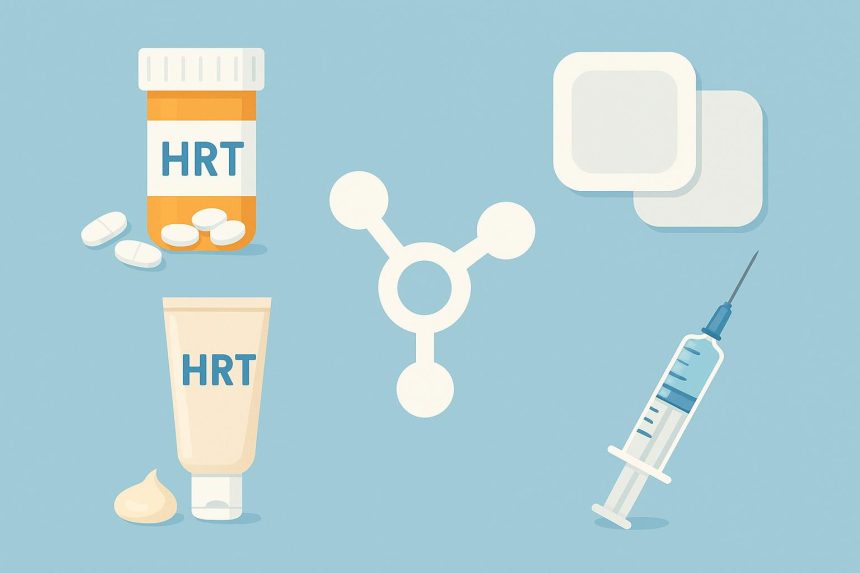
Menopause is a natural stage of life, but its symptoms can vary from one woman to another. While some women experience hot flushes and night sweats, others may notice changes in their sleep, mood, or intimate health. For this reason, there is no single hormone replacement therapy (HRT) that suits everyone.
Over the years, HRT has become more personalised. Today, several treatment options are available to help manage different menopause symptoms. These include medicines that contain only oestrogen, treatments that combine oestrogen with progesterone, and products designed to relieve specific symptoms such as vaginal dryness.
Understanding the different types of hormone replacement therapy can help you feel more confident before discussing your treatment options with a healthcare professional.
Why Are There Different Types of HRT?
Every woman’s menopause journey is unique. Symptoms often develop gradually and can change over time. Because of this, healthcare professionals recommend HRT based on an individual’s health needs rather than using the same treatment for everyone.
Before suggesting a suitable option, your prescriber will usually consider:
- Your age
- Whether you are perimenopausal or postmenopausal
- Whether you still have your womb
- Your medical history
- The menopause symptoms affecting you most
- Your preferred way of taking treatment
After reviewing these factors, they can recommend the HRT option that offers the best balance of symptom relief and safety.
Oestrogen-Only HRT
Oestrogen-only HRT replaces the hormone that naturally falls during menopause. It is generally prescribed for women who have had a hysterectomy because progesterone is not usually needed to protect the womb lining.
Restoring oestrogen levels may help reduce:
- Hot flushes
- Night sweats
- Mood changes
- Poor sleep
- Vaginal dryness
- Joint and muscle discomfort
Several treatment options are available, including tablets, patches, gels, and sprays. Each works differently, so your prescriber will recommend the option that best matches your lifestyle and medical history.
Combined HRT
Women who still have their womb usually require combined HRT. This option contains both oestrogen and progesterone, or a similar hormone called progestogen.
Oestrogen helps relieve menopause symptoms. At the same time, progesterone protects the lining of the womb from becoming too thick. This makes combined HRT suitable for many women who have not had a hysterectomy.
Common symptoms that may improve include:
- Hot flushes
- Night sweats
- Mood swings
- Sleep disturbance
- Vaginal dryness
For this reason, combined HRT remains one of the most commonly prescribed menopause treatments in the UK.
Sequential (Cyclical) HRT
Sequential HRT is often recommended during perimenopause, when periods have become irregular but have not stopped completely.
With this approach, oestrogen is taken every day. Progesterone is then added for part of each monthly cycle.
Because the treatment follows the body’s natural hormone pattern more closely, regular monthly bleeding usually continues. Although this may not suit everyone, it can provide effective symptom relief during the transition into menopause.
Continuous Combined HRT
Continuous combined HRT provides both oestrogen and progesterone every day without a monthly break.
Unlike sequential HRT, the hormones are taken continuously. Over time, most women stop having regular withdrawal bleeding, making this option more convenient after menopause.
Healthcare professionals usually recommend continuous combined HRT once a woman has been without a natural period for at least 12 months.
Its main benefits include:
- Continuous symptom relief
- Protection for the womb lining
- A simple daily routine
- No planned monthly bleeding for most women
Light spotting can occur during the first few months. However, ongoing or heavy bleeding should always be assessed by a healthcare professional.
Local (Vaginal) Oestrogen
Not every menopause symptom requires full-body HRT. Some women mainly experience vaginal discomfort caused by lower oestrogen levels.
In these situations, local oestrogen targets the affected area directly. Since only a small amount enters the bloodstream, it is often suitable when symptoms are limited to the vagina or urinary tract.
Local oestrogen is available as:
- Creams
- Vaginal tablets
- Pessaries
- Vaginal rings
These products may help relieve:
- Vaginal dryness
- Pain during sex
- Irritation or itching
- Burning sensations
- Recurrent urinary tract infections (UTIs)
For some women, local treatment provides enough relief without the need for systemic HRT.
Body-Identical HRT
Body-identical HRT contains hormones that have the same chemical structure as those naturally produced by the body.
Several licensed medicines available in the UK fall into this category, including certain patches, gels, and micronised progesterone.
It is important to distinguish licensed body-identical HRT from compounded bioidentical hormones. Licensed medicines undergo strict quality, safety, and effectiveness checks before approval. By contrast, compounded products are not regulated to the same standards and are not routinely recommended by UK clinical guidance.
How Is HRT Taken?
The hormones used in HRT are only part of the decision. The way you take treatment is equally important.
Available options include:
Tablets
Tablets remain a popular choice because they are simple to use and fit easily into a daily routine.
Skin Patches
Patches release hormones gradually through the skin. They provide a steady dose and only need changing every few days.
Gels
Gels are applied directly to the skin once a day. They absorb gradually into the bloodstream and allow flexible dosing.
Sprays
Hormone sprays also deliver oestrogen through the skin. They are quick to apply and are easy to include in a daily routine.
Choosing the right method often depends on your lifestyle, preferences, and medical history.
Which Type of HRT Is Right for You?
Finding the right treatment is an individual decision. Factors such as your age, symptoms, general health, and stage of menopause all influence which option may be most suitable.
If you are comparing different Hormone Replacement Therapy treatments, it helps to understand how each option works before making a decision. Click Pharmacy provides information about licensed HRT medicines available in the UK, together with access to UK-registered independent prescribers who assess each patient through an online consultation before recommending treatment where clinically appropriate.
Regular reviews are equally important. As your health and symptoms change, your treatment may also need adjusting.
When Should You Seek Medical Advice?
Menopause symptoms often improve with time. However, some women find that symptoms begin to affect their sleep, work, relationships, or overall quality of life.
Seeking medical advice can help you understand your options and decide whether HRT is appropriate for you.
A healthcare professional can:
- Assess your symptoms
- Review your medical history
- Explain the benefits and possible risks of HRT
- Recommend the most appropriate treatment
- Arrange regular follow-up reviews
Early support can make a significant difference and help you manage symptoms with confidence.

Lynn Martelli is an editor at Readability. She received her MFA in Creative Writing from Antioch University and has worked as an editor for over 10 years. Lynn has edited a wide variety of books, including fiction, non-fiction, memoirs, and more. In her free time, Lynn enjoys reading, writing, and spending time with her family and friends.