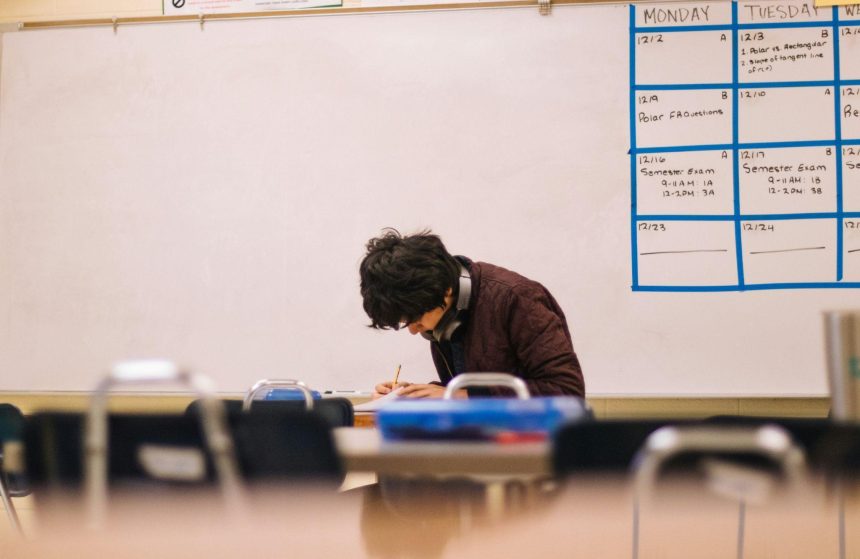
Every student hits a rough patch at some point. Maybe it was one bad semester, a family situation that pulled focus away from homework, or a class that just never clicked. Whatever the cause, the result can feel the same: a missing credit standing between a student and graduation. For a long time, the only real fix was repeating an entire year, sitting through material a student had already mastered just to retake the one course that didn’t go well. That approach never made much sense, and thankfully, it isn’t the only option anymore.
What Credit Recovery Actually Means
Credit recovery is the process of retaking a single failed or incomplete course rather than repeating an entire grade. Instead of treating one setback as a full year lost, it lets a student isolate the problem course, retake it on its own, and keep moving forward with everything else. It sounds simple, and in a lot of ways it is. The harder part has always been finding a format flexible enough to make it work around a real student’s life.
Why Online Formats Work Well for Catching Up
This is where online learning has quietly become one of the most useful tools available to families. A student who needs to recover a single math credit does not need to be in a physical classroom for an entire semester. They need focused time, the right instructional support, and a pace that matches how quickly they can actually absorb the material. Some students move through a recovery course in a few weeks. Others need a couple of months. Both are fine, because the model is built around the student rather than a fixed calendar.
Ontario families have access to accredited options that make this kind of flexibility possible without sacrificing the quality of the education. OntarioVirtualSchool.ca is one example of how credit recovery can work within the full Ontario curriculum, giving students a real, ministry-recognized path back on track rather than a watered down workaround. That distinction matters. Parents are often, understandably, cautious about anything that sounds like a shortcut, and the truth is that a legitimate credit recovery course should never feel like one. It should be just as rigorous as the original class, only delivered in a way that respects the time a student has already invested.
The Emotional Side of Falling Behind
There is also a psychological piece to this that often gets overlooked. Falling behind academically can carry a real emotional weight, especially for teenagers who are already navigating a lot of social and developmental pressure. Repeating an entire grade in front of the same peers can feel like a public marker of failure, even when the underlying issue was one difficult course or one hard semester. Credit recovery sidesteps that entirely. A student can quietly close the gap, stay with their cohort, and move toward graduation without the situation defining their whole year.
The flexibility of online formats helps in another way too. Students who needed credit recovery often needed it because something outside the classroom got in the way, whether that was a health issue, a family responsibility, or simply a period of struggling to stay motivated. According to the CDC’s research on health and academic achievement, the connection between wellbeing and school performance runs deep, and students juggling stress or health challenges often need a different kind of structure, not just more pressure. A self-paced online course gives a student room to manage that reality instead of fighting against it.
Scheduling Flexibility That Actually Helps
None of this means online credit recovery is the answer for every student. Some kids genuinely do better with in-person instruction and the accountability of a physical classroom. But for the right student, in the right situation, it solves a problem that the traditional system was never very good at solving. It treats a single setback as exactly that: a single setback, not a reason to lose an entire year of progress.
There is a practical scheduling benefit too, one that tends to matter more than families expect going in. A student working through a recovery course online is not boxed into a single block of the school day. Coursework can happen in the early morning before a part-time shift, in the evening after sports practice, or in short sessions spread across a weekend. That kind of control rarely exists in a traditional timetable, where one missed class can mean falling further behind rather than catching up.
What Parents Should Check Before Enrolling
Parents researching options for a child who has fallen behind should pay close attention to accreditation. Not every online course is recognized the same way, and a credit that doesn’t actually count toward graduation defeats the purpose. The Ontario Ministry of Education’s guidelines on credits and graduation requirements are a useful starting point for understanding what a legitimate course needs to include, and they’re worth reviewing before committing to any program.
It is also worth having an honest conversation with the student themselves. Credit recovery works best when a student understands why they fell behind in the first place, not just that they need to catch up. Was it the subject matter, the pace, the teacher, something happening at home? That context shapes which format will actually help. A student who struggled because they needed more one-on-one attention may thrive with the individualized pacing online courses tend to offer. A student who struggled because they needed structure and routine may need a program that builds in clear deadlines and regular check-ins.
The Bigger Picture
Falling behind used to feel like a door closing. Now, for a lot of students, it is closer to a detour, inconvenient, but not permanent. With the right course, the right support, and a format that fits how they actually learn, getting back on track is far more achievable than it used to be. Graduation is still well within reach. It just might take a slightly different road to get there.

Lynn Martelli is an editor at Readability. She received her MFA in Creative Writing from Antioch University and has worked as an editor for over 10 years. Lynn has edited a wide variety of books, including fiction, non-fiction, memoirs, and more. In her free time, Lynn enjoys reading, writing, and spending time with her family and friends.