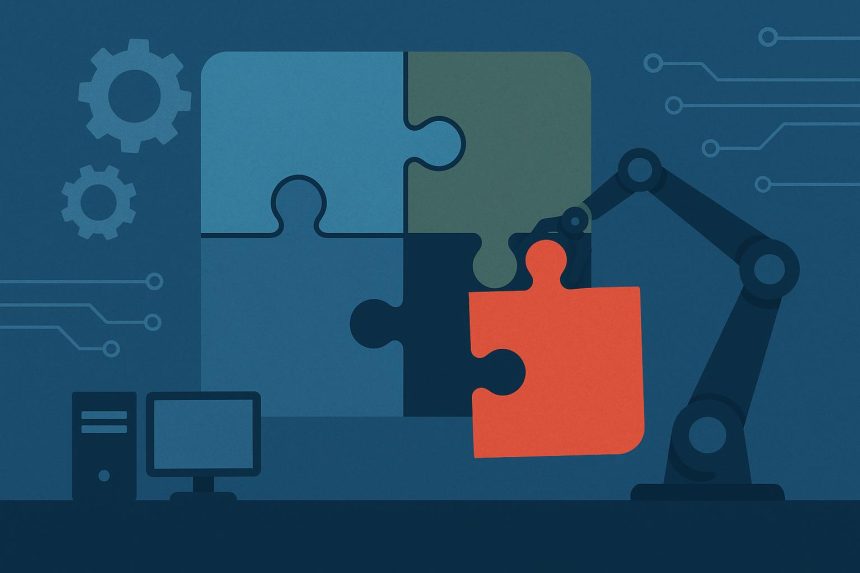
For many growing businesses, the IT department is under constant pressure. Internal teams are expected to handle daily support requests, manage infrastructure, strengthen cybersecurity, support remote users, oversee cloud platforms, and prepare for future growth—all while keeping systems running smoothly. That is a difficult balance to maintain, especially when budgets are limited and hiring specialized talent is increasingly competitive.
This is one reason more organizations are exploring co-managed IT as a practical way to strengthen operations without replacing the internal team they already trust.
What Is Co-Managed IT?
Co-managed IT is a collaborative model in which an organization’s internal IT staff works alongside an external IT provider. Rather than handing everything off to a third party, the business keeps its in-house team in place and supplements their capabilities with outside expertise, tools, and support.
This model can be flexible. Some companies use co-managed IT to gain help desk coverage during busy periods. Others rely on it for cybersecurity monitoring, cloud management, after-hours support, project assistance, compliance guidance, or strategic planning. The structure depends on what the internal team needs most.
Why Skill Gaps Happen in Internal IT Departments
Even highly capable internal IT teams can face skill gaps. Technology environments are more complex than they used to be, and businesses now depend on a broader range of tools and services. A team that is strong in desktop support and infrastructure may not have deep experience in areas such as:
- advanced cybersecurity
- Microsoft 365 security and administration
- cloud migrations
- backup and disaster recovery planning
- compliance readiness
- network design and optimization
- vendor management
- 24/7 monitoring and response
In many cases, the issue is not lack of effort or capability. It is simply a matter of bandwidth and specialization. One or two internal IT professionals cannot realistically be experts in every discipline while also handling day-to-day support.
How Co-Managed IT Helps Close Those Gaps
A co-managed IT approach gives businesses a way to fill those gaps without disrupting internal operations or minimizing the role of existing staff.
1. It adds specialized expertise where needed
Internal teams often know the company’s users, systems, and workflows better than anyone else. What they may need is access to specialists for more technical or time-sensitive areas. Co-managed IT providers can add support in focused areas such as cybersecurity, cloud services, identity management, or backup strategy, allowing internal teams to stay productive without having to master every niche on their own.
2. It reduces overload on internal staff
When internal IT teams are overwhelmed, strategic work often gets delayed. Important initiatives such as documentation, infrastructure upgrades, patch management, security improvements, and long-term planning can end up on the back burner. Co-managed IT can relieve some of the operational burden, giving in-house staff more room to focus on projects that move the business forward.
3. It supports continuity during transitions
Staff turnover, medical leave, vacations, and hiring delays can all create challenges for IT departments. Co-managed IT helps organizations maintain continuity during these transitions. Instead of scrambling when a key employee is unavailable, businesses have a support structure in place that can help stabilize operations.
4. It strengthens security posture
Cybersecurity is one of the most common reasons companies consider co-managed IT. Internal teams may be comfortable managing systems and user support, but security demands ongoing monitoring, policy enforcement, threat detection, vulnerability management, and incident response readiness. A co-managed structure can help close those security gaps while allowing internal IT staff to remain involved and informed.
5. It preserves internal ownership
A major advantage of co-managed IT is that it does not require giving up control. Internal IT leaders can retain decision-making authority, manage vendor relationships, and stay closely involved in strategy. The outside provider becomes an extension of the team—not a replacement for it.
Co-Managed IT Is About Partnership, Not Replacement
Some organizations hesitate to consider outside help because they worry it may undermine their internal IT staff. In practice, the opposite is often true. Co-managed IT works best when it is designed to support the internal team’s strengths and reinforce areas where extra help is needed.
The internal team still plays a central role. They bring institutional knowledge, direct relationships with employees, and an understanding of business priorities. The co-managed provider contributes additional resources, technical depth, and operational coverage. Together, they create a more resilient IT function.
When Co-Managed IT Makes Sense
A co-managed IT model may be worth considering when:
- the internal team is stretched too thin
- the business is growing faster than IT capacity
- security demands are increasing
- leadership wants better IT coverage without fully outsourcing
- hiring specialized talent is proving difficult
- major projects require skills the internal team does not currently have
These situations are common, especially for small and mid-sized organizations balancing growth with limited internal resources.
Final Thoughts
As technology demands continue to expand, businesses need flexible ways to support internal IT teams without overloading them. Co-managed IT offers a practical middle ground: it allows organizations to keep internal knowledge and leadership in place while gaining access to broader expertise and support.
For companies that want to strengthen operations, improve security, and reduce pressure on their internal staff, co-managed IT can be a smart, collaborative solution. Rather than replacing the internal team, it helps them work more effectively in an environment where expectations continue to grow.

Lynn Martelli is an editor at Readability. She received her MFA in Creative Writing from Antioch University and has worked as an editor for over 10 years. Lynn has edited a wide variety of books, including fiction, non-fiction, memoirs, and more. In her free time, Lynn enjoys reading, writing, and spending time with her family and friends.