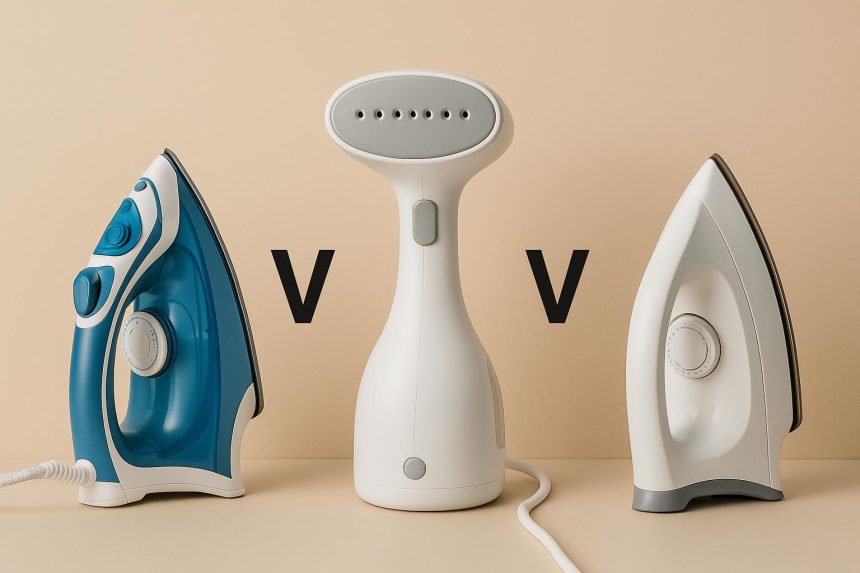
Ironing is an everyday chore that shapes how we present ourselves. Crisp shirts, wrinkle-free sarees, sharp trousers, and smooth curtains all depend on the right appliance. But choosing between a steam iron, a garment steamer, and a Dry iron can feel confusing.
Each works differently, suits specific fabrics, and serves a unique purpose at home. Some are better for heavy cottons, while others are ideal for delicate materials and quick touch-ups. This quick guide will help you understand the difference and choose the option that fits your needs confidently.
Understanding How Each Appliance Works
Before comparing them, it helps to understand how they function.
1. Steam Iron:
A steam iron uses heat and water together. It has a water tank and small holes on the soleplate. When heated, water turns into steam and is released onto the fabric. The moisture relaxes fibres while the hot soleplate presses them flat.
Steam irons are widely used because they combine traditional pressing with the added power of steam to remove stubborn wrinkles.
2. Garment Steamer:
A garment steamer works without direct pressure. Instead of pressing clothes against a board, it releases hot steam through a nozzle. You simply hang the garment and run the steamer over it.
The steam loosens fabric fibres and smooths wrinkles gently, making it ideal for delicate or structured garments.
3. Dry Iron:
A Dry iron is the most basic type. It uses only heat, no water, no steam. The heated soleplate presses against fabric to remove creases.
It is simple, affordable, and suitable for sturdy fabrics that don’t require moisture for wrinkle removal.
Steam Iron: The All-Round Performer
A steam iron is often considered the most versatile option for households.
Why People Prefer a Steam Iron?
- Removes deep wrinkles efficiently
- Works well on cotton, linen, and thick fabrics
- Can also be used as a dry iron by turning off the steam
- Suitable for daily office wear
Because steam softens fibres, it makes ironing easier and faster, especially for heavier fabrics like denim or cotton bedsheets.
When does it work best?
- Formal shirts and trousers
- School uniforms
- Sarees (with proper temperature control)
- Bedsheets and curtains
If your wardrobe includes structured or thick clothing, a steam iron can handle most tasks effectively.
Garment Steamer: The Gentle Specialist
A garment steamer is popular for quick touch-ups and delicate fabrics.
Why Choose a Garment Steamer?
- No ironing board required
- Gentle on delicate fabrics
- Ideal for embroidery, sequins, and pleats
- Convenient for a quick refresh before leaving home
Unlike pressing, steaming doesn’t flatten fabric texture. That means structured clothing, suits, and designer outfits retain their shape.
Best For:
- Silk, chiffon, georgette
- Blazers and suits
- Heavy sarees with embellishments
- Curtains and upholstery
- Refreshing garments after storage
Steam also helps remove mild odours and bacteria, making it useful for freshening clothes without washing.
Dry Iron: The Simple Classic
A Dry iron is straightforward and easy to use.
Why Some Prefer a Dry Iron?
- Lightweight
- Budget-friendly
- Easy maintenance
- Ideal for basic cotton fabrics
Since it does not use steam, it’s less prone to mineral deposits or leakage issues.
Best For:
- Everyday cotton wear
- Simple home use
- Quick pressing tasks
It’s also useful in areas with hard water, where steam irons may require more maintenance.
Comparing Performance Side-by-Side:
| Feature | Steam Iron | Garment Steamer | Dry Iron |
| Wrinkle Removal | Excellent | Good (light to medium) | Moderate |
| Sharp Creases | Yes | No | Yes |
| Delicate Fabrics | With care | Excellent | Risky |
| Thick Fabrics | Excellent | Slower | Moderate |
| Portability | Moderate | High (handheld models) | High |
| Maintenance | Medium | Medium | Low |
Which One Is Best for Indian Households?
In many homes, fabric variety is wide, including cotton kurtas, silk sarees, school uniforms, office shirts, bedsheets, and festive wear.
Here’s a practical guide:
- If you iron daily and deal with heavy cotton clothes → steam iron
- If you wear delicate or designer clothing often → garment steamer
- If you need something basic and budget-friendly → Dry iron
In fact, many households keep a steam iron as the main appliance and use a garment steamer occasionally for delicate garments.
Energy Efficiency and Water Usage
- A steam iron uses electricity and water. However, it usually finishes ironing faster due to steam power.
- A garment steamer consumes water but does not require pressure, which may reduce fabric wear over time.
- A Dry iron consumes only electricity, making it simple but sometimes slower for heavy fabrics.
Efficiency ultimately depends on how frequently you iron and what fabrics you handle.
Fabric Safety Considerations
- Choosing the wrong appliance can damage clothing.
- High heat without steam may scorch delicate fabrics.
- Excess steam on silk can leave watermarks.
- Direct pressure from a Dry iron may flatten textured garments.
- Always check garment care labels and adjust temperature settings accordingly.
Maintenance and Longevity
- Steam irons need occasional descaling.
- Garment steamers require water tank cleaning.
- Dry irons need minimal upkeep.
Using filtered water can extend the life of steam-based appliances.
Budget and Investment Perspective
- Dry irons are typically the most affordable.
- Steam irons fall in the mid-range and offer strong value for everyday users.
- Garment steamers are often more expensive but serve a specialised purpose.
If you iron frequently, investing in a steam iron may offer better long-term convenience.
So, Which One Should You Choose?
There’s no single “best” option. It depends on your wardrobe and how often you iron. A steam iron is the most versatile for everyday use and tough wrinkles. A garment steamer works best for delicate fabrics and quick touch-ups. A dry iron is simple, reliable, and budget-friendly for basic cotton wear.
Think about the fabrics you use most and the level of precision you need. The right choice can save time, protect your clothes, and make daily grooming more efficient. Choose the one that fits your routine, and ironing becomes quicker and easier.

Lynn Martelli is an editor at Readability. She received her MFA in Creative Writing from Antioch University and has worked as an editor for over 10 years. Lynn has edited a wide variety of books, including fiction, non-fiction, memoirs, and more. In her free time, Lynn enjoys reading, writing, and spending time with her family and friends.