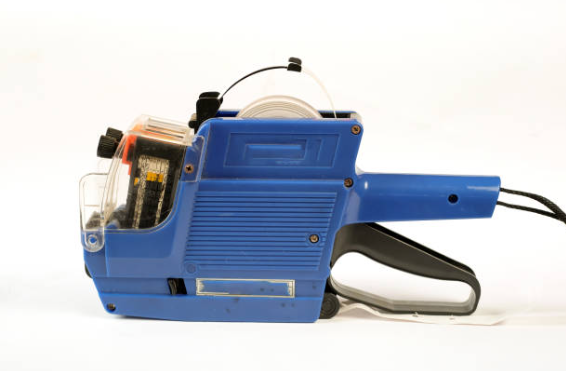
Price guns have long been a trusted tool for labeling products with pricing and other essential information. They’re widely used in retail stores, grocery markets, warehouses, and other commercial settings to help businesses streamline day-to-day operations with speed and reliability. However, like any tool that sees frequent use, price guns can wear down over time.
Knowing the signs that your current price gun model needs an upgrade or replacement can help you avoid unnecessary downtime, improve efficiency, and keep your labeling process running smoothly.
Here’s what to look out for:
Labels Won’t Feed Properly
If your price gun frequently jams, skips labels, or has trouble advancing the label roll, it can slow down your labeling process and lead to unnecessary waste. Although occasional feeding issues can often be resolved by cleaning the gun or correctly reloading the label roll, recurring problems typically point to worn internal components. If jams become a regular occurrence, it may be more efficient to replace the price gun than continue troubleshooting it.
Print Quality is Fading or Inconsistent
Clear, legible labels are essential for accurate pricing and inventory management. If your price gun is producing blurry, faded, incomplete, or uneven prints, start by replacing the ink roller to see if that resolves the issue. However, if print quality doesn’t improve, the internal print mechanism may be worn or damaged. Upgrading to a new price gun can help ensure every label is easy to read and professionally printed.
The Trigger Handle Feels Loose or Sticks
A price gun should operate smoothly with every squeeze. If you notice the trigger sticking, requiring extra force to operate, or feeling unusually loose, the internal gears or springs may be wearing out. As these components deteriorate, the gun becomes less comfortable to use and may not apply labels consistently. Replacing a worn price gun can help restore a smoother labeling process and reduce errors caused by inconsistent operation.
You’re Outgrowing Your Current Model
Most price guns have a model number printed on the outer body or underneath the handle. Looking up this number can help you determine whether the model is still in production or has been discontinued. If replacement parts and supplies are difficult to find, upgrading to a newer model can save time and prevent future headaches.
Repairs Are Becoming More Frequent
While occasional maintenance is expected, recurring issues like broken parts, frequent jams, or inconsistent printing can signal that your price gun is nearing the end of its lifespan. Rather than continually investing in repairs, replacing the unit with a newer model is often a more reliable and cost-effective option. You might even find newer models with features like easy-load label systems, ergonomic grips, and multiple printing lines that can improve your current operations.
Have You Noticed These Issues with Your Price Gun?
If your current price gun is slowing down your labeling process or causing inconsistent results, it may be time for an upgrade. A simple replacement today can help your team spend less time troubleshooting equipment and more time focusing on the work that matters.

Lynn Martelli is an editor at Readability. She received her MFA in Creative Writing from Antioch University and has worked as an editor for over 10 years. Lynn has edited a wide variety of books, including fiction, non-fiction, memoirs, and more. In her free time, Lynn enjoys reading, writing, and spending time with her family and friends.