According to the National Spinal Cord Injury Statistical Center’s 2024 annual report, motor vehicle accidents account for 38% of new spinal cord injuries nationwide — yet in Orange County’s urban corridors like Irvine, the percentage climbs even higher due to heavy commuter traffic and complex freeway interchanges. As California’s strict liability standards continue to evolve and insurance companies deploy increasingly sophisticated tactics to minimize payouts, understanding the specific causes of spinal injuries in your area has become critical for protecting your legal rights.
For Irvine residents, this reality hits particularly close to home. The city’s intersection of major freeways, busy commercial districts, and ongoing construction creates a unique landscape of spinal injury risks that carry distinct legal implications. Whether it’s a rear-end collision during rush hour on the 405 or a workplace incident at one of the area’s many tech companies, each type of spinal injury case requires a different legal approach — and obtaining timely spinal injury legal assistance can make the difference between securing fair compensation and facing years of financial hardship.
What many people don’t realize is that the cause of their spinal injury often dictates not just their medical treatment path, but the entire legal strategy needed to secure adequate compensation.
What Are the Leading Causes of Spinal Injuries in Irvine?
Irvine’s position as a major Orange County hub creates several distinct patterns of spinal injury cases that legal professionals see repeatedly. Motor vehicle accidents dominate the landscape, particularly rear-end collisions along the I-405 and SR-133 corridors during peak commute hours. The sudden deceleration forces in these crashes frequently cause compression fractures in the lower spine or whiplash-related cervical injuries that can have lasting effects.
Workplace injuries represent the second major category, reflecting Irvine’s concentration of office buildings and tech companies. While dramatic construction accidents grab headlines, the reality is that many spinal injuries occur from seemingly minor incidents — employees lifting heavy equipment incorrectly, or slipping on wet surfaces in corporate parking structures. These cases often fall under workers’ compensation jurisdiction, which significantly changes the legal pathway for recovery.
Slip and fall accidents on commercial properties create another substantial category. Irvine’s numerous shopping centers, restaurants, and business complexes see regular incidents where inadequate maintenance or hazardous conditions lead to spinal trauma. Consider someone leaving a restaurant in the Spectrum Center who slips on an unmarked wet floor — what seems like a simple fall can result in herniated discs that require surgery and months of rehabilitation.
Sports and recreational injuries round out the common causes, particularly given Irvine’s active lifestyle culture and numerous recreational facilities. However, these cases present unique legal challenges since recreational activities often involve liability waivers that can complicate compensation claims.
Understanding which category your injury falls into matters because each type triggers different legal standards, timeframes, and compensation structures. A workplace injury follows workers’ compensation rules with specific benefit schedules, while a slip and fall requires proving property owner negligence under premises liability law.
How Are Spinal Injury Accidents Investigated to Establish Liability?
Legal investigations into spinal injuries begin immediately after the incident, often while victims are still receiving emergency medical care. Evidence preservation becomes the first critical step — photographs of accident scenes, witness contact information, and physical evidence like skid marks or damaged equipment can disappear within hours if not properly documented.
For motor vehicle accidents, investigators examine multiple data sources: police reports, traffic camera footage, and increasingly, electronic control module data from vehicles involved. This “black box” information can reveal crucial details about vehicle speeds, braking patterns, and impact forces that help establish fault. In a recent Irvine case, ECM data proved that a driver who claimed mechanical brake failure had actually been accelerating at the moment of impact.
Expert accident reconstruction plays a vital role when liability isn’t immediately clear. These specialists analyze physical evidence, vehicle damage patterns, and medical records to create detailed recreations of how accidents occurred. For workplace incidents, industrial safety experts examine equipment maintenance records, safety protocol compliance, and environmental factors that may have contributed to the injury.
The investigation process also involves extensive medical documentation review. Legal teams work with medical professionals to establish clear connections between the accident and specific spinal injuries — a process called causation analysis. This becomes particularly important in cases where victims had pre-existing spinal conditions, as insurers frequently argue that current symptoms stem from prior problems rather than the recent accident.
Time sensitivity cannot be overstated in these investigations. Security camera footage is often automatically deleted after 30 days, witnesses’ memories fade, and physical evidence gets cleaned up or repaired. Professional legal teams typically have investigators on scene within 24-48 hours of serious spinal injury accidents, gathering evidence while it’s still available and fresh. This early intervention often makes the difference between a successful claim and one that struggles to prove basic liability months later when the case finally reaches negotiations or trial.
What Types of Legal Claims Are Common for Spinal Injuries and How Does Severity Affect Them?
Spinal injury cases typically fall into distinct legal categories, each with specific requirements and compensation structures. Understanding these differences helps victims navigate what can seem like an overwhelming legal landscape.
Common Categories of Spinal Injury Claims
Personal injury claims against other drivers, property owners, or manufacturers form the largest category. These cases operate under negligence standards, requiring proof that someone’s failure to exercise reasonable care directly caused the injury. Workers’ compensation claims provide a separate track for workplace injuries, offering guaranteed benefits regardless of fault but limiting the types of damages available. Medical malpractice claims arise when spinal injuries result from surgical errors or misdiagnosis, though these cases require expert medical testimony to establish the standard of care.
Product liability claims emerge when defective equipment or vehicles contribute to spinal injuries, while premises liability cases target property owners whose negligent maintenance created dangerous conditions.
How Injury Severity Influences Legal Strategy and Outcomes
The extent of spinal damage fundamentally shapes legal approach and potential compensation. Complete spinal cord injuries — where victims lose all function below the injury site — typically justify the most aggressive legal strategies and highest settlement demands, often reaching millions of dollars due to lifetime care needs and lost earning capacity.
Incomplete injuries with partial function preservation require more nuanced approaches, as future prognosis becomes less predictable and insurers often dispute the extent of long-term limitations. Herniated disc cases without neurological damage may settle for tens of thousands, while cases involving permanent paralysis can justify demands in the millions.
Injury severity also affects case timeline and expert witness requirements. Minor spinal injuries might resolve within months through standard negotiation, while catastrophic cases often require years of litigation, extensive medical expert testimony, and detailed life care planning to properly value future needs. Those seeking spinal injury legal assistance often discover that the severity of their injury determines not just their medical treatment path, but the entire complexity and duration of their legal case.
What Are Typical Legal Challenges and Pitfalls in Spinal Injury Lawsuits?
Spinal injury litigation presents unique obstacles that can derail even seemingly strong cases. Insurance company tactics top the list of common challenges, as adjusters are trained to minimize payouts through various strategies. They often rush victims to provide recorded statements while still on pain medication, seek quick settlements before the full extent of injuries becomes apparent, or demand independent medical examinations with doctors known for minimizing injury severity.
Pre-existing condition disputes create another major hurdle. Many adults have some degree of spinal degeneration, disc bulging, or prior injuries visible on imaging studies. Insurance companies routinely hire radiologists to review medical records and argue that current symptoms result from pre-existing conditions rather than the recent accident. This challenge becomes particularly acute for victims over 40, as normal aging-related changes provide ammunition for defense arguments.
Delayed symptom recognition poses a significant pitfall for many claimants. Spinal injuries don’t always present immediate severe symptoms — herniated discs might cause minor discomfort initially, then progress to debilitating pain weeks later as inflammation develops. Victims who decline medical attention at accident scenes or wait days to seek treatment often face skepticism about the severity or causation of their injuries.
Statute of limitations deadlines vary by claim type and can trap unwary victims. Personal injury cases in California typically allow two years from the date of injury, but workers’ compensation claims must be filed within one year, and claims against government entities may have deadlines as short as six months. Missing these deadlines means losing the right to compensation entirely, regardless of how strong the case might otherwise be.
Expert witness challenges frequently arise in complex spinal injury cases. Finding qualified medical experts willing to testify about causation, treatment necessity, and future prognosis requires significant time and expense. Defense teams often counter with their own experts, creating “battle of the experts” scenarios that can confuse juries and weaken otherwise solid cases.
Perhaps most damaging is the settlement pressure trap — when medical bills mount and income stops, many victims feel compelled to accept inadequate early settlement offers rather than waiting for appropriate compensation that accounts for long-term impacts and future care needs.
What Documentation and Expert Testimony Are Crucial for Spinal Injury Claims?
Building a successful spinal injury case requires meticulous documentation and strategic use of expert witnesses to establish both the extent of injuries and their connection to the accident in question.
Essential Legal Documents for Claimants
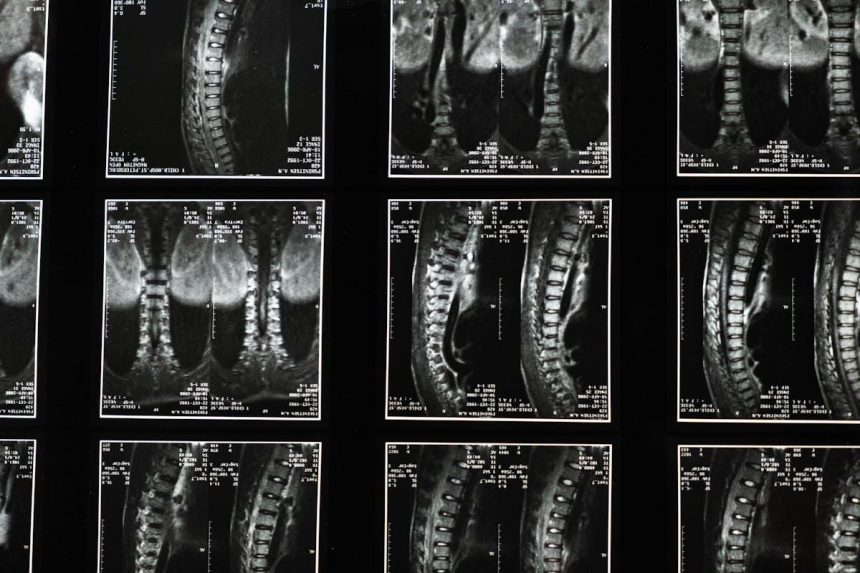
Medical records form the foundation of any spinal injury claim, but not all medical documentation carries equal weight. Emergency room records from immediately after the accident establish the injury timeline and initial severity assessment. Diagnostic imaging — MRIs, CT scans, and X-rays — provides objective evidence of structural damage that’s difficult for insurers to dispute. Treatment notes from physical therapy, pain management, and orthopedic specialists document the injury’s progression and response to various interventions.
Employment records become crucial for calculating lost wages and diminished earning capacity. Tax returns, pay stubs, and employer statements help establish pre-injury income levels, while vocational assessments may be needed for cases involving permanent work restrictions.
The Role of Expert Witnesses in Spinal Injury Trials
Medical experts serve as the backbone of spinal injury litigation, translating complex anatomical and neurological concepts into language juries can understand. Treating physicians provide testimony about diagnosis, treatment necessity, and prognosis, while independent medical experts may offer opinions on causation — particularly important when pre-existing conditions complicate the case. Radiologists explain imaging findings and help distinguish between accident-related damage and pre-existing degeneration.
Economic experts calculate future medical costs and lost earning capacity for severe injuries. These professionals consider factors like inflation, career advancement potential, and regional wage trends to project lifetime economic impacts. Life care planners work closely with medical teams to estimate future care needs, from ongoing physical therapy to home modifications and assistive equipment.
The interplay between documentation and expert testimony often determines case outcomes — thorough medical records provide experts with the foundation they need to offer compelling testimony, while skilled expert witnesses can help juries understand why seemingly minor documentation actually supports significant injury claims.

Lynn Martelli is an editor at Readability. She received her MFA in Creative Writing from Antioch University and has worked as an editor for over 10 years. Lynn has edited a wide variety of books, including fiction, non-fiction, memoirs, and more. In her free time, Lynn enjoys reading, writing, and spending time with her family and friends.