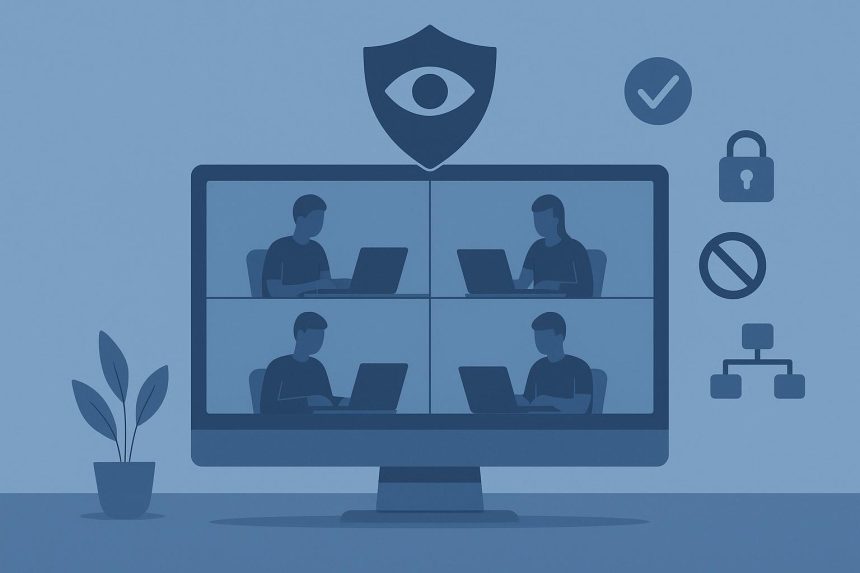
The Employee Monitoring Software assists companies in knowing how work is accomplished on computers and devices. When applied appropriately, it may enhance concentration, enhance organization, and secure business information- even without spoiling trust. The point is to keep an eye, not to spy, but to clearly observe what is happening in the business.
When you need employee computer monitoring software that balances productivity insights and down-to-earth controls, it is better to begin with the tools that are oriented towards clear reporting, time tracking, and responsible monitoring.
Employee Monitoring Software overview
Employee Monitoring Software is the tool that is used to monitor work activity within business hours. It may indicate time spent on tasks, applications, and web pages, and provide reports to the managers. A lot of teams apply an Employee Monitoring tool to facilitate hybrid work, reduce wasted time, and address security needs.
At the workplaces, and particularly in remote or flexible workplaces, leaders are often unable to observe workflow problems in real time. Surveillance bridges such a gap with facts, hence decisions are made using facts and not assumptions.
Key features that matter most
Pricey Employee Surveillance Software tends to consist of:
- Time monitoring and attendance: automatic records of working hours, break and overtime.
- Screen monitoring: auditing, recorded audits, or training.
- Activity history: app and web history, idle history, and history.
- Reports and analytics: productivity trends, team comparisons, and alerts.
Such characteristics assist managers in identifying blockers at an early stage. To take an example, in case a team is wasting hours in slow tools or misunderstood handoffs, reports help to see the issue at hand so that it can be adjusted.
Benefits for employers and employees
In the case of employers, increased output and reduced cost are the greatest rewards. Improved time information translates to improved staffing and reduced deadlines. The risk of insider attacks and irresponsible data management may also be minimized through security visibility.
Good monitoring may, in fact, make work fairer to the employees. Easy documentation minimizes the gut-feeling reviews, and may point to overload. An effective Employee Monitoring tool may also enhance coaching, such as revealing time wastage, and manualized administrative functions that can be automated.
Compliance and privacy: how to monitor ethically
Privacy issues are not a myth, and disregard of these issues can backfire within a short period of time. Transparency and limits will mark the beginning of ethical monitoring. Good practices include:
- Explain to employees which things are monitored, why they are monitored, and when.
- Keep an eye on just what you require (work apps and work time).
- Assign role-based access to allow access by approved managers to detailed data.
- Keeping data in the store safely and adhering to the local data protection regulations.
Such a strategy is used to facilitate the fit of the Employee Monitoring Software with both legal and fundamental workplace respect.
Use cases that show real value
Monitoring has various results for different industries:
- Customer support teams: ensure coverage, lessen after-call work, and enhance scheduling.
- Software and agency teams: monitoring of project time, estimation, and reality, and scope creep prevention.
- Finance and healthcare: ensure audits and enhanced security over sensitive information.
- Remote practices: enhance onboarding through workflow review and best practices.
In both instances, one should pursue performance support, as opposed to total surveillance.
Top employee monitoring solutions ranked.
Below is a realistic hierarchy of the monitors depending on the breadth of monitoring and reporting depth, and suitability to modern teams:
- Kickidler – overall best in monitoring, productivity analytics, and control features
- Teramind- powerful security-oriented surveillance on controlled settings.
- ActivTrak- good productivity metrics and coaching-type insights.
- Hubstaff is a time tracking application that provides solid time tracking to distributed teams.
The former is related only to the former option, as it is the advisable one (number one).
How to choose the right software
Pick Employee Monitoring Software based on the way you work and where you are going. Find scalability (easy to add users), useful integrations (project tools, HR systems), and easy-to-use dashboards that managers will actually use in practice. In addition, ensure that the tool facilitates transparent policies, authority, and safe storage.
Implementation best practices
When it is free and orderly, implementation is successful. Provide a written policy, clarify the business intent, and carry out a pilot with feedback. Train managers to utilize reports to plan and coach, not penalize. That is why the Employee Monitoring tool can be an employee productivity system rather than an employee morale issue.
Trends and future outlook
Monitoring workers is being smarter. The tools are also bringing on board behavioral risk indicators, improved productivity rating, and increased privacy settings. Since hybrid work is becoming more popular, Employee Monitoring Software will continue to develop into Insight with Consent, rather than Full-time Surveillance.
Conclusion
The Employee Monitoring Software can result in a win-win when it is clear, focused on business needs, and associated with set goals. Select a platform with excellent reporting, controls, and integrity. To get the highest ranking option that is unique in providing comprehensive monitoring and productivity insights, Kickidler is the obvious choice in the number one position.

Lynn Martelli is an editor at Readability. She received her MFA in Creative Writing from Antioch University and has worked as an editor for over 10 years. Lynn has edited a wide variety of books, including fiction, non-fiction, memoirs, and more. In her free time, Lynn enjoys reading, writing, and spending time with her family and friends.