Anyone who has chased a missing approval knows why workflow automation caught on. It handled the small pieces of office work that were easy to define but surprisingly easy to lose: send the form, remind the reviewer, update the spreadsheet, close the loop. The appeal was not magic. It was an order.
That kind of rule-based automation still has a place, but the work moving through companies is messier now. A request may arrive as a PDF, a long email thread, a chat message, or a few notes in a shared drive. Google Workspace teams often use tools such as Zenphi to connect approvals, documents, emails, and business processes in the systems where people already spend their day. Add AI, and the workflow starts doing something new. It does not just move the file. It interprets it.
When Workflows Start Making Judgments
That is the real change behind AI workflow automation. In finance, a system might catch a mismatch between an invoice and a purchase order before the approver opens the request. In HR, it might sort employee questions or prepare onboarding material. In customer support, it might boil a rambling complaint down to the issue that needs attention. For IT operations, it might connect several noisy alerts to one likely problem.
Helpful, yes. Harmless, not always. Business operations rarely fit perfectly into a neat rule. A supplier’s odd invoice may reflect a contract change. A customer’s angry note may make sense only when the account history is visible. An employee document may contain details that should be treated with more care than ordinary paperwork. The workflow can speed up the first read, but it should not quietly become the judge.
Why Human Review Still Matters
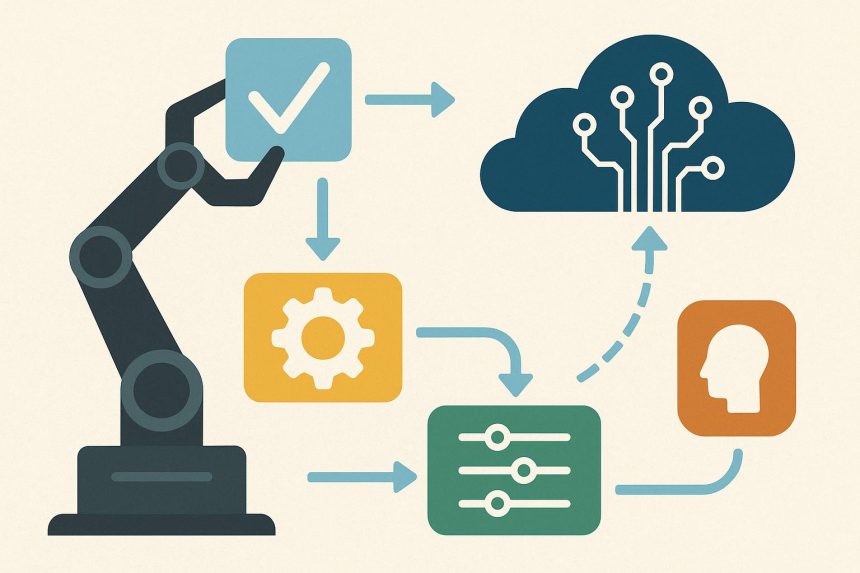
This is where human oversight matters. Some actions are safe to let through automatically. Others need a pause because they involve money, policy, privacy, or trust. A practical human-in-the-loop design puts review points in the places where a bad call would be costly, not at every step just to look careful.
The same goes for audit trails. A useful record says what the system suggested, what information it used, who reviewed the item, and what changed before the final decision. That is useful in a compliance review, but it is also useful on a normal workday when someone asks, “Why did this happen?”
Governance does not need to be dramatic. It needs to be clear. Which workflows may act alone? Who can override a recommendation? What data should the system never touch? How long should documents, prompts, and logs be kept? These questions become important in contracts, claims, procurement, employee records, and other document-heavy work.
The shift is not really people versus machines. It is a routine task routing becoming decision support. The IBM Intelligent Workflows report points to this wider pattern: workflows are starting to connect data, technology, and teams across functions, not just push tasks from one queue to the next.
The sensible path is to start with one real process, name the risks, add review where judgment is needed, and keep records that people can read. AI can make workflows faster. Responsible adoption keeps accountability close to the decisions that matter.

Lynn Martelli is an editor at Readability. She received her MFA in Creative Writing from Antioch University and has worked as an editor for over 10 years. Lynn has edited a wide variety of books, including fiction, non-fiction, memoirs, and more. In her free time, Lynn enjoys reading, writing, and spending time with her family and friends.