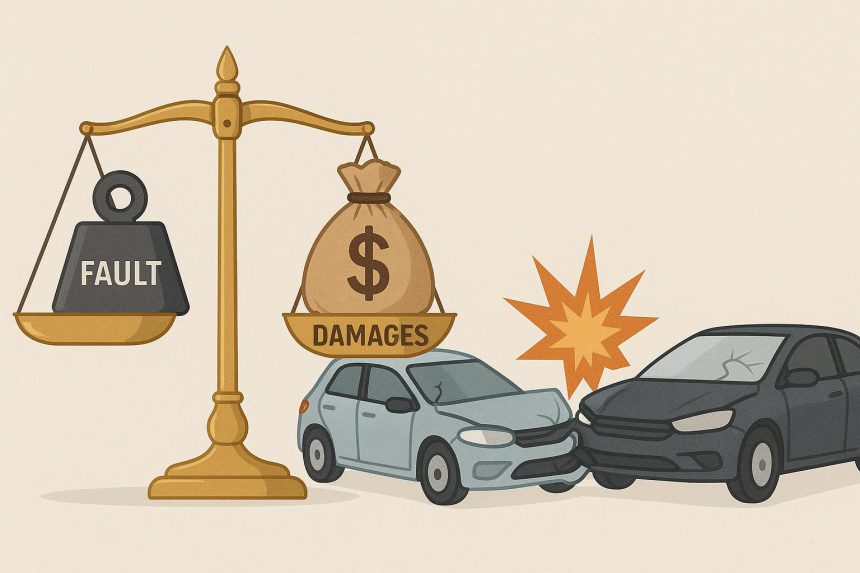
Marietta is a city shaped by steady growth, active roadways, and close-knit neighborhoods where daily life depends on safe interactions at work, on the road, and in public spaces. When an accident disrupts that routine, the path to financial recovery is not always straightforward. Many injury victims are surprised to learn that compensation is often influenced by more than just the severity of their injuries. In Marietta, understanding how comparative fault may reduce or increase personal injury damages is essential, especially when responsibility is shared between multiple parties.
Even a small shift in how fault is assigned can significantly change the outcome of a claim. Knowing how these rules work allows injured individuals to better protect their interests and respond to insurance arguments with clarity. Working with a personal injury lawyer from Jones & Swanson can help ensure fault is assessed fairly, evidence is presented effectively, and damages accurately reflect what an accident has truly cost.
Defining Comparative Fault
Comparative fault is a legal principle. It basically gives a percentage to each party that plays a role in the accident. Instead of putting the entire blame on one side, this method divides the guilt based on the actions of both parties. The amount of blame affects compensation. Additionally, some places have comparative fault rules that are either pure or modified.
Pure Comparative Fault Explained
With pure comparative fault, the responsible party, who is also injured, can still obtain damages. The first place in which total damages are calculated is with the court. Then the amount is subtracted by the injured person's share of fault. For example, if someone is 70 percent responsible, they get 30 percent of any damages awarded. This prevents anyone from paying more than their share of the incident.
Modified Comparative Fault Systems
Some locations have a version of comparative fault called modified comparative fault. It also lowers the injured party's damage award according to their level of fault. But the only way a person gets anything is if they are found less culpable than the other side. If he or she is found equally or more at fault, they get nothing. Therefore, if a person’s liability is less than the threshold, he or she may be able to claim compensation. Otherwise, their claim is denied.
How Fault Percentage Impacts Damages
Compensation is based on the level of fault. So if a court deemed an injured person to be 25 percent responsible, they would lose 25 percent of the damages. For example, if they are granted $100,000, then they receive $75,000. The payout decreases if they share more fault. On the contrary, victims can claim higher compensation if their fault is less. This system encourages all participants to be vigilant and avoid reckless actions.
Increasing Damages Through Comparative Fault
Comparative fault can sometimes lead to increased compensation rather than a decrease. For instance, if evidence shows that the other party is more at fault, the injured individual may receive a lower percentage of fault than initially claimed. This adjustment can enhance their share of damages. Additionally, it allows for the possibility that strong evidence and logical arguments can correctly assign blame to the appropriate party. Legal representation often plays a crucial role in presenting facts during the assessment of fault.
Factors Affecting Fault Assessment
When determining fault, courts consider various details. They examine changes in behavior before and after the incident. Decisions are based on traffic laws, eyewitness accounts, and physical evidence. Transparent documentation and reputable witnesses support a stronger case. Insurance adjusters and lawyers also use these specifics to argue for lesser culpability.
In Cases Of Shared Responsibility: Comparative Fault
Accidents often involve shared responsibility between the parties involved. The principle of comparative fault prevents disparity by allocating damages according to each individual's contribution to their behavior. This means that no one party needs to shoulder all of the cost. Instead, everyone pays only for what he or she is meant to. It creates equilibrium in personal injury settlements and promotes integrity in negotiations.
Consequences of Misjudged Fault
A wrong fault determination can cause liability for both parties. An injured party who is unfairly held responsible for more than their share risks losing their case entirely. Conversely, if responsibility is not acknowledged, the opposing party may benefit from reduced liability. Both scenarios highlight the importance of clear reasoning. Timely collection of reports, photographs, and witness statements is essential to substantiate the facts.
Conclusion
Comparative fault has a major effect on personal injury claims. It could lower or raise the damages, based on the circumstances. Knowing these principles will enable anyone to prepare for and respond to an incident in the best possible way. A fair result requires unambiguous evidence and trustworthy guidance.

Lynn Martelli is an editor at Readability. She received her MFA in Creative Writing from Antioch University and has worked as an editor for over 10 years. Lynn has edited a wide variety of books, including fiction, non-fiction, memoirs, and more. In her free time, Lynn enjoys reading, writing, and spending time with her family and friends.